
Copenhagen vs Stockholm: Our 10-Day Trip and Honest Verdict
This article contains affiliate links. If you make a purchase through these links, we may earn a small commission at no extra cost to you. This helps us keep creating free content for you!
Four hours after landing in Copenhagen, we were standing on the edge of a wooden pier in our swimsuits, looking down at the harbour. Dem jumped first. It was about two metres, which will not impress anyone who actually dives, but the water was so cold it knocked the air out of both of us. Then something odd happened: it was wonderful. Clear water, sun, and hundreds of locals doing exactly the same thing in the middle of a capital city.
That first afternoon more or less decided this article before we had seen anything else. We spent eight days in Copenhagen and two in Stockholm in July 2026, with a day trip across the bridge to Lund and Malmö in between. It was not a pure holiday. Vale was in Copenhagen for a work week and Dem worked remotely from the hotel, so a lot of what we saw was squeezed into evenings, early mornings, and one glorious long weekend. We think that is actually a fair test of a city: how much does it give you when you only have a few hours at a time?
Short answer: we preferred Copenhagen. It is smaller, the vibe is more relaxed, and everything is a short bike ride away. Stockholm is more impressive in a postcard sense, with its islands, palaces, and the jaw-dropping Vasa Museum, but it asked more of us and gave us less time to just sit by the water with a beer. Below is everything we did in both cities, what things cost in 2026, the things we would skip, and the full reasoning behind our verdict.
Copenhagen vs Stockholm at a Glance
If you are choosing between the two, Copenhagen is the better pick for a relaxed, walkable, bike-everywhere city break, while Stockholm is the better pick for history, museums, and big views over water. Here is how they compared for us, side by side.
| Copenhagen | Stockholm | |
|---|---|---|
| Size and feel | Compact, flat, very chill | Spread over 14 islands, grander |
| Getting around | Bike (under 10 minutes to most places) | Metro, trams, ferries, lots of walking |
| Best thing we did | Swimming in the harbour | The Vasa Museum |
| Best view | The Tower at Christiansborg (free) | City Hall tower and Monteliusvägen |
| Food highlight | Juno cardamom bun, Danish lunch | Meatballs at the Vasa, huge schnitzel |
| Beer (0.5 l, typical) | About 60 DKK (8 euros) | About 80 SEK (7 euros) |
| Days we recommend | 3 to 4 plus a Sweden day trip | 2 to 3 |
| Our pick | Winner | Close second |
Our Copenhagen vs Stockholm comparison after 8 days in Copenhagen and 2 in Stockholm (July 2026). Prices are 2026 reference averages.
Our Copenhagen vs Stockholm comparison after 8 days in Copenhagen and 2 in Stockholm (July 2026). Prices are 2026 reference averages.
Copenhagen From the Water: Harbour Swims, Nyhavn and a GoBoat
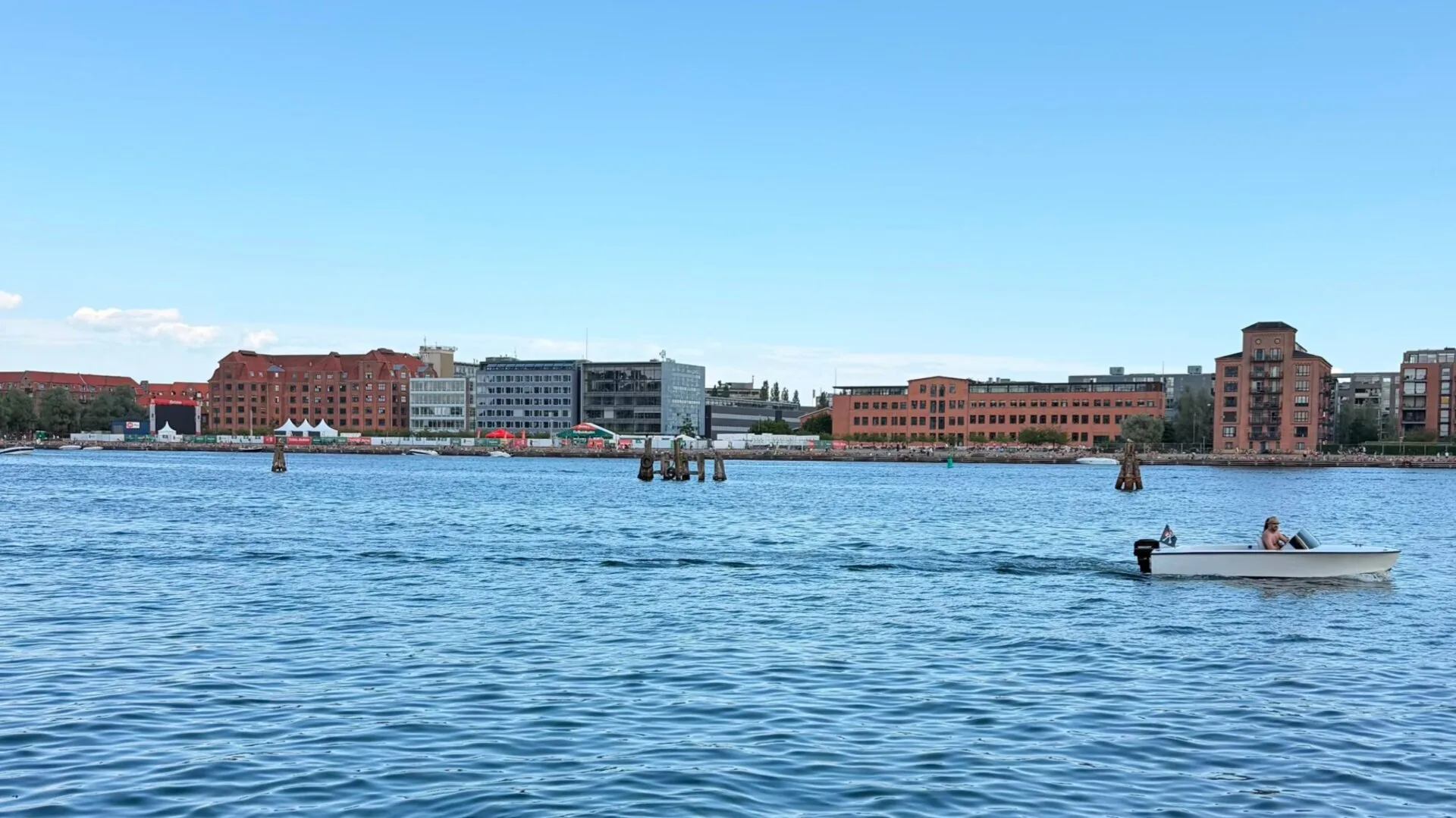
The water is the single biggest reason we fell for Copenhagen. The city was built facing the sea, and after decades of work cleaning up the port, the harbour is now clean enough that people swim in it all summer. It is not a gimmick. On a warm afternoon the quays turn into urban beaches, with towels on the concrete, kids cannonballing off ladders, and office workers taking a dip on the way home.
You do not need to find a secret spot. The official harbour baths, like Islands Brygge and Kalvebod Bølge, are free, and Islands Brygge has lifeguards from June to August. The water is tested every day, and if a red flag is up, you stay out. In July it sits around 19 to 22 degrees. The first ten seconds hurt. After that, it is one of those travel moments you keep thinking about months later.
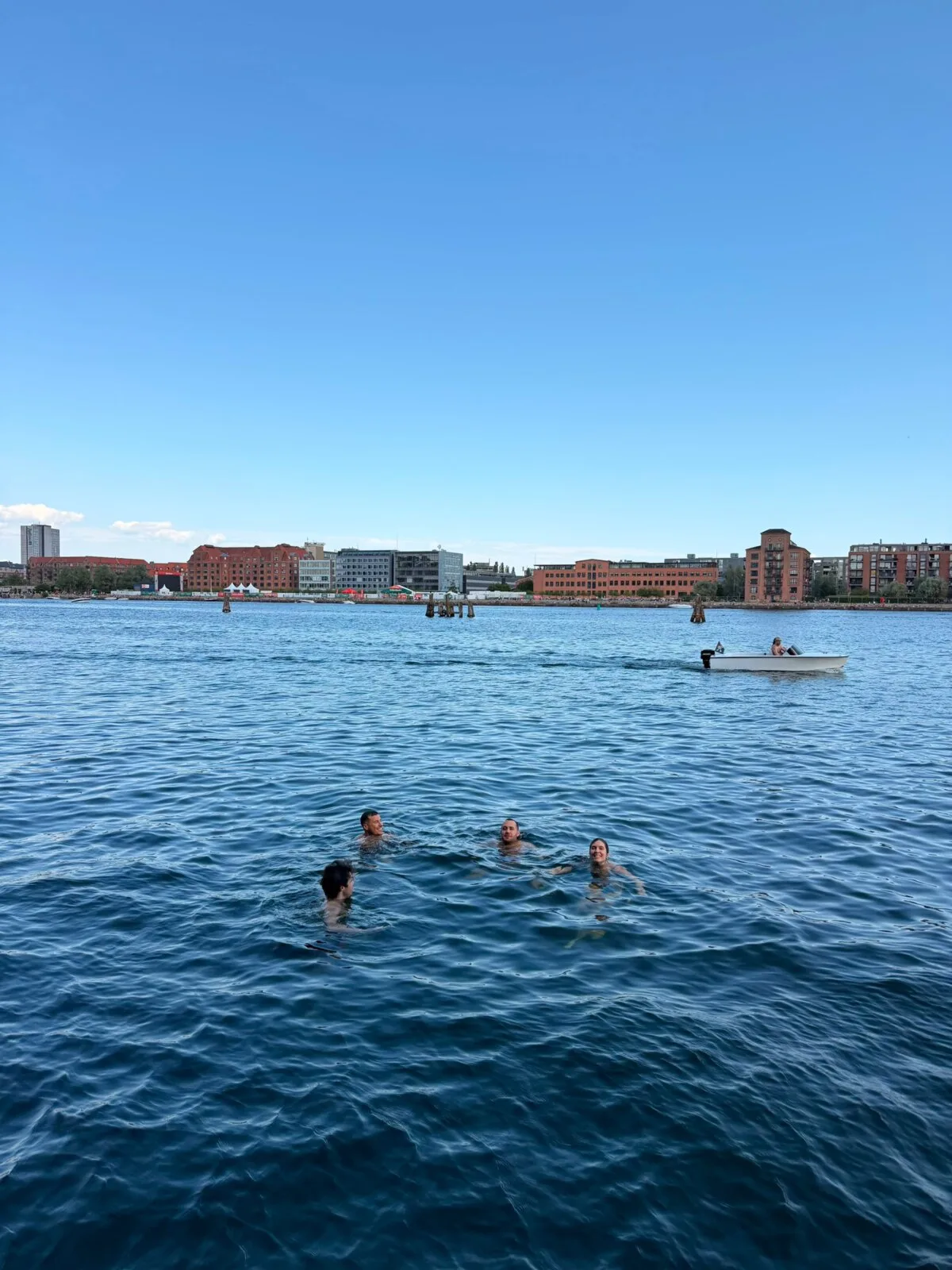
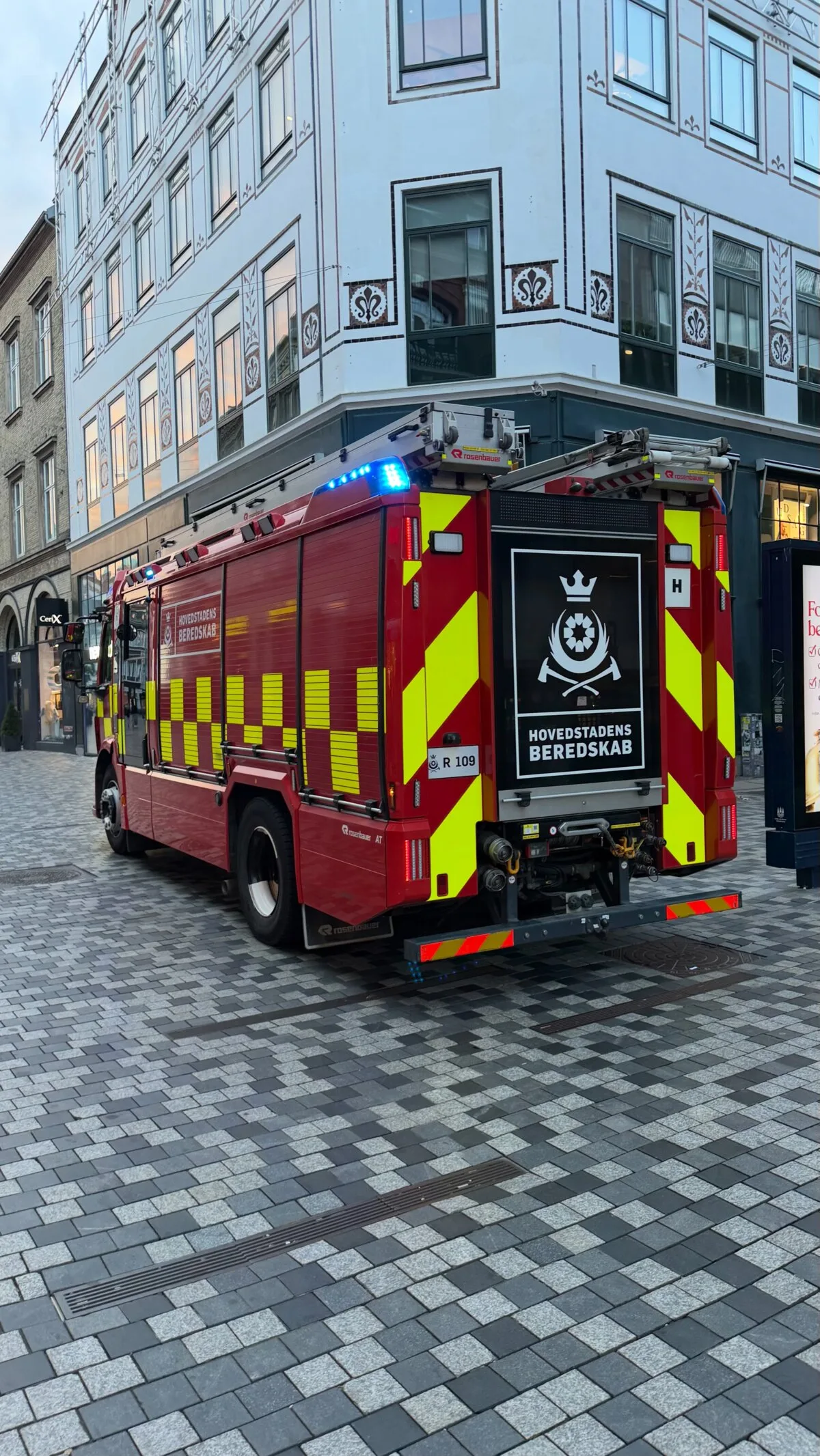
Left: our first harbour swim. Right: the fire engine that showed up during our rooftop pizza dinner (false alarm, more on that below).
On our second evening we walked along Nyhavn, the row of colourful 17th-century townhouses and old wooden ships that is on every Copenhagen postcard. It is touristy, and it is also genuinely lovely at golden hour, when the terraces fill up and the light hits the facades. It is funny to think that for centuries this was one of the rougher corners of the city, full of sailors, taverns, and a lot of alcohol. Today the roughest thing about it is the price of a beer.
Our favourite afternoon of the whole trip was on a GoBoat, the little solar-powered electric boats you can rent and drive yourself without a licence. We stopped at a supermarket first for a few beers, a bottle of white wine, and crisps, then showed up at the dock without a booking. Mistake: the next free boat was an hour later. Once we got going, though, it was perfect. Dem drove, we cruised the canals at our own pace, and the sun refused to go down. You can book a GoBoat for 1, 2 or 3 hours in advance, which we would absolutely do next time. Boats seat up to eight, so split between a group it is one of the best-value things to do in an expensive city.
If you would rather someone else drives and explains what you are looking at, a 1-hour guided canal cruise from Nyhavn or Gammel Strand covers the Opera House, the Little Mermaid, and Christianshavn from the water in one go. And one more water tip: there is a bar on a moored boat in one of the canals where we ended a long workday drinking white wine while the sun hung around until well after 10pm. Nobody warns you how strange and wonderful the Scandinavian summer light is until you are in it.
Top-Rated Activities in Copenhagen
Copenhagen by Bike: Kastellet, the Little Mermaid and the Best Cardamom Bun
Copenhagen is one of the most bike-friendly cities in the world, and you feel it within five minutes. The cycle lanes are wide, clearly marked, and often feel like they have more priority than the roads. One evening Dem started walking to meet everyone for dinner, did the mental maths (almost 30 minutes), and downloaded the Donkey Republic app instead. The same trip took under ten minutes. He arrived so early nobody was there yet, so he ordered a glass of Riesling and waited like an elegant gentleman who had definitely not been sweating on a rental bike five minutes earlier.
A Donkey Republic 24-hour pass costs about 99 DKK (13 euros), and there are e-bikes and scooters from other apps all over the centre. A word of warning about the e-bikes: on our last day we rode a few back to the hotel and they were ridiculous. You barely touch the pedal and they launch. Fun, but hold on. If you want the city explained as you ride, the guided Copenhagen highlights bike tour is the way to cover the most ground in a few hours.
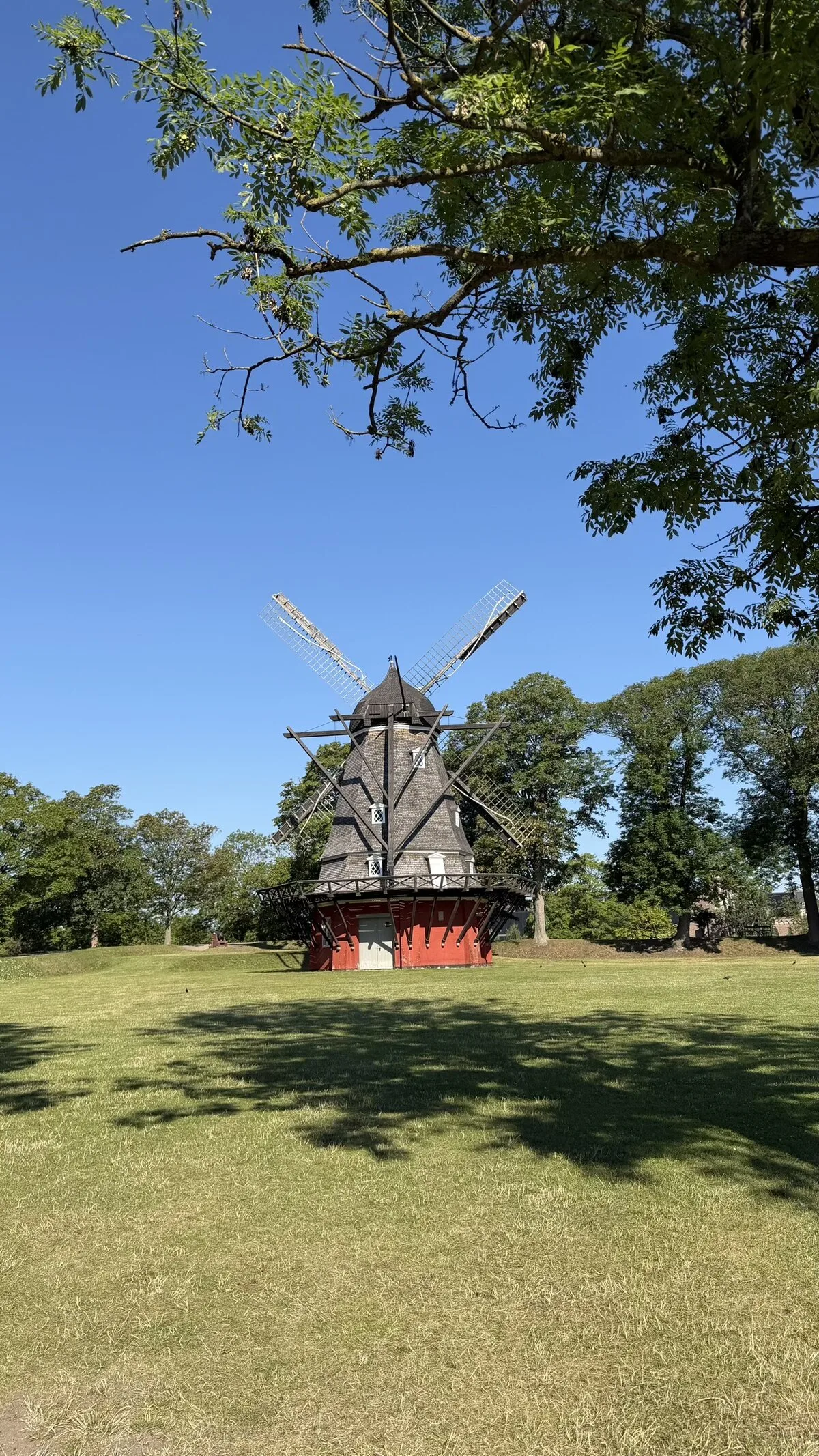
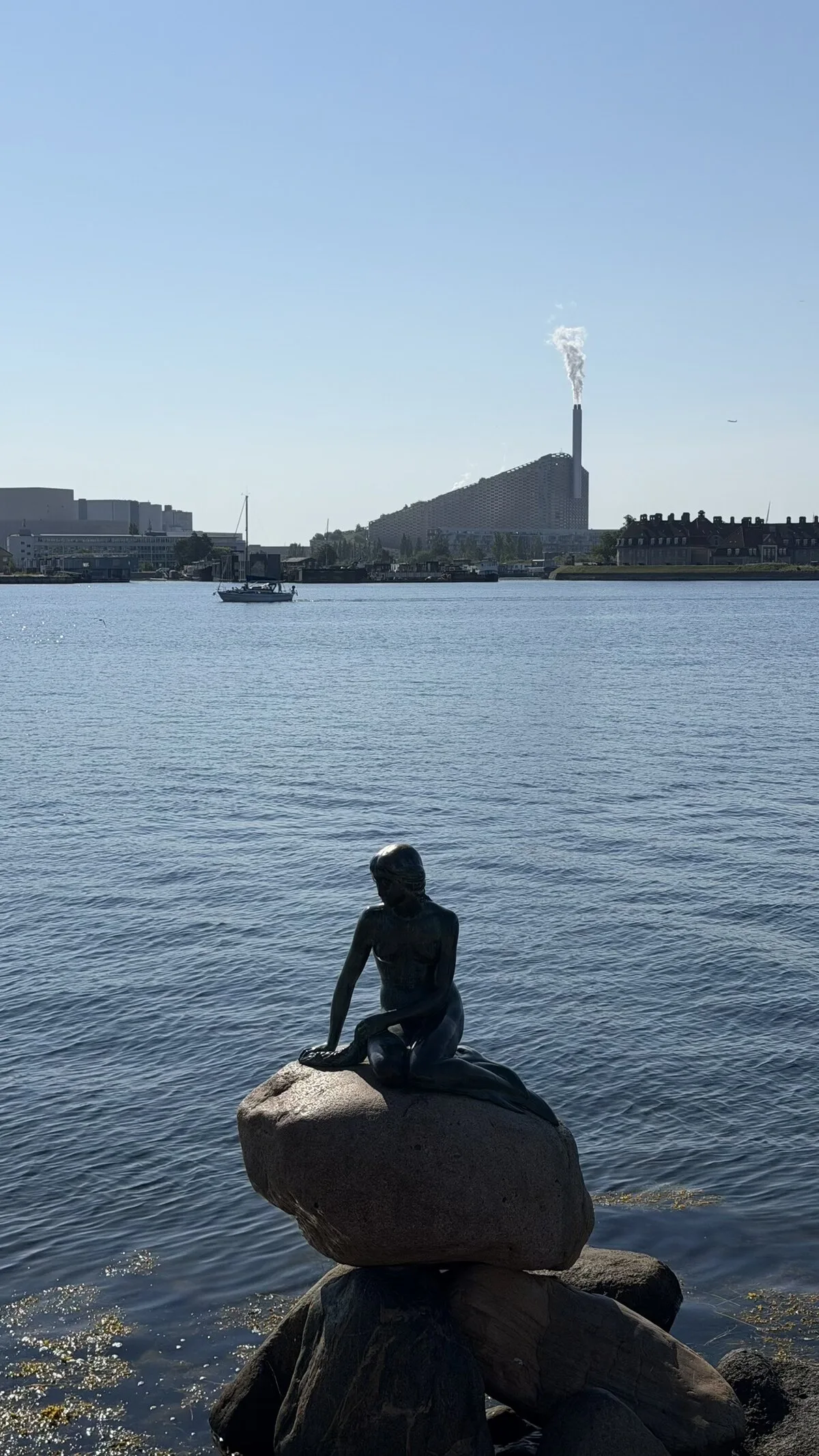

One morning loop: the windmill on Kastellet's ramparts, the Little Mermaid, and the Gefion Fountain, all within a few minutes of each other.
On a free morning we did a loop around Kastellet, one of the best-preserved star fortresses in Europe. Seen from above it is a perfect five-pointed star, designed in the 17th century to be as hard as possible to attack. Today it is a huge, peaceful park where people run, walk dogs, and sit on the grass ramparts next to an old windmill. From there it is a short walk to the Little Mermaid. Yes, she is smaller than you imagine. Everyone says that, and it is still true. Hans Christian Andersen's original story is also a lot darker than the Disney version, which makes her look a bit more melancholy once you know it.
The best bike ride of the trip was purely for food. Dem pedalled about 20 minutes, alone, to Juno the Bakery in Østerbro with one goal: the famous cardamom bun. It costs around 30 DKK (4 euros) and it lived up to every bit of the hype: soft, buttery, and with that intense cardamom smell that is everywhere in Nordic baking. He sat outside with a coffee and then rode back through a city that he liked more every day he spent on two wheels. Our advice: go early, because the queue can get long and the best pastries go first.
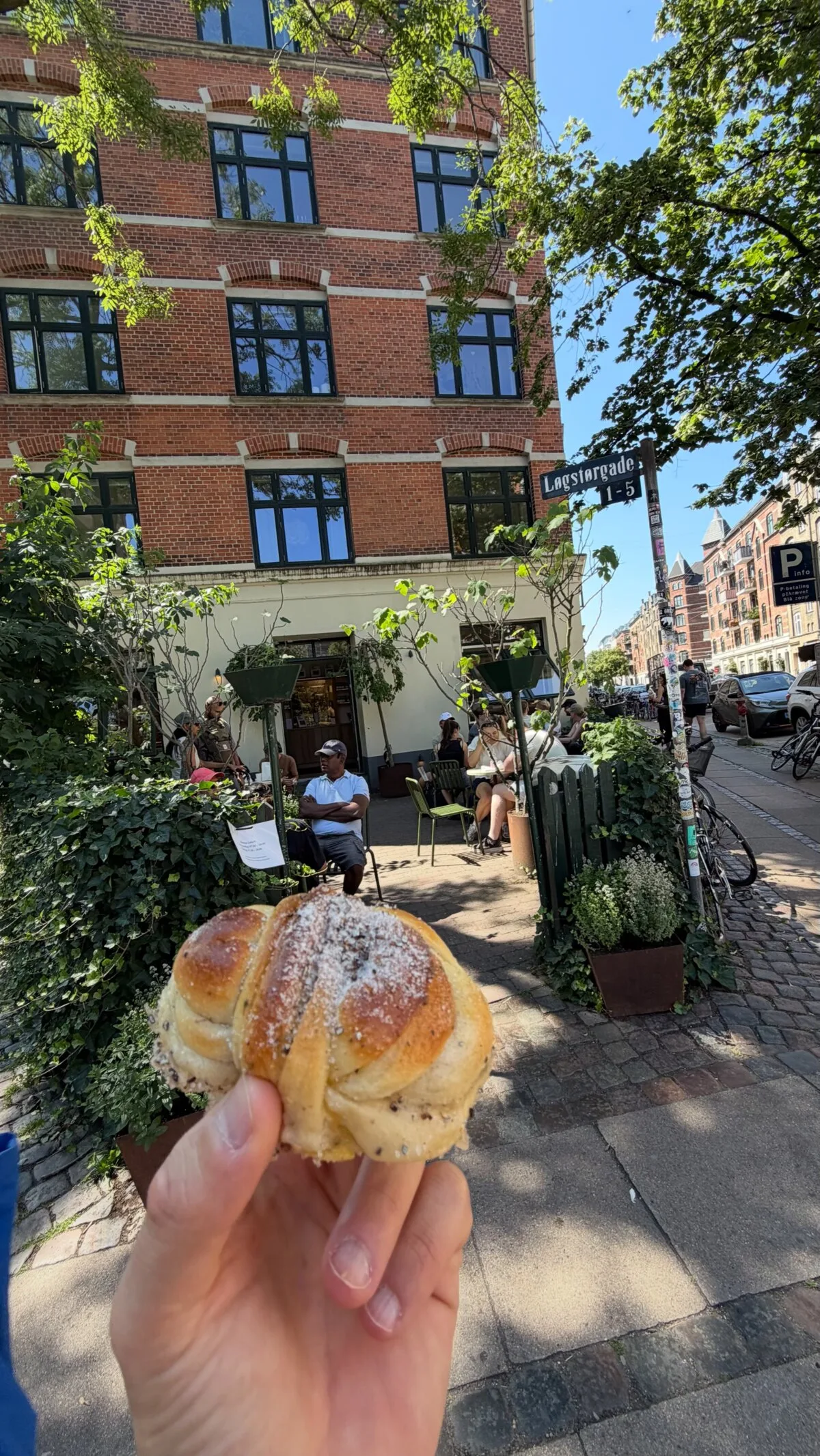
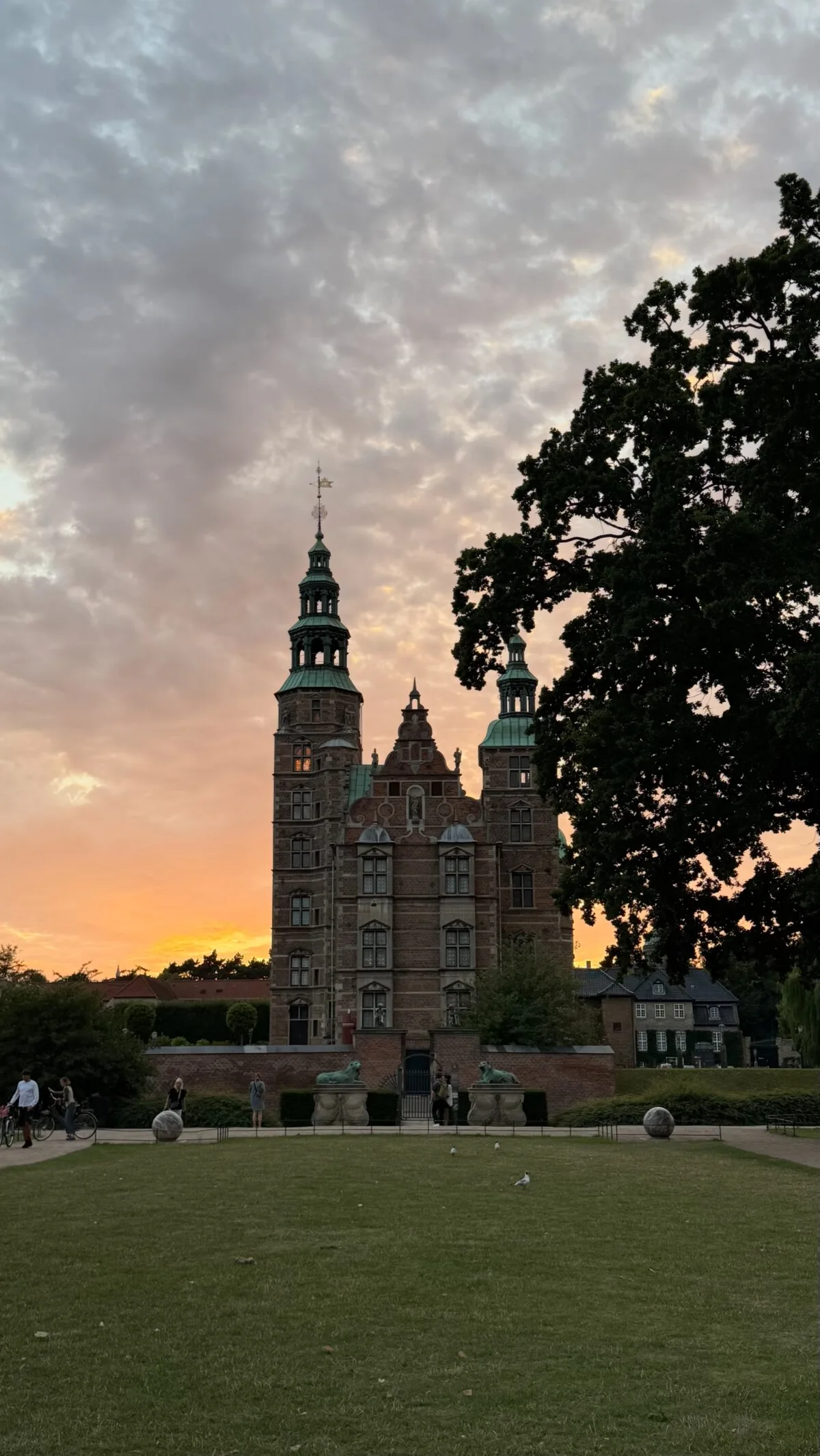
The Juno cardamom bun (worth the ride), and Rosenborg Castle after 10pm on a July evening.
Tivoli, Christiania and the Copenhagen Classics
We did the shopping street first, Strøget, which is exactly what you expect from a long pedestrian high street, with one dangerous exception: the LEGO Store. It is very easy to convince yourself that a 400-euro plastic castle is an investment. We resisted. Barely.
Tivoli Gardens opened in 1843, which makes it one of the oldest amusement parks in the world, and the story goes that Walt Disney visited while he was dreaming up Disneyland. You can see why. It is part fairground, part garden, part fairy tale, with lanterns and flower beds between the rides. We went straight for the big red roller coaster, which was one of those minute-and-a-half experiences where you question every decision you have ever made, and then want to go again the second it stops. Entry starts from about 180 DKK depending on the day, and rides are paid separately or with an unlimited ride pass. Buy a Tivoli Gardens entry ticket online to skip the ticket window, or the Tivoli entry and unlimited rides combo if you plan to ride more than a few times, because single rides cost around 65 DKK each.
On our last day in Copenhagen we joined a walking tour of the old town, led by a Mexican guide who absolutely nailed it. Two and a half hours flew by, and a big chunk of it was about the centuries-long rivalry between Denmark and Sweden. The southern Swedish provinces of Scania, Halland, and Blekinge were Danish for a very long time, until the Treaty of Roskilde in 1658 handed them to Sweden. It is a strange thought when you remember that today you can cross the Øresund Bridge to Sweden in half an hour on a commuter train. The guided old town walking tour covers the same ground, and there is also a Copenhagen tour in Spanish if that is your language.
The best tip our guide gave us: The Tower at Christiansborg Palace, the tallest tower in the city, is free to go up. It was drizzling and grey when we went, so the view was not the most photogenic, and it was still worth it. It is closed on Mondays and entry works with time slots, so expect a short queue.
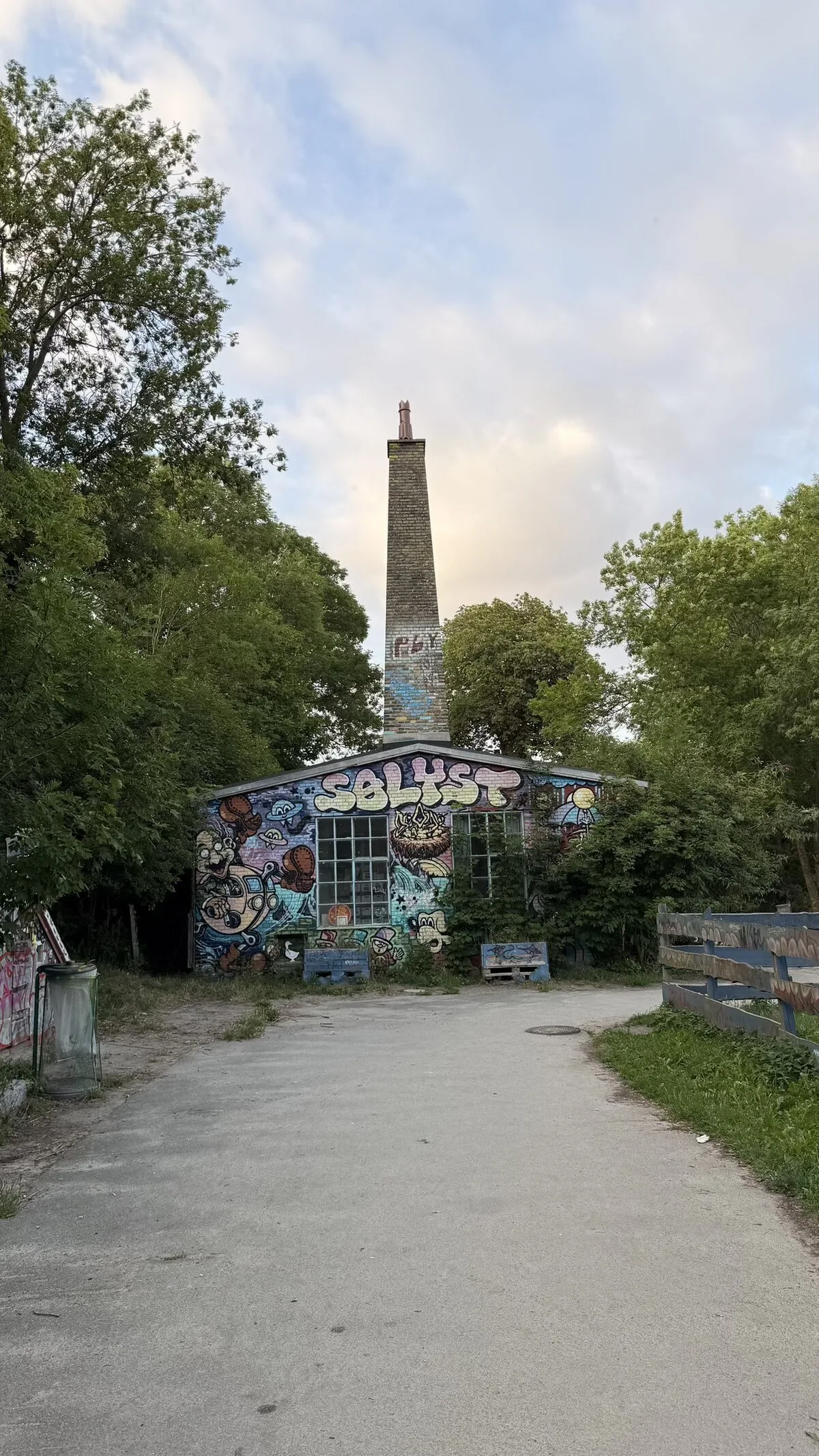
Christiania: murals, self-built houses, and a completely different pace from the rest of Copenhagen.
Then there is Christiania, which is worth visiting even if only to say "what a strange place". It started in 1971 as a self-governing community squatting in an old military base, and for decades it ran on its own rules. It still has a very different personality from the rest of the city, with murals, homes built by the residents themselves, and a lake path that feels like the countryside. Respect the no-photo signs on the main street and keep your phone away there. The Christiania and Christianshavn guided walking tour is a good way to understand the history instead of just wandering through.
What We Ate in Copenhagen (and One Burger That Did Not Live Up to the Hype)
The food story of this trip has a running joke, and it is called Gasoline Grill. It is the burger place every "best burger in the world" list sends you to. On our second night we walked to the first location: sold out of burgers. They sent us to another one five minutes away: also sold out. Apparently the Danes had eaten them all before us. We finally got one two days later. Is it good? Yes. Is it the best burger in the world, as the internet wants you to believe? Not even close. An Original costs about 100 DKK, and the very next night a random burger-and-beer place we found without any research beat it comfortably.
That night we lost to Gasoline Grill, we ended up at a rooftop pizza place that saved the evening with a lot of dignity. And just as we were about to pay, the fire alarm went off. Within seconds we were being evacuated down the emergency stairs while fire engines pulled up outside. It was a false alarm. After a few minutes they let us back in, we paid like responsible citizens, and only then did we leave. It is not every day you get evacuated from a restaurant before settling the bill.

The burger that beat Gasoline Grill: a place we walked into with zero research.
Some other things that stuck with us:
- Giant sandwiches. Our first lunch in the city was a sandwich place where Vale's pork, bacon, and red cabbage sandwich played in a different league from Dem's (very good) chicken one. She could not finish it. He helped. Nobody can say he did not contribute.
- Texas barbecue. Copenhagen has a surprisingly strong American-style low-and-slow barbecue scene. The pulled pork, ribs, and brisket at our group dinner were superb. The problem was the bill: eleven of us, and the restaurant would take one payment or, very generously, split it in two. Two. For eleven people. If you are travelling as a group, ask about splitting before you order.
- A proper Danish lunch. After the walking tour we went looking for traditional Danish food. Dem ordered what was probably the least Danish thing on the menu, an enormous schnitzel with potatoes and peas, and Vale had fried pork with brown sauce. We shared both and agreed it was the best meal of the trip up to that point.
- Reffen. The huge street food market on the water, with sand, graffiti, stalls from all over the world, and music. The kind of place you could spend an entire evening doing nothing at all.
Reffen was also where our Friday night started, before the strangest party we have ever been to: a huge old hangar where they put a sticker over your phone camera at the door. No photos, no videos. People were dancing barefoot, some in pyjamas, and there were seventy-year-olds giving it absolutely everything. The music was fantastic and we danced for two and a half hours. Copenhagen is not all cardamom buns and canals.
If you want the Danish classics without the trial and error, a Copenhagen food tour with six tastings of Danish classics, smørrebrød included is a smart first-day move. Smørrebrød, the open-faced rye sandwiches, run 80 to 130 DKK a piece at market stalls and more in restaurants, so a tour that bundles several tastings is not bad value here.
Where We Stayed in Copenhagen
For the work week we stayed at a large business hotel arranged through Vale's job, so we will not pretend that one is a recommendation. For our last night we moved to Steel House Copenhagen, a big design hostel with private rooms near Tivoli and the Central Station. It has a pool, it is clean, and the location made it easy to walk to Tivoli, Strøget, and the Meatpacking District. Private doubles there typically run around 100 to 170 euros a night in summer, which is honestly reasonable by Copenhagen standards.
For context, a regular mid-range double in July costs roughly 800 to 1,600 DKK (107 to 214 euros) in Vesterbro and 1,200 to 2,500 DKK (161 to 334 euros) in the old centre, Indre By. Summer books up early, so it pays to compare Copenhagen hotels on Booking.com a couple of months ahead.
Breakfast in Denmark, Lunch in Sweden: Our Day Trip to Lund and Malmö
The first official day of our holiday started with a slightly silly goal: have breakfast in Denmark and lunch in Sweden. The Øresund trains leave Copenhagen Central frequently, and Lund is about 51 minutes away, straight across the bridge.
Lund has a charm that is hard to explain. It is small, tidy, full of cobbled lanes and bicycles, with buildings that look like they came out of a storybook. Lund University, founded in 1666, is one of the most prestigious in Scandinavia, and it gives the whole town a young, calm energy. We walked around with no plan, got a little lost, and enjoyed a very Nordic kind of quiet that we had started to miss in busier Copenhagen.
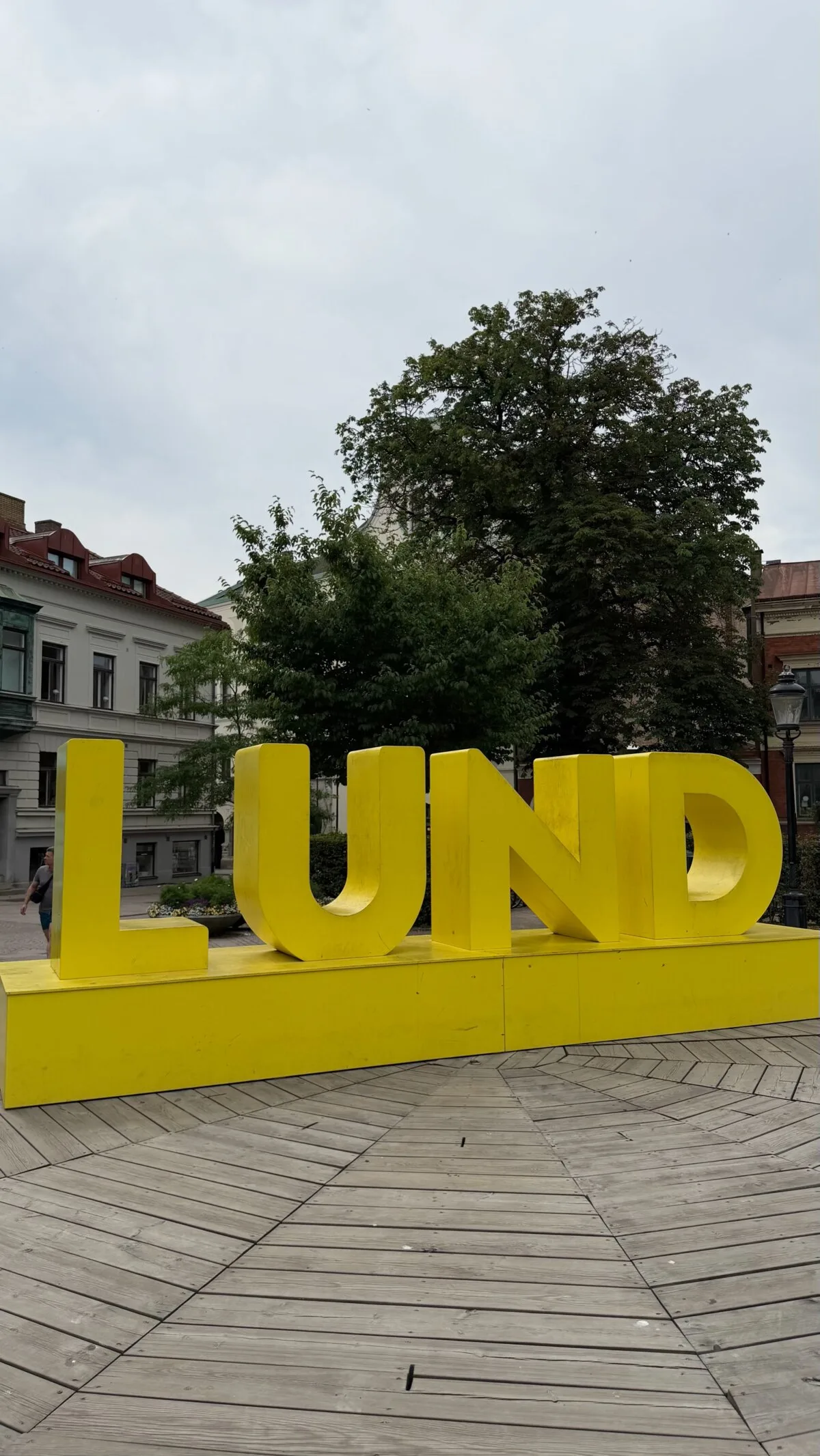
Lund: a small, cobbled university town 51 minutes by train from Copenhagen.
From Lund it is just 11 minutes on to Malmö, where the plan was simple: eat well. We ended up at Malmö Saluhall, a food hall in an old railway goods shed, and had excellent fish and chips. Before leaving we bought kitchen towels as souvenirs, because apparently they are a Swedish tradition, and many are hand-designed. It was not the souvenir we imagined bringing home, but now we have international dish towels. The ride back from Malmö to Copenhagen takes about 39 minutes. Dem slept for all of them.
Doing it independently by train is easy and cheap (around 100 DKK each way). If you would rather not deal with tickets and connections, or you want to add Kronborg Castle, the "Hamlet" castle in Helsingør, the Lund and Malmö two-country day tour from Copenhagen packs all of it into one day.
From Copenhagen to Stockholm (and the iPad We Left Behind)
We flew from Copenhagen to Stockholm Arlanda with Norwegian. The flight is only about 1 hour 10 minutes, and one-way fares usually land somewhere between 50 and 200 US dollars depending on how early you book. The alternative is the SJ high-speed train, about 5 hours 20 minutes to 5 hours 50 minutes centre to centre, from roughly 300 SEK if you book ahead. With only two days in Stockholm, flying made sense for us.
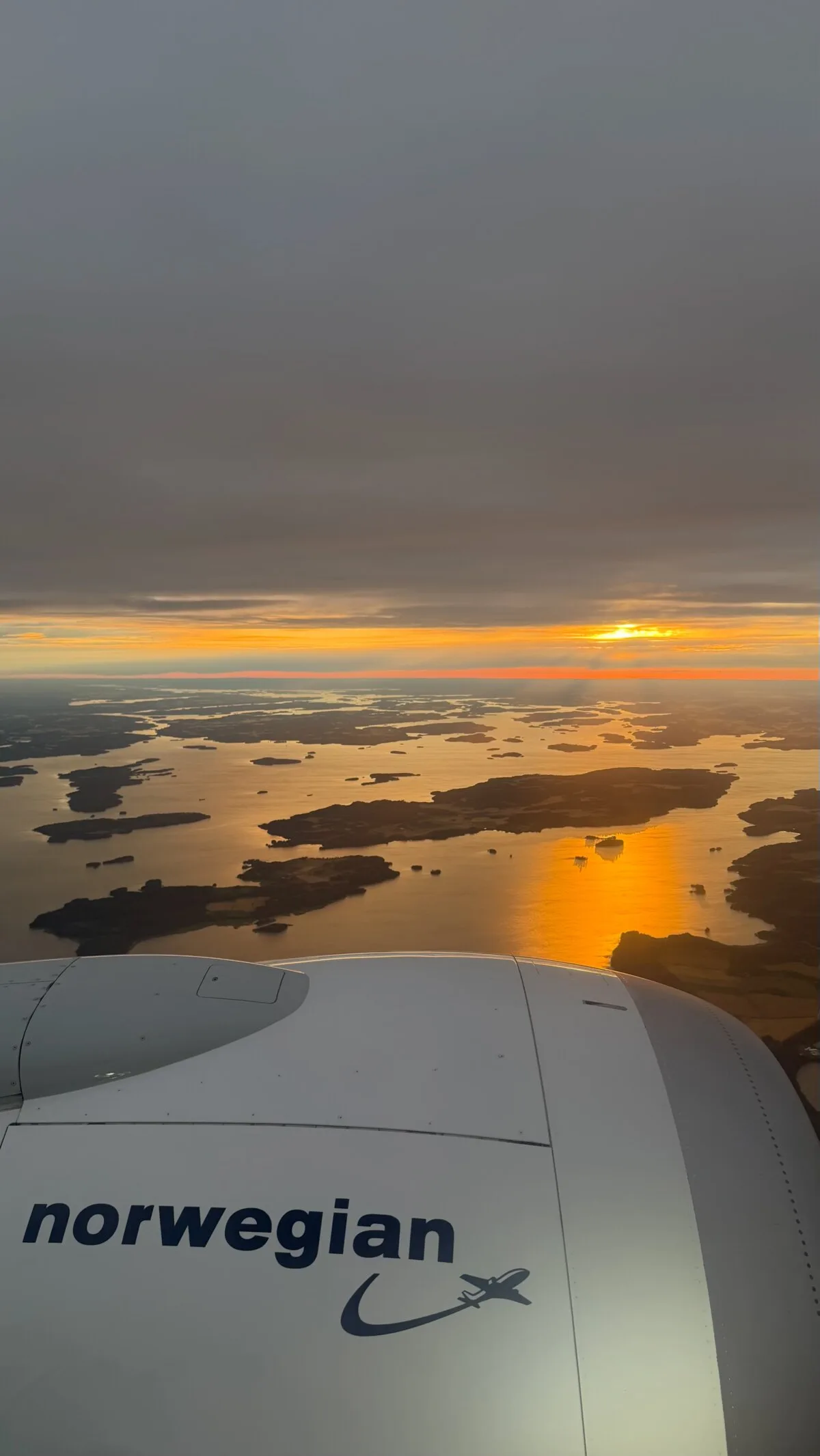
Landing over the Stockholm archipelago. Beautiful. And the exact moment the iPad was still sitting on the seat.
Everything went perfectly: quick check-in, quick boarding, quick landing. Then Dem stepped off the plane and realised the iPad was still on the seat. What followed was a marathon of phone calls, lost-and-found forms, and attempts to talk to the airline, the airport, and anyone who might help. Nothing. We have pretty much given it up for lost, and it was by far the worst moment of the trip. We ended the day watching the second half of the World Cup final squeezed around a single phone screen.
The lesson, which sounds obvious until it happens to you: do a full seat and seat-pocket check before you stand up, and if something is missing, report it to the airline immediately, before you leave the arrivals area. Once the cleaning crew has been through the plane, it gets much harder.
Two Days in Stockholm: Gamla Stan, the Vasa and the Best Views
Our first Stockholm morning started with a walking tour in Gamla Stan, the old town, all cobbled lanes and ochre, red, and yellow facades. Before the tour began we got a show nobody asked for: a seagull eating a pigeon in the middle of the square. From start to finish. It was a disturbing thing to watch with your morning coffee, and it became the running joke of our Stockholm days.
The tour itself was very good, and, just like in Copenhagen, much of Scandinavian history turns out to be Sweden versus Denmark. We learned about the Kalmar Union of 1397, when Queen Margaret I of Denmark brought Denmark, Norway, and Sweden under one crown. It looked great on paper, but the Swedes were never really happy with the deal, and after several rebellions Sweden broke away in 1523 with Gustav Vasa as king, the start of modern Sweden. The Gamla Stan old town walking tour covers the same story in about two and a half hours.
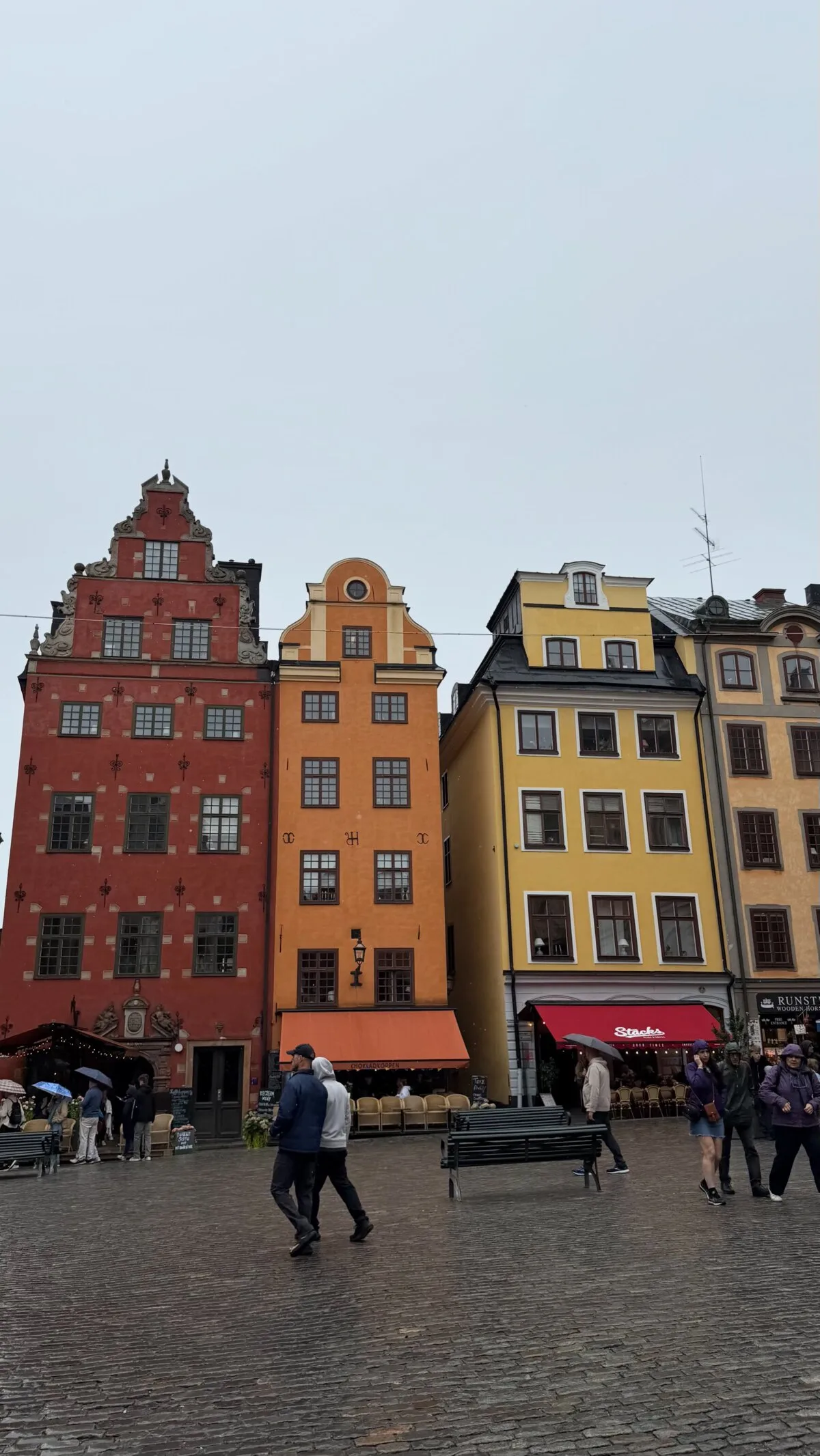
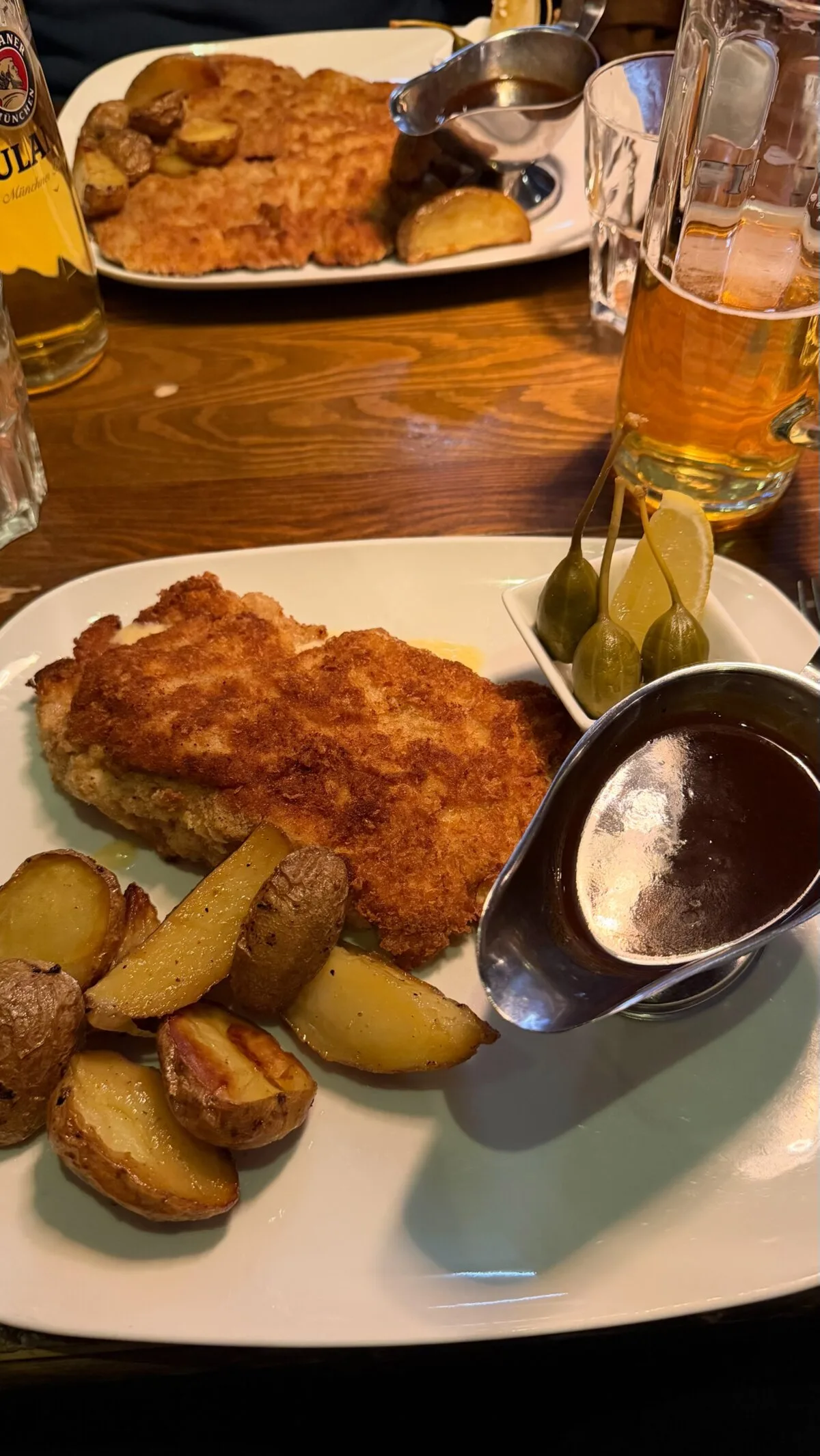
Stortorget in Gamla Stan (minus the seagull), and the schnitzel that changed our best-meal ranking again.
From the Gamla Stan side we took the ferry to Djurgården, the island of museums and parks. It is covered by a regular SL public transport ticket (43 SEK for a single), so it doubles as a cheap sightseeing cruise. The star of the day, and honestly of the whole Stockholm leg, was the Vasa Museum. The Vasa was a warship built to be the pride of the Swedish navy, and it sank in 1628 about 1,300 metres into its maiden voyage, because it carried too many cannons for how stable it really was. It lay on the bottom of the Baltic for 333 years, where the low-salt water helped preserve the wood, and it was raised in 1961. Today you can see it almost complete. It looks big in photos. Standing next to it is something else.
Admission is 240 SEK (about 21 euros) in summer, and the queue at the door in July can be long, so a Vasa Museum entrance ticket bought in advance is worth it. We had lunch at the museum restaurant, and went for another classic: Swedish meatballs with mashed potatoes, gravy, and lingonberry jam, with a beer. Much better than we expected from a museum restaurant.
Later we stopped for coffee and tried kladdkaka, the famous Swedish sticky chocolate cake. Being completely honest, it tastes a lot like a moist brownie. Nice, but nobody needs to build a monument to it. Dinner that night was at a schnitzel restaurant called Santa Clara: enormous, crispy schnitzels in a great setting, which knocked the Danish lunch off the top of our best-meal ranking. We walked it off past the campus of KTH Royal Institute of Technology and bought ice creams at a 7-Eleven for the walk home.
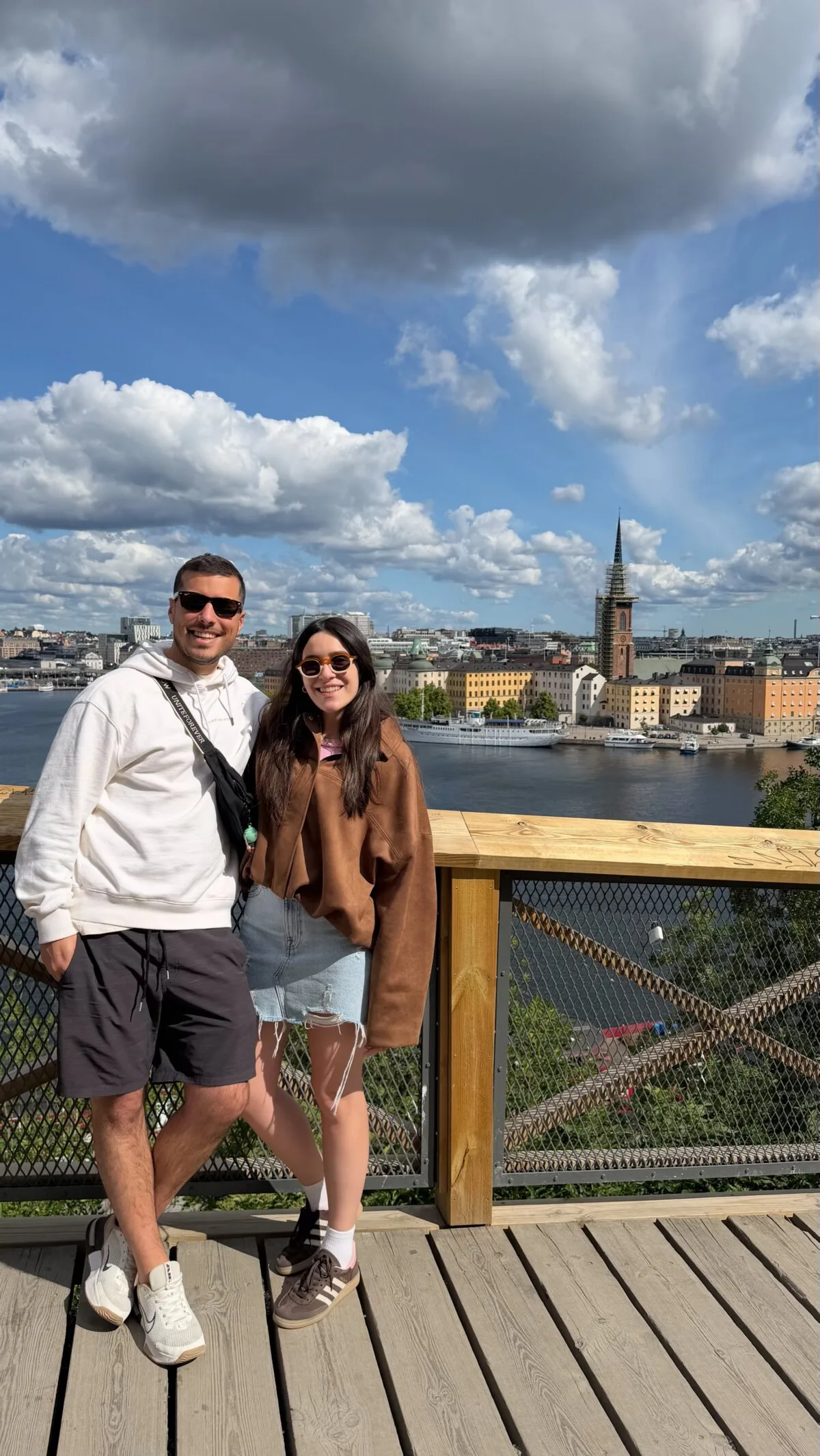
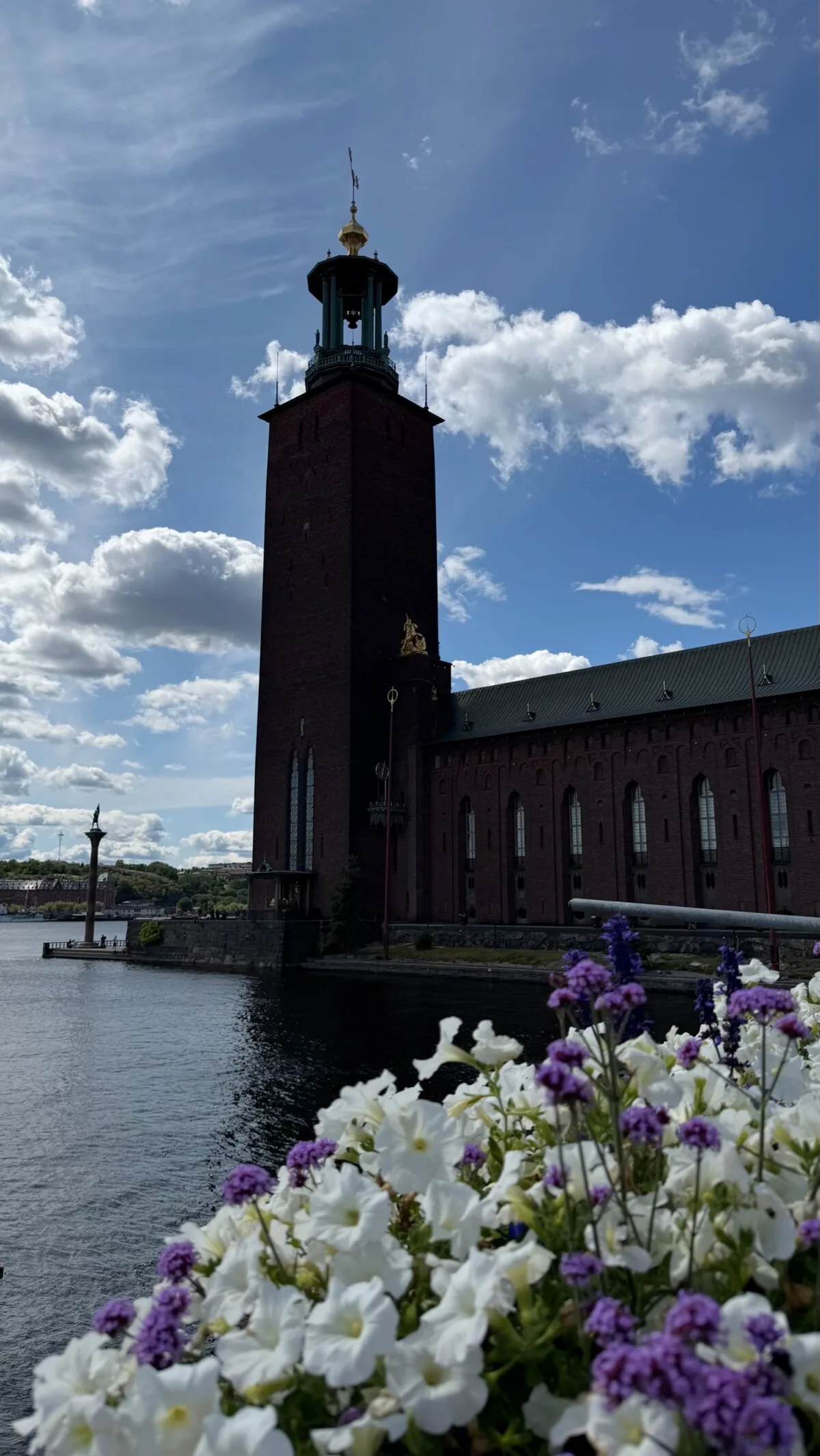
Us at Monteliusvägen on our last morning, and the Stockholm City Hall tower we climbed a few hours later.
Our second day was all about views, and the weather finally gave us a cloudless sky. We walked along Monteliusvägen, a 500-metre path along the cliffs of Södermalm with one of the best views in the city: City Hall, Lake Mälaren, and the jigsaw of islands that makes Stockholm look like it is floating. It is free and open all day. Funny detail: we had breakfast right next to it the day before without having any idea it was there.
From there we walked north across Riddarholmen, the small island where most of Sweden's kings have been buried since the 17th century, to climb the City Hall tower. It costs 100 SEK, it is summer-only, and visits run in timed groups of about 27 people, so buy your ticket online (they go on sale a week ahead) or at the ticket office from 8:30 on the day. There are about 365 steps, with a lift for part of the way. We went thinking "fine, another viewpoint" and came down converted. With a clear sky, the rooftops, islands, and water are spectacular.
We finished with pastries at a random café (Nordic cafés always end up better than you expect), a quick loop around the Swedish History Museum for the Viking and medieval collections (it was free when we visited; check current admission before you go), and a rooftop drink reached by a public lift, with Stockholm spread out below us as the Swedish chapter of our trip came to an end.
Two things we did not have time for, and would add with a third day: a boat tour like Under the Bridges of Stockholm, which passes under a dozen bridges and through the lock between the Baltic and Lake Mälaren, and the rest of Djurgården. If you want to pack in several paid museums, the Go City Stockholm Pass, which includes the Vasa Museum can pay off. With our pace (one big museum a day), individual tickets were cheaper.
What Things Cost in Copenhagen and Stockholm (2026)
We did not keep a spreadsheet on this trip, so we are not going to invent a "we spent exactly X" number. What we remember very clearly is the feeling: Denmark was brutally expensive, and Stockholm felt a notch cheaper. The data backs that up. According to Numbeo's September 2026 comparison, restaurant prices in Stockholm are about 19% lower than in Copenhagen. Here are 2026 reference prices for the things we actually did, so you can budget properly.
| Item | Copenhagen | Stockholm |
|---|---|---|
| Draft beer (0.5 l, bar) | ~60 DKK (8 euros) | ~80 SEK (7 euros) |
| Cappuccino | ~46 DKK (6.20 euros) | ~50 SEK (4.50 euros) |
| Casual meal | ~150 DKK (20 euros) | 160 to 220 SEK main (14 to 19 euros) |
| Pastry | Juno cardamom bun ~30 DKK (4 euros) | Kanelbulle ~44 SEK (3.90 euros) |
| Headline sight | Tivoli entry from 180 DKK (24 euros) | Vasa Museum 240 SEK (21 euros) |
| Free viewpoint | The Tower at Christiansborg | Monteliusvägen |
| Paid viewpoint | None needed | City Hall tower 100 SEK (8.80 euros) |
| Getting around | Donkey bike 24 h ~99 DKK (13 euros) | SL 24 h ticket 180 SEK (16 euros) |
| Boat | GoBoat 1 h ~449 to 799 DKK per boat | Djurgården ferry 43 SEK (SL ticket) |
| Mid-range double, July | ~107 to 334 euros | ~100 to 220 euros |
Reference prices for 2026 from official attraction sites, Numbeo (September 2026), and transport operators. Exchange rate used: 1 euro = 7.48 DKK = 11.32 SEK.
Reference prices for 2026 from official attraction sites, Numbeo (September 2026), and transport operators. Exchange rate used: 1 euro = 7.48 DKK = 11.32 SEK.
A few money tips that made a real difference for us:
- You will not need cash. Both countries are almost entirely card-only, and some places do not accept cash at all.
- Tipping is optional. Service is included in Denmark, and nobody expects the American 15 to 20% in either country.
- Supermarkets are your friend. Our GoBoat drinks came from a supermarket, and a picnic by the harbour costs a fraction of a terrace.
- Lean on the free stuff. Harbour swimming, The Tower, Kastellet, Christiania, Monteliusvägen, and the free walking tours (tip-based) are some of the best things in both cities, and they cost nothing.
Scandinavia is also a place where a lost phone, a missed flight, or a sprained ankle gets expensive fast (we are still annoyed about that iPad), so travel insurance is worth sorting out before you go.
🛡️ Don't Forget Travel Insurance
We never travel without insurance. Heymondo covers medical expenses, trip cancellation, and stolen or damaged electronics, with 24/7 assistance through their app. As one of our readers, you get 5% off your policy.
Get 5% off your travel insurance →If you purchase through our link, we may earn a commission at no extra cost to you. Discount not available for US residents.
Our Verdict: Why Copenhagen Won
We liked Copenhagen more. It is smaller, and the vibe is more chill. That is the whole thing, really, but here is what it means in practice:
- Everything is close. With a bike, almost any point in the centre is under 10 minutes away. That made our short evenings after work feel long.
- Life happens on the water. Swimming in the harbour, drifting in a GoBoat, drinking wine on a boat bar. Copenhagen treats its water like a public living room.
- Nobody is in a hurry. The pace is slow in the best way. Long evenings, terraces, people sitting on the edge of the canals until the sun finally sets.
- Sweden is included. Lund and Malmö are under an hour away, so Copenhagen quietly gives you two countries.
Stockholm is the more impressive city on paper. The islands, the palaces, the Vasa, the views from City Hall and Monteliusvägen: it has more "wow" moments per kilometre. But it is spread out, you spend more time walking and on transit between islands, and it felt more like sightseeing and less like living in a city for a few days. If you love museums, royal history, and big panoramas, Stockholm might well be your winner. We just enjoyed Copenhagen's pace more.
If we planned this trip again with 10 days, we would give Copenhagen four days, add the Lund and Malmö day trip, and give Stockholm three days instead of two, adding the archipelago. If you like combining capitals in one trip, our Vienna, Budapest and Prague itinerary follows the same idea in Central Europe. And if bike-first cities are your thing, compare Copenhagen with our guide to the best things to do in Amsterdam.
What We Would Skip or Do Differently
- Chasing Gasoline Grill. Good burger, huge hype. Do not plan an evening around it, and if you go, go early.
- Showing up to GoBoat without a booking. We waited an hour on a sunny Saturday. Book it.
- Big-group dinners without asking about the bill. Some Copenhagen restaurants only take one or two payments per table.
- Kladdkaka expectations. Try it, sure. Just know it is basically a brownie.
- Leaving the plane without checking the seat. We paid for this one with an iPad.
- Only two days in Stockholm. It deserves three.
And a few things we would do again in a heartbeat: the first harbour swim, the ride to Juno, the red roller coaster at Tivoli, the Vasa, and the City Hall tower on a clear day. If you are building a bigger Europe trip around this, our guide to skip-the-line tickets in Europe covers which attractions are worth booking ahead, and our 7-day Switzerland itinerary is another summer trip built around lakes and mountains.
Copenhagen vs Stockholm: Frequently Asked Questions
Is Copenhagen or Stockholm better for a first trip to Scandinavia?
We preferred Copenhagen. It is smaller, flatter, and more relaxed, almost everything is a 10-minute bike ride away, and in summer you can swim in the harbour right in the city centre. Stockholm is grander and more spread out across 14 islands, with better museums (the Vasa Museum above all) and more dramatic viewpoints. For a first, laid-back introduction to Scandinavia, pick Copenhagen; for history and big views, Stockholm will not disappoint.
How many days do you need in Copenhagen and in Stockholm?
Three to four full days is the sweet spot for Copenhagen: enough for Nyhavn, Tivoli, Christiania, Kastellet, a harbour swim, a GoBoat afternoon, and a day trip to Malmö and Lund. Stockholm needs two to three days. We had two and managed Gamla Stan, the Vasa Museum, Monteliusvägen, and the City Hall tower, but a third day would have let us add the archipelago.
Is Copenhagen more expensive than Stockholm?
Yes. Numbeo's September 2026 data puts Stockholm's restaurant prices about 19% below Copenhagen's. A 0.5-litre draft beer runs around 60 DKK (about 8 euros) in Copenhagen versus roughly 80 SEK (about 7 euros) in Stockholm, and a casual meal in Copenhagen rarely comes in under 150 DKK (20 euros). Both are expensive by European standards, and both are almost entirely card-only.
Can you swim in Copenhagen's harbour?
Yes. After decades of cleaning up the port, the harbour water is clean enough to swim in, and thousands of people do it every summer day. The official harbour baths, such as Islands Brygge and Kalvebod Bølge, are free, and Islands Brygge has lifeguards from June to August. Water quality is tested daily and a red flag means no swimming. Expect around 19 to 22 degrees Celsius in July.
How do you get from Copenhagen to Stockholm?
The fastest option is a direct flight to Stockholm Arlanda, about 1 hour 10 minutes; we flew Norwegian, with one-way fares usually between 50 and 200 US dollars. The alternative is the SJ high-speed train, roughly 5 hours 20 minutes to 5 hours 50 minutes city centre to city centre, from around 300 SEK when booked early.
Is a day trip from Copenhagen to Malmö and Lund worth it?
Yes, it was one of our favourite days. Copenhagen Central to Lund takes about 51 minutes by Øresund train, Lund to Malmö about 11, and Malmö back to Copenhagen about 39. Lund is a small cobbled university town, and Malmö is ideal for lunch at the Malmö Saluhall food hall. Two countries in one day for the price of a few regional train tickets.