
Vienna, Budapest & Prague: 10-Day Trip Planner (2026)
This article contains affiliate links. If you make a purchase through these links, we may earn a small commission at no extra cost to you. This helps us keep creating free content for you!
Vienna, Budapest, and Prague sit within a few hours of each other by train, yet each feels like an entirely different world. Imperial grandeur and coffee houses in Vienna. Thermal baths and ruin bars in Budapest. Gothic spires and cheap beer in Prague. Together, they form what might be the most rewarding 10-day trip in all of Europe.
We spent 10 days looping through Central Europe, and the trip exceeded every expectation we had. The best way to see Vienna, Budapest, and Prague is a 10-day itinerary starting in Vienna (with day trips to Salzburg and Bratislava), then taking the train east to Budapest, and finishing in Prague. This guide covers our exact route, the tours and activities we booked, how we got between cities, and what we spent.
Whether you are planning your first trip to Central Europe or refining a return visit, this is the guide we wish we had before we left. Want to focus on just one city? See our dedicated 10-day Vienna itinerary, 10-day Budapest itinerary, and 10-day Prague itinerary. If you are building a bigger European adventure, our guide to skip-the-line tickets across Europe covers fast-track booking strategies for the continent's busiest attractions.
🗺️ Our 10-Day Central Europe Route at a Glance
This route moves from west to east, starting in Vienna and ending in Prague. Vienna sits at the centre of the trip, making it the natural base for day trips to Salzburg (2 hours 22 minutes west by train) and Bratislava (just 1 hour east). From Vienna, a 2.5-hour train takes you to Budapest. After 3 days there, you head north to Prague for the final leg.
| Day | City | Highlights |
|---|---|---|
| Day 1 | Vienna | Schonbrunn Palace, Naschmarkt, Danube canal cruise |
| Day 2 | Vienna | Hofburg Palace, St. Stephen's Cathedral, coffee houses |
| Day 3 | Salzburg (day trip) | Hohensalzburg Fortress, Mozart's birthplace, Old Town |
| Day 4 | Bratislava (day trip) | Old Town, Bratislava Castle, UFO Bridge |
| Day 5 | Budapest | Buda Castle, Fisherman's Bastion, Danube evening cruise |
| Day 6 | Budapest | Parliament, Central Market Hall, ruin bars |
| Day 7 | Budapest | Szechenyi Baths, Heroes' Square, Gellert Hill sunset |
| Day 8 | Prague | Prague Castle, Lesser Town, Charles Bridge at sunset |
| Day 9 | Prague | Old Town Square, Jewish Quarter, beer tasting |
| Day 10 | Prague | Petrin Hill, Lennon Wall, Vysehrad, farewell dinner |
Our 10-day Central Europe itinerary: Vienna, Salzburg, Bratislava, Budapest, and Prague
Our 10-day Central Europe itinerary: Vienna, Salzburg, Bratislava, Budapest, and Prague
The total distance is roughly 1,200 km by train across 5 cities and 3 countries. If you want to save money across multiple attractions, consider city passes: the Vienna PASS for 85+ attractions and the Budapest Card with unlimited public transport both paid for themselves on our trip.
🏰 Vienna: 4 Days of Imperial Grandeur (Days 1-4)
Vienna is the kind of city that makes you feel underdressed. Everything here has a sense of occasion: the palaces, the opera house, even the coffee shops. You need 4 days in Vienna to see the major attractions plus do day trips to Salzburg and Bratislava, though you could easily spend a week.
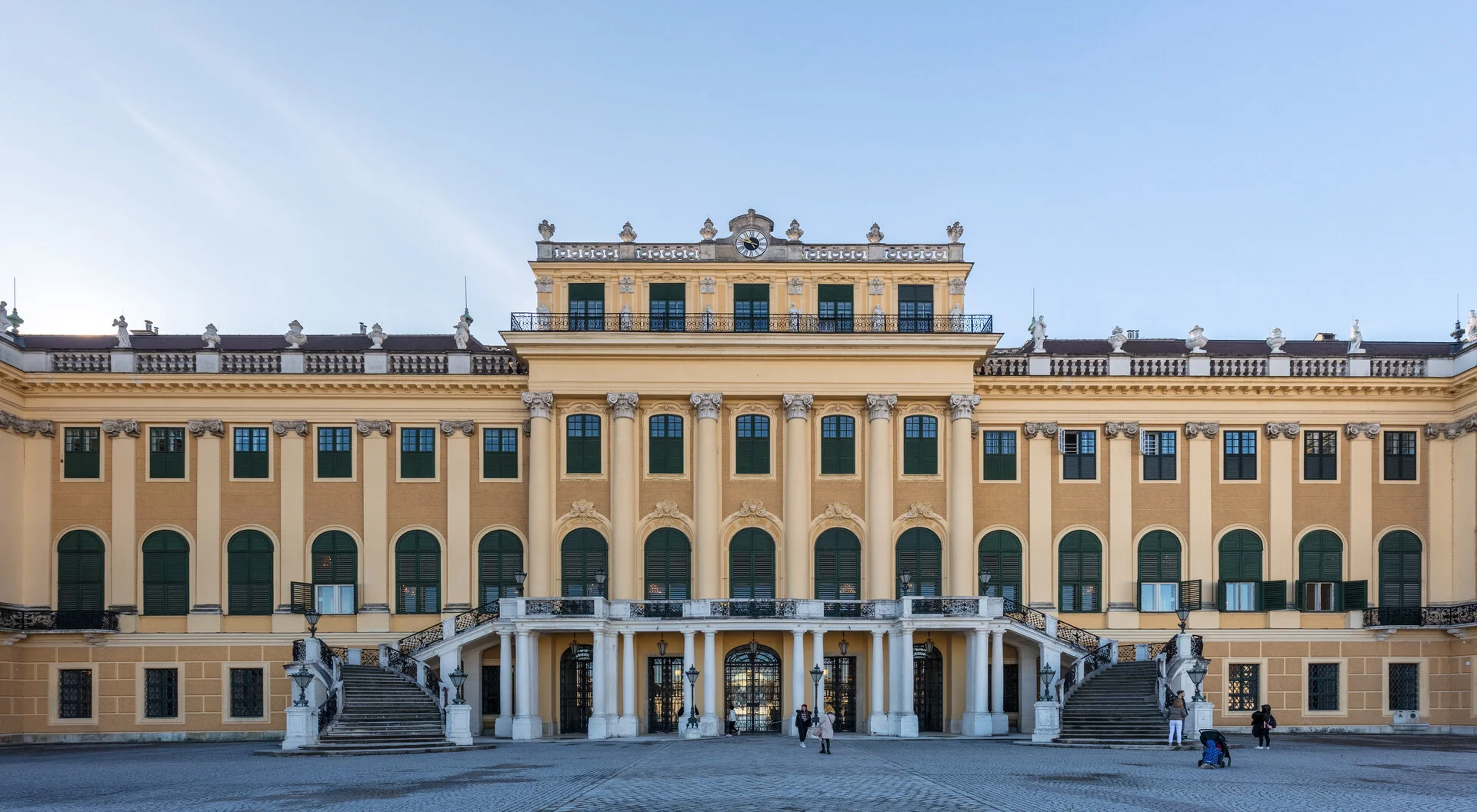
Schonbrunn Palace is Vienna's most visited attraction. Book skip-the-line tickets to avoid queues of 30 to 60 minutes.
Day 1: Schonbrunn Palace, Naschmarkt, and a Danube Cruise
Start your trip with Vienna's crown jewel. Schonbrunn Palace was the Habsburgs' summer residence, with 1,441 rooms (40 are open to visitors) and some of the most opulent interiors in Europe. The gardens alone could fill half a day. We booked a Schonbrunn Palace skip-the-line guided tour, and it was absolutely worth it. The guide brought the Habsburg stories to life in ways the audio guide never could, and we skipped a queue that stretched around the building.
In the afternoon, head to the Naschmarkt, Vienna's most famous open-air market. It stretches for over a kilometre with stalls selling everything from Turkish spices to fresh oysters. Perfect for lunch. In the evening, we took a Danube Canal city cruise to see Vienna from the water. It departs from Schwedenplatz and loops through the canal in about an hour.
Day 2: Hofburg Palace, St. Stephen's, and Coffee Culture
The Hofburg is the Habsburg winter palace and current residence of the Austrian president. The skip-the-line Sisi Museum, Hofburg and Gardens tour takes you through Empress Sisi's personal apartments, the Imperial Silver Collection, and the stunning palace gardens. Budget 2 to 3 hours.
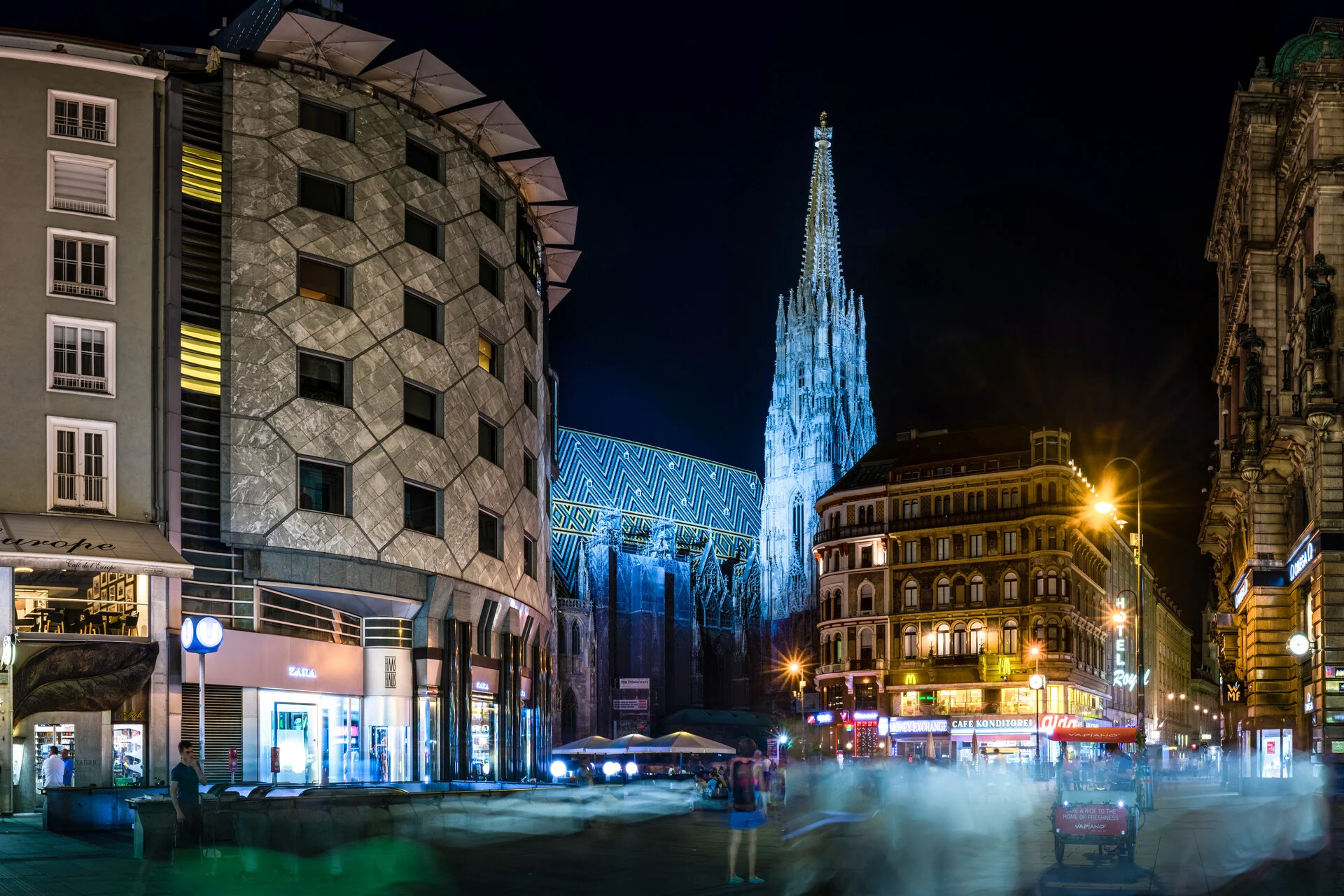
Walk to St. Stephen's Cathedral afterwards (10 minutes on foot). The nave is free to enter, and the Gothic architecture is breathtaking. Pay to climb the South Tower for panoramic city views.
No visit to Vienna is complete without coffee house culture, a UNESCO Intangible Cultural Heritage tradition. We loved Cafe Central (the one Freud and Trotsky frequented) for its grand atmosphere, and Cafe Hawelka for something more bohemian. Order a Melange (Vienna's answer to the cappuccino) with a slice of Sachertorte. If you want a structured introduction, a Vienna food tour with coffee house visit covers the food scene and the coffee house tradition in one go.
If time allows (and it did for us on the morning of Day 3 before our Salzburg train), the Belvedere Palace houses Klimt's famous The Kiss. The Upper Belvedere entry ticket gives you access to the permanent collection.
🏔️ Day Trip from Vienna to Salzburg (Day 3)
The Vienna to Salzburg train takes 2 hours and 22 minutes and costs approximately 30 euros each way when booked in advance on OBB (Austria's national railway). We caught the 7:25am from Wien Hauptbahnhof and were walking through Salzburg's Old Town by 10am. If you prefer a guided experience with transport included, there are also guided day trips to Salzburg from Vienna.
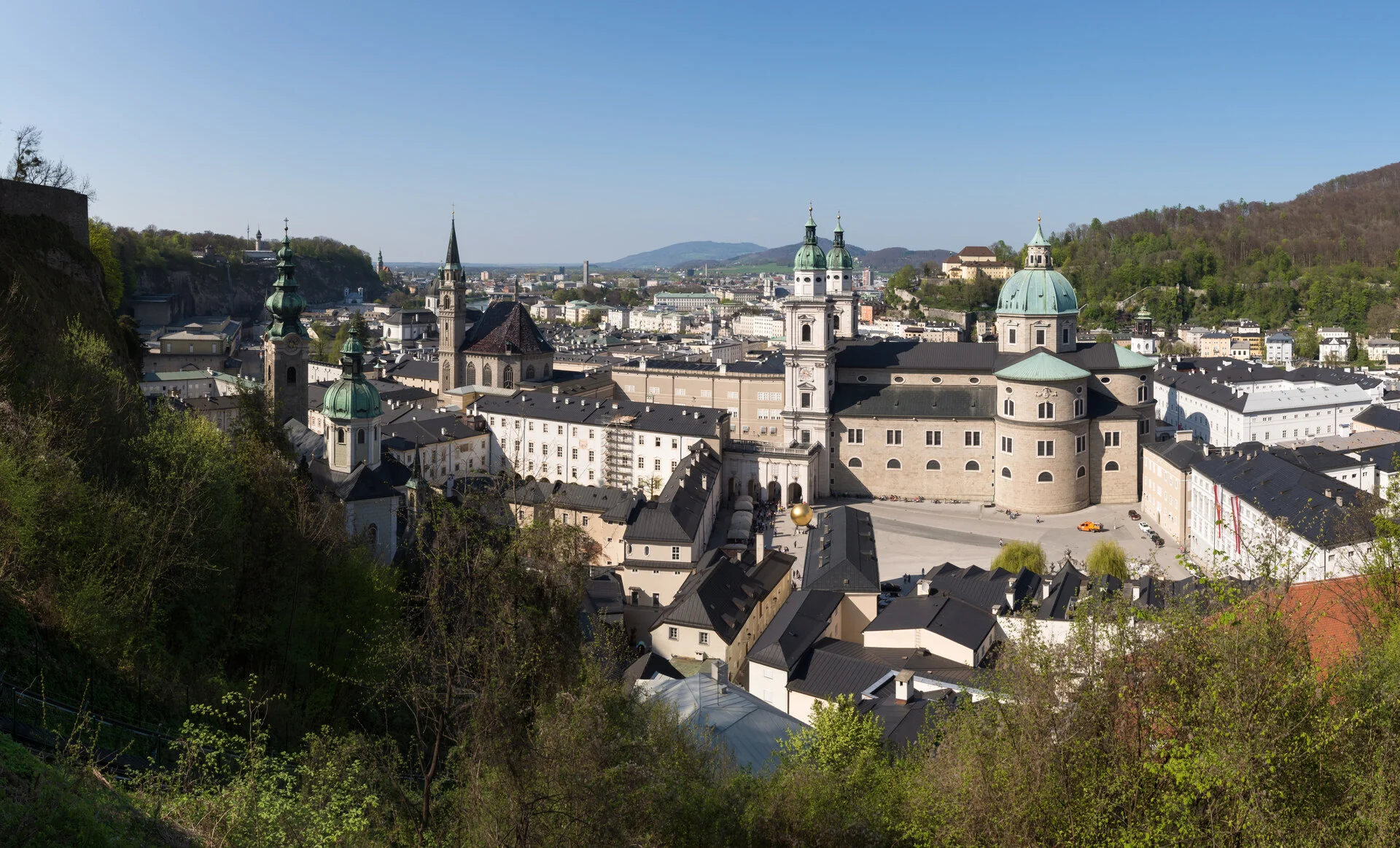
Hohensalzburg Fortress dominates the Salzburg skyline. You can take the funicular up and walk down through the Old Town.
Salzburg is compact and walkable. Start with Hohensalzburg Fortress, the largest fully preserved medieval fortress in Central Europe. Take the funicular up (included with the Hohensalzburg Fortress admission ticket) and walk down through the Old Town on the way back. The views from the top are stunning.
From the fortress, walk down to Getreidegasse 9, Mozart's birthplace. The narrow medieval shopping street is charming in its own right. Continue to Salzburg Cathedral, Mirabell Gardens (a Sound of Music filming location), and stop for lunch at Stiftskeller St. Peter, one of Europe's oldest restaurants.
For Sound of Music fans, the Original Sound of Music tour visits the main filming locations around Salzburg and the surrounding countryside. It is a half-day tour, so it works best if you start early or dedicate a full day to Salzburg.
Our honest take: Salzburg was one of the highlights of our entire trip. The combination of the fortress, the Old Town, and the Alpine backdrop is unlike anything else in Austria. We caught the 6pm train back to Vienna, arriving just after 8pm.
🇸🇰 Day Trip from Vienna to Bratislava (Day 4)
Bratislava is only 1 hour from Vienna by train, making it one of the easiest and cheapest day trips in Central Europe. In fact, Vienna and Bratislava are the two closest capital cities in the world (just 60 km apart). Tickets cost around 12 to 16 euros each way on OBB. You can also opt for a Bratislava day trip from Vienna with local guide that includes transport, a walking tour, and food tastings.
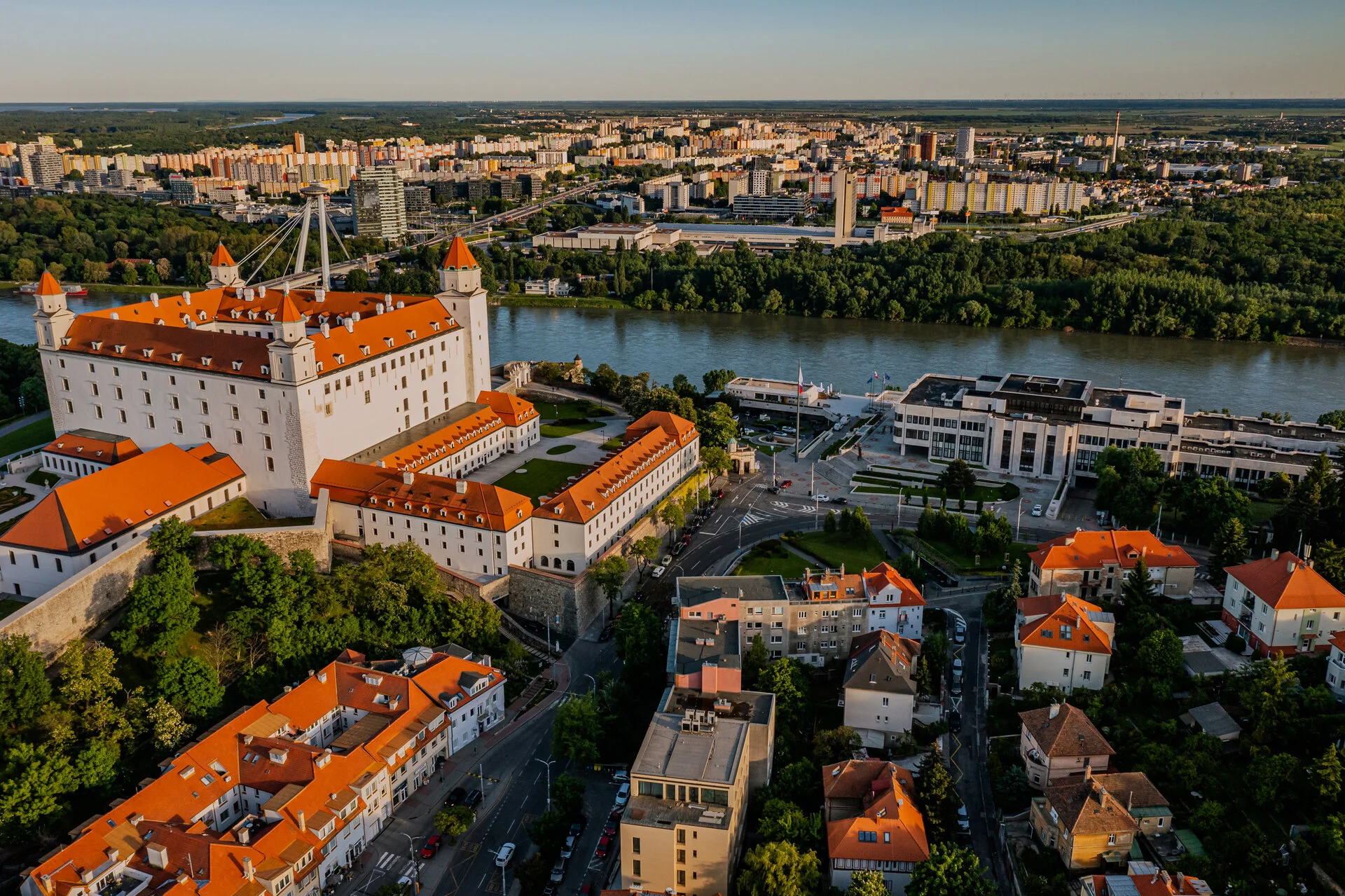
Bratislava Castle offers panoramic views of the Danube and the compact Old Town below.
Bratislava was the charming surprise of our trip. The Old Town is tiny and walkable in under two hours: Michael's Gate, the Main Square, Primate's Palace, and the quirky Cumil statue (a bronze man peeking out of a manhole). Walk uphill to Bratislava Castle for panoramic views over the Danube. The castle itself is modern inside (rebuilt in the 1950s), but the views alone make the climb worthwhile.
For a more in-depth experience, we recommend the Bratislava walking tour with castle entry ticket, which covers the Old Town history and includes priority entry to the castle.
Do not leave without trying bryndzove halusky (potato dumplings with sheep cheese and bacon), Slovakia's national dish. Local craft beer is excellent and costs around 2 to 3 euros per half-litre in the Old Town, significantly cheaper than Vienna.
Our honest take: half a day (4 to 5 hours) is genuinely enough to see Bratislava's highlights. We arrived at 10am and were back in Vienna by 4pm, leaving the evening free for a final Viennese dinner before our train to Budapest the next morning.
♨️ Budapest: 3 Days of Thermal Baths and History (Days 5-7)
The Vienna to Budapest train takes about 2 hours and 30 minutes, with tickets from 20 to 40 euros when booked in advance on OBB. We took the morning departure from Wien Hauptbahnhof and arrived at Budapest Keleti station before noon. Budapest immediately felt different from Vienna: grittier, more energetic, more surprising at every turn.
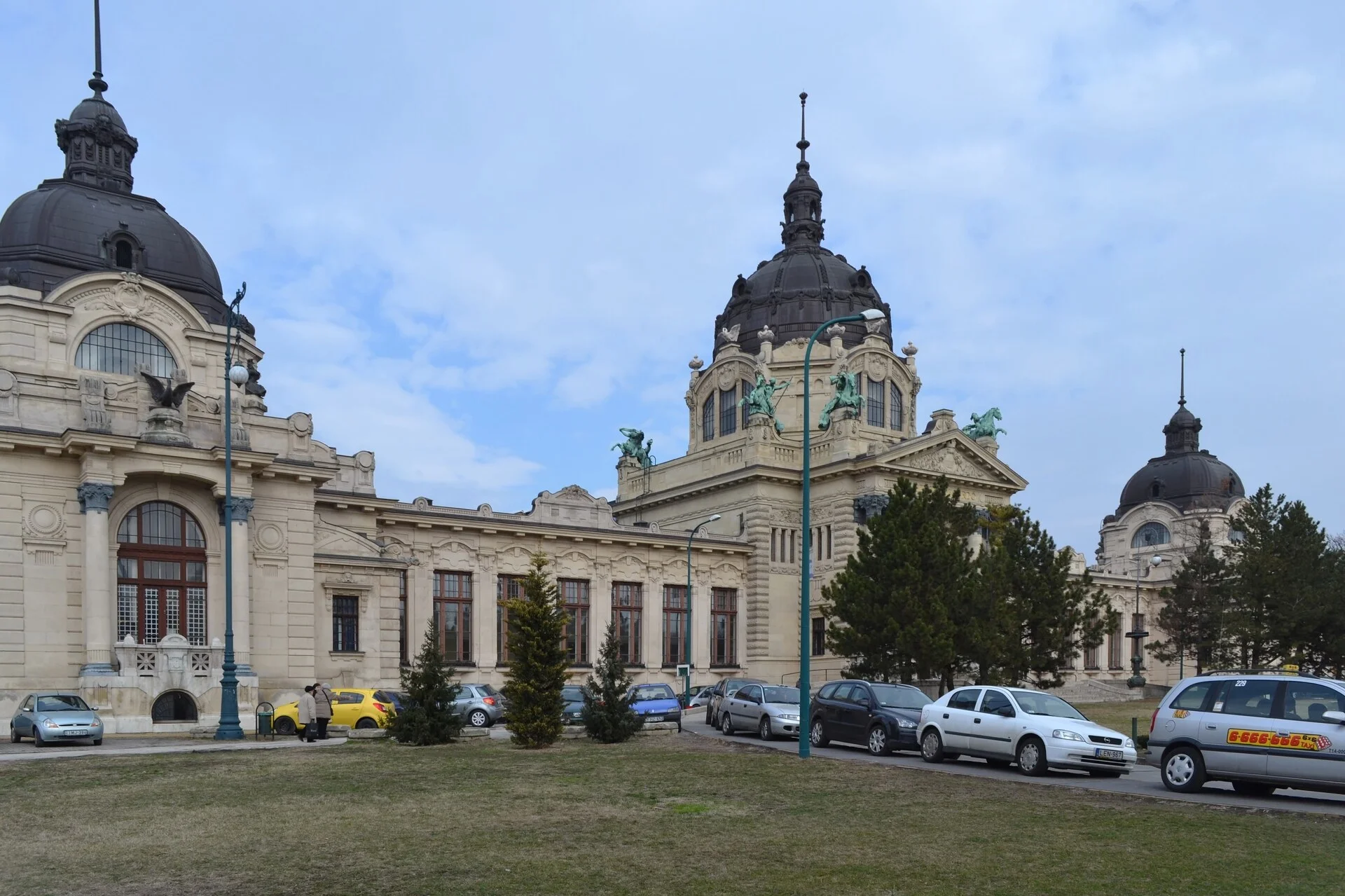
Szechenyi Baths is the largest thermal bath complex in Europe, with 18 pools open year-round.
Day 5: Buda Castle and the Danube at Night
Cross the Danube to the Buda side and spend the morning exploring the Castle District. A Buda Castle District walking tour covers the history of the fortress, Fisherman's Bastion (with its fairy-tale turrets and panoramic views of the Parliament across the river), and Matthias Church. The views from Fisherman's Bastion at golden hour are spectacular.
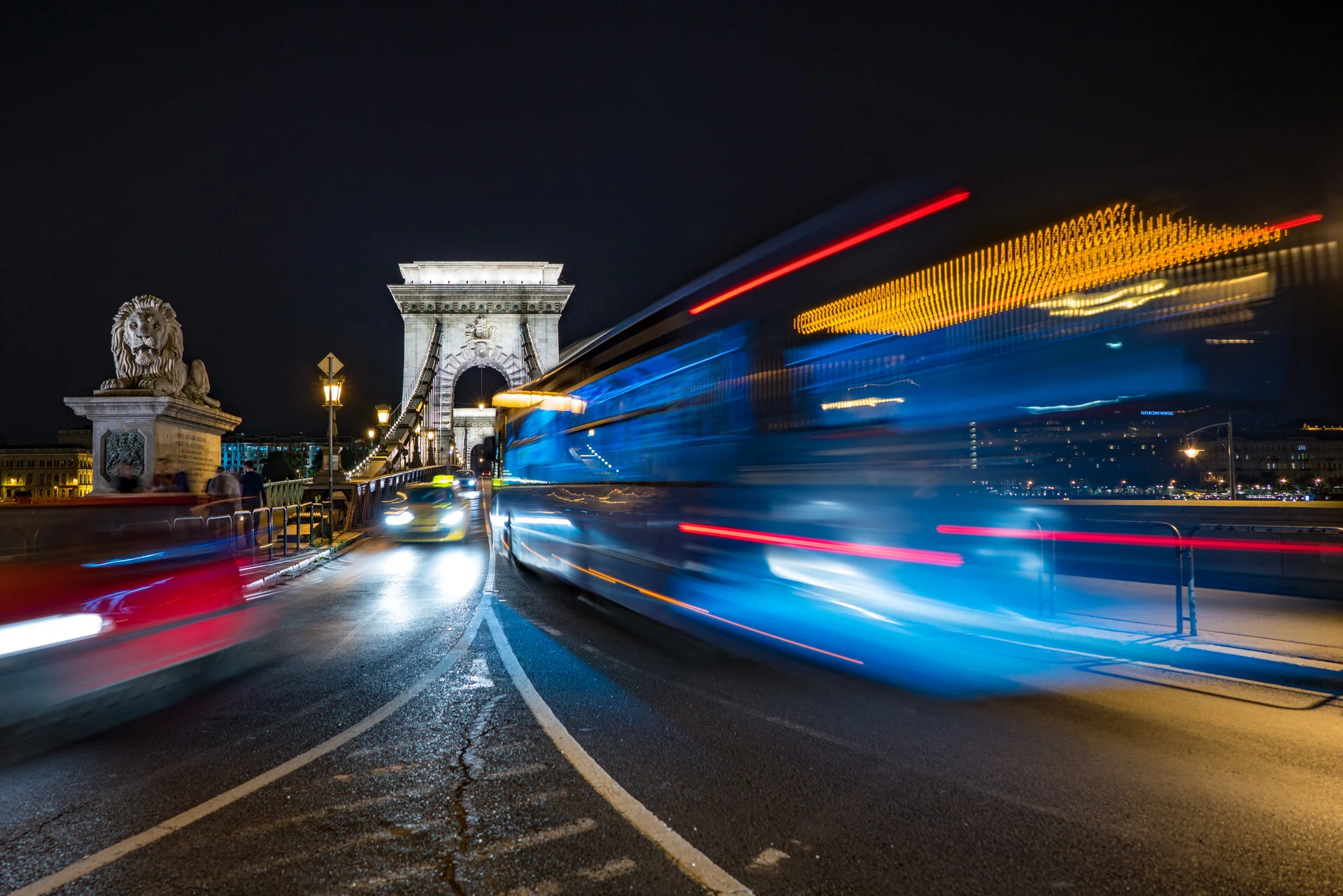
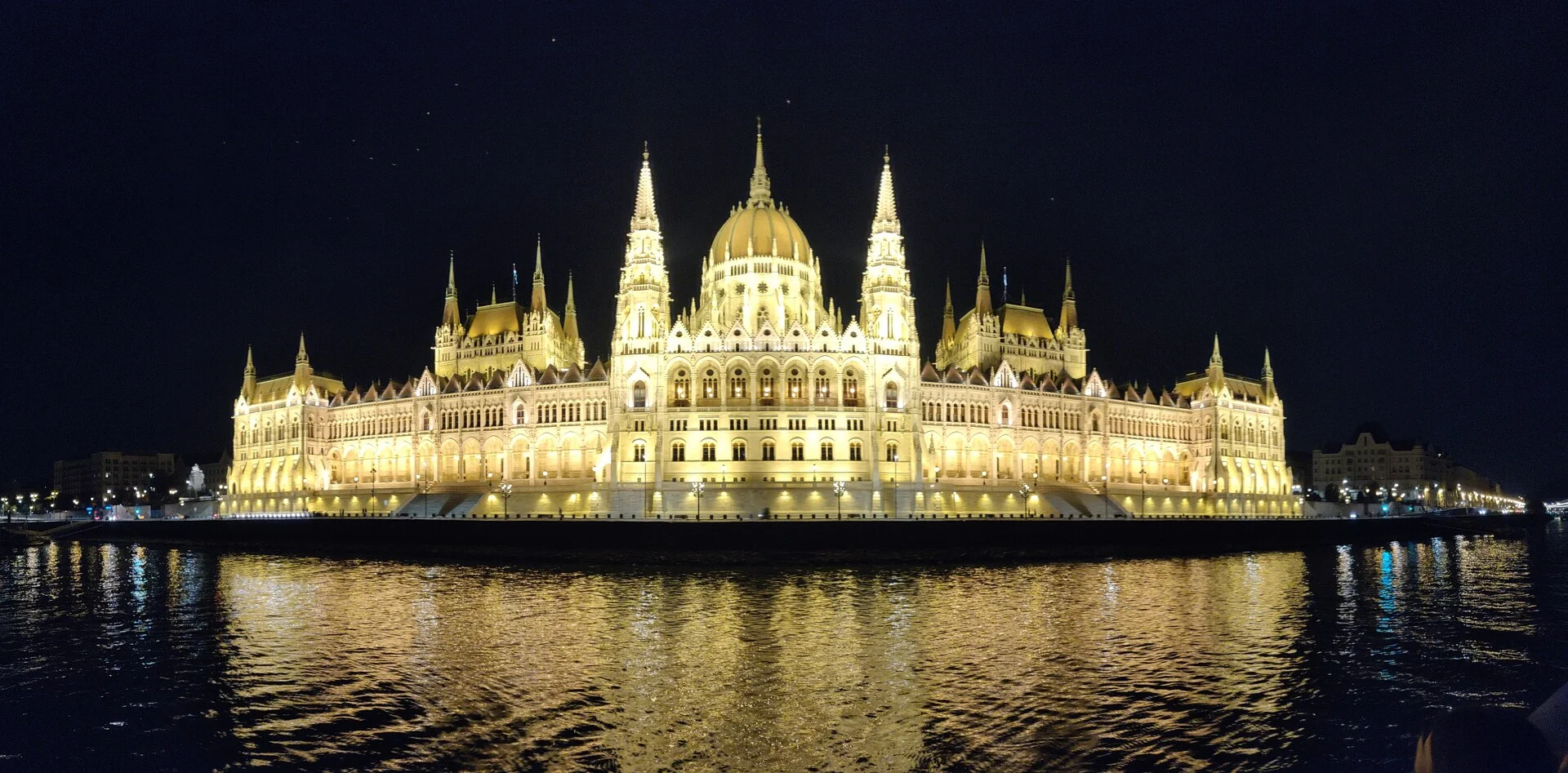
In the evening, book a Danube evening sightseeing cruise. Budapest at night, seen from the water, with the Parliament, Chain Bridge, and Buda Castle all illuminated, is one of the most beautiful urban views in Europe. This is not optional.
Day 6: Parliament, Food, and Ruin Bars
The Hungarian Parliament building is the third largest parliament building in the world, and the interior is even more impressive than the exterior. Book the Parliament entry ticket with audio guide in advance because tours sell out, especially in summer.
After Parliament, walk to the Central Market Hall (Nagy Vasarcsarnok), a stunning neo-Gothic building where you can try langos (deep-fried flatbread), pick up Hungarian paprika, and browse local produce. For a deeper dive into Hungarian food culture, the Budapest food walking tour is a great way to understand why this city punches so far above its weight gastronomically.
In the evening, head to the Jewish Quarter for ruin bars. Szimpla Kert is the original and still the best: a sprawling, eclectic maze of rooms in a former factory. It gets busy after 10pm, so arrive early to grab a good spot.
Day 7: Thermal Baths and a Prosecco Cruise
Budapest's thermal baths are the city's most iconic experience. Szechenyi Baths is the largest and most popular, open year-round with 18 pools including outdoor pools where you can soak in steaming water even in winter. Book a Szechenyi Spa day ticket with skip-the-line entry. Go in the morning (we arrived at 9am) when the pools are quieter. Bring your own towel to save on rental fees.
After the baths, walk through Heroes' Square and City Park (right next to Szechenyi), then take the metro to Gellert Hill for sunset. The view from the Citadella at the top is the best panoramic view in Budapest, better than Fisherman's Bastion because you can see Fisherman's Bastion itself.
Our number one Budapest recommendation: the Unlimited Prosecco, Beer and Aperol Spritz cruise. A friend specifically recommended this one to us, and we are so glad they did. Many "unlimited drink" cruises in Budapest are misleading (slow service, small glasses, fine print), but this one is truly unlimited with excellent staff who keep your glass full the entire time. It was hands down one of the highlights of our entire trip. We booked the evening departure and watched the Budapest skyline light up while sipping prosecco. Do not miss it.
🛏️ Where should you sleep in Budapest? We compare all five districts by traveller type, price, and noise in our full guide to where to stay in Budapest.
🏛️ Prague: 3 Days of Fairy-Tale Architecture (Days 8-10)
The Budapest to Prague train takes about 6 hours and 30 minutes, with tickets from 19 euros when booked early on RegioJet or Czech Railways. It is a long ride but scenic, especially through the Slovak and Czech countryside. We brought snacks, books, and enjoyed the rolling green hills. Prague's main station (Praha hlavni nadrazi) is a 10-minute walk from Old Town.
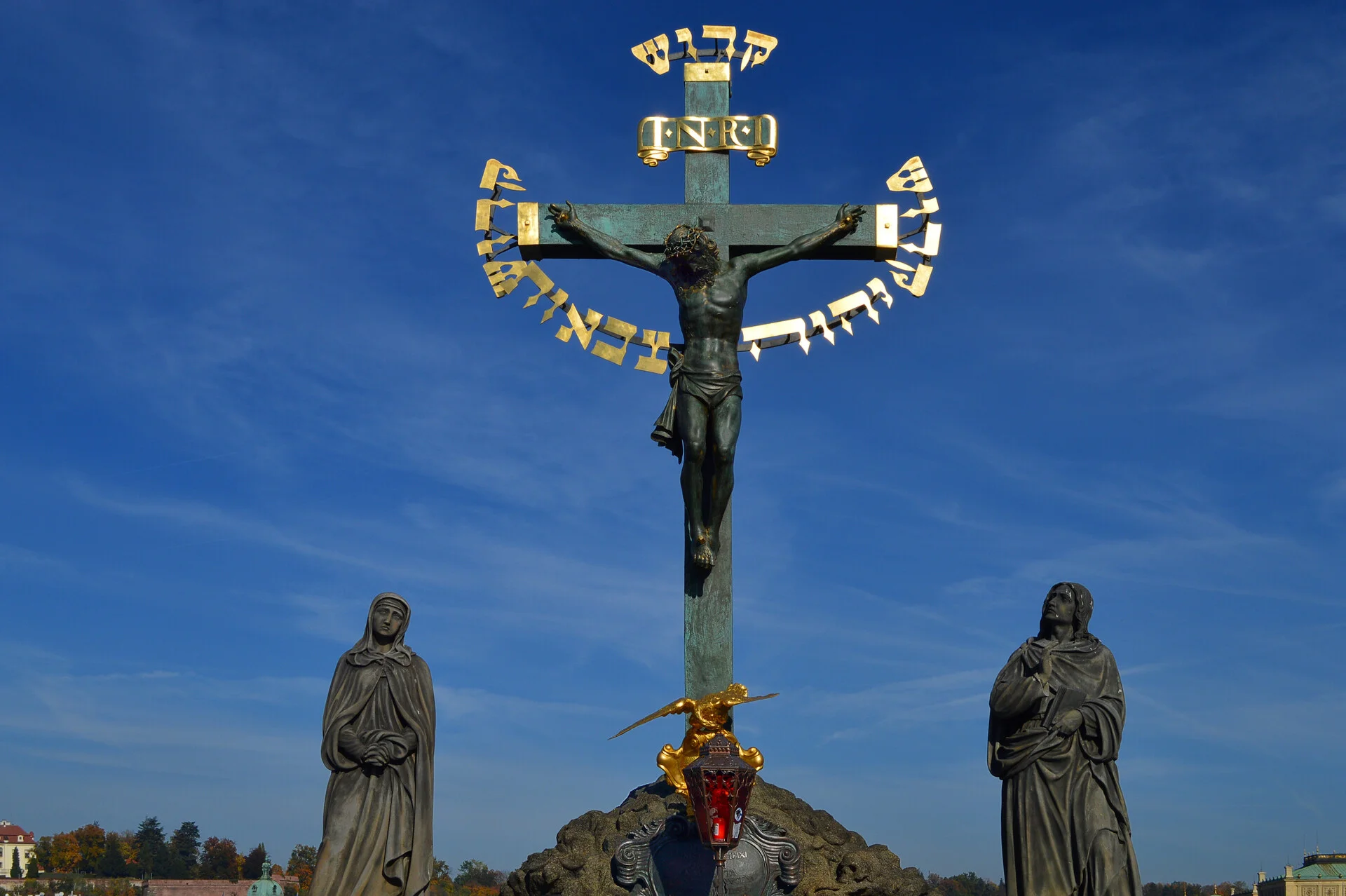
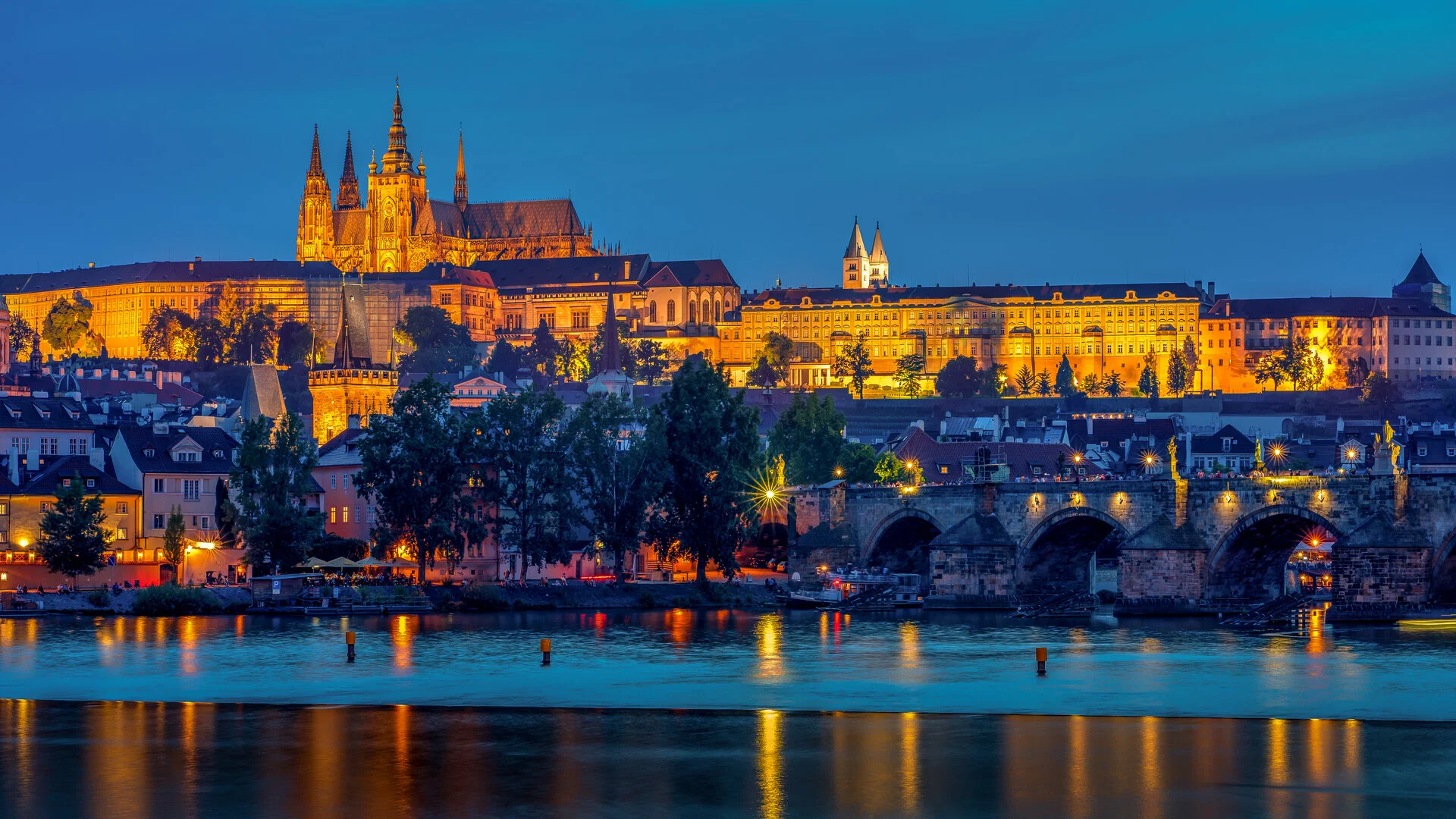
Prague Castle is the largest ancient castle complex in the world, spanning over 7 hectares.
Day 8: Prague Castle and Charles Bridge at Sunset
Prague Castle is the largest ancient castle complex in the world and requires at least 2 to 3 hours to explore properly. The complex includes St. Vitus Cathedral (its stained glass windows are extraordinary), the Old Royal Palace, Golden Lane (a row of tiny, colourful houses where Franz Kafka once lived), and St. George's Basilica. Book a Prague Castle skip-the-line ticket with audio guide to avoid the long queue at the entrance.
After the castle, walk downhill through the Lesser Town (Mala Strana), one of Prague's most beautiful neighbourhoods with Baroque churches and cobblestone streets. Time your walk to reach Charles Bridge around sunset. The bridge is crowded during the day, but in the golden hour light, with Prague Castle glowing in the background, it is pure magic.
Day 9: Old Town, Jewish Quarter, and Czech Beer
Spend the morning in Old Town Square watching the Astronomical Clock (every hour from 9am to 11pm, the mechanical figures perform a brief show) and exploring the surrounding streets. A 3-hour Old Town and Prague Castle walking tour gives you the historical context that makes these buildings come alive.
Walk north to the Jewish Quarter (Josefov) for the Old Jewish Cemetery and the Spanish Synagogue, two of Prague's most moving sites. In the afternoon, lean into Czech beer culture. The Czech Republic invented Pilsner (in the city of Plzen in 1842), and beer here costs 40 to 60 CZK (roughly 1.5 to 2.5 euros) in local pubs. We booked a Czech beer tasting experience where we tried 8 different Czech beers with paired snacks while learning about the brewing tradition. A perfect afternoon.
Day 10: Petrin Hill, Lennon Wall, and Farewell
Take the funicular up Petrin Hill in the morning for a view of the entire city. The Petrin Lookout Tower (a mini Eiffel Tower built in 1891) gives you 360-degree views on a clear day. Walk down through the gardens and stop at the Lennon Wall, a constantly evolving street art tribute near the French Embassy.
If you have time before your departure, cross the river to Vysehrad, a 10th-century fortress with a gorgeous cemetery where Dvorak is buried. Far fewer tourists make it here, and the views of the Vltava River are outstanding. For a final Prague experience, book a panoramic Vltava River cruise to see the city from the water. It is a beautiful way to say goodbye.
🚆 How to Travel Between Vienna, Budapest, and Prague
We took trains for every leg of this trip and have no regrets. Trains in Central Europe are comfortable, scenic, and run from city centre to city centre, eliminating the time and cost of airport transfers. Here is the breakdown for every route:
| Route | Train | Bus | Flight |
|---|---|---|---|
| Vienna → Salzburg | 2h 22min, ~€30 (OBB) | 2h 30min, ~€15 (FlixBus) | Not practical |
| Vienna → Bratislava | 1h, ~€12-16 (OBB) | 1h 15min, ~€5 (FlixBus) | Not practical |
| Vienna → Budapest | 2h 30min, ~€20-40 (OBB) | 2h 45min, ~€15 (FlixBus) | 1h flight + transfers |
| Budapest → Prague | 6h 30min, ~€19-35 (RegioJet) | 6h 30min, ~€15 (FlixBus) | 1h 30min + transfers |
Transport options and approximate costs for Central Europe routes
Transport options and approximate costs for Central Europe routes
Booking tips: For Austrian routes, book OBB SparSchiene (advance purchase) tickets through the OBB website as early as possible. For Budapest to Prague, RegioJet offers significantly cheaper fares than Czech Railways and the trains are newer and more comfortable. FlixBus is the budget option but the time savings over trains are minimal.
For the Bratislava leg, an interesting alternative is the Vienna to Bratislava tour by bus and boat, which takes you there by coach and returns along the Danube by catamaran.
Our recommendation: trains for everything. The scenery between Vienna and Salzburg (Alpine foothills), and between Budapest and Prague (rolling countryside) is genuinely enjoyable. And stepping off a train in the city centre, 5 minutes from your hotel, beats any airport experience.
💰 Budget Breakdown: What We Spent on 10 Days in Central Europe
A 10-day trip through Vienna, Budapest, and Prague costs approximately 1,500 to 2,500 euros per person including accommodation, transport, food, and activities. The range depends heavily on your accommodation standards and how many paid activities you do. Here is a rough per-person breakdown:
| Category | Vienna (4 nights) | Budapest (3 nights) | Prague (3 nights) |
|---|---|---|---|
| Accommodation | €80-120/night | €50-80/night | €60-90/night |
| Food & drink | €40-60/day | €20-35/day | €25-40/day |
| Transport (in-city) | €15/day or city card | €5-10/day or card | €10/day or card |
| Activities & tours | €30-50/day | €20-40/day | €20-35/day |
| Beer (avg. price) | €4-5 | €2-3 | €1.5-2.5 |
Average daily costs per person in each city (mid-range budget, 2026 prices)
Average daily costs per person in each city (mid-range budget, 2026 prices)
Are the City Passes Worth It?
Vienna PASS (€89/1 day, €127/2 days): The Vienna PASS covers 85+ attractions including Schonbrunn, Hofburg, and Belvedere plus hop-on hop-off buses. If you plan to hit 3 or more major attractions per day, it saves money. We used a 2-day pass and saved roughly 40 euros.
Budapest Card (€33/48 hours, €43/72 hours): The Budapest Card includes unlimited public transport and free entry to 30+ attractions. At Budapest's already low prices, you need to be an aggressive sightseer to break even. We found it useful mainly for the transport benefit.
Prague CoolPass (€62/2 days): The Prague CoolPass covers 90+ attractions. Prague's individual ticket prices are low, so the pass only pays off if you visit many paid attractions in a short time. We skipped this one and bought tickets individually.
Currency Quick Reference
Austria and Slovakia use the Euro (€). Hungary uses the Forint (HUF), approximately 390 HUF to 1 EUR. Czech Republic uses the Koruna (CZK), approximately 25 CZK to 1 EUR. Credit cards are widely accepted in all three countries, but carry some cash for smaller shops and markets, especially in Budapest and Prague.
🛡️ Don't Forget Travel Insurance
We never travel without insurance. Heymondo covers medical expenses, trip cancellation, and stolen or damaged electronics, with 24/7 assistance through their app. As one of our readers, you get 5% off your policy.
Get 5% off your travel insurance →If you purchase through our link, we may earn a commission at no extra cost to you. Discount not available for US residents.
🆚 Vienna vs Budapest vs Prague: Which City Is Best?
This is the question everyone asks, and the honest answer is that they are so different it is hard to compare directly. But we will try.
| Category | Vienna | Budapest | Prague |
|---|---|---|---|
| Architecture | Baroque & Imperial | Art Nouveau & Ottoman | Gothic & Romanesque |
| Best for food | Coffee houses, Schnitzel | Goulash, langos, ruin bars | Beer, trdelnik, pub food |
| Nightlife | Classical concerts, wine bars | Ruin bars, thermal parties | Beer halls, pub crawls |
| Budget-friendliness | $$$ | $ | $$ |
| Must-do experience | Schonbrunn Palace | Szechenyi Thermal Baths | Prague Castle + Old Town |
| Best for | Culture lovers | First-time adventurers | Romantic getaways |
| Walkability | Good (spread out) | Good (split by river) | Excellent (very compact) |
Vienna vs Budapest vs Prague: a side-by-side comparison
Vienna vs Budapest vs Prague: a side-by-side comparison
Vienna is best for architecture lovers, classical music fans, and anyone who appreciates refined cafe culture. It feels the most polished and expensive of the three.
Budapest is the best value of the three cities, with hotel rooms averaging 30 to 50 percent less than Vienna. It is the most surprising city: grand and decaying simultaneously, with world-class experiences (thermal baths, Danube cruises, food scene) at very affordable prices.
Prague is the most walkable, with nearly all major attractions within a 30-minute walk of Old Town Square. It has the strongest fairy-tale atmosphere and the cheapest beer in Europe.
If you only have time for one: Budapest, for the sheer variety of experiences at unbeatable prices. But honestly, visiting all three in one trip is one of the best things we have ever done.
Our personal favourite: Budapest won our hearts. The prosecco cruise at sunset, soaking in Szechenyi Baths on a cold morning, wandering through ruin bars at midnight. It felt like a city that had not been fully discovered yet, and we cannot wait to go back.
If you are planning a broader European trip, our 7-day Switzerland itinerary pairs well with this Central Europe route (Vienna to Zurich is just 8 hours by train). You might also enjoy our list of the best things to do in Amsterdam.
Frequently Asked Questions
How many days do you need for Vienna, Budapest, and Prague?
We recommend 10 days total: 4 days in Vienna (including day trips to Salzburg and Bratislava), 3 days in Budapest, and 3 days in Prague. This gives you enough time to see the major attractions in each city without rushing. If you are short on time, 7 days is doable but you will need to skip the day trips from Vienna.
What is the best order to visit Vienna, Budapest, and Prague?
Start in Vienna to take advantage of easy day trips to Salzburg (2 hours 22 minutes by train) and Bratislava (1 hour by train). Then take the train to Budapest (2 hours 30 minutes), and finish in Prague. This route follows a logical geographic path from west to east and avoids backtracking.
How much does a 10-day Central Europe trip cost?
Budget approximately 1,500 to 2,500 euros per person for 10 days, including accommodation, transport, food, and activities. Budapest is the most affordable of the three cities, where meals average 8 to 12 euros. Vienna is the most expensive, with comparable meals costing 15 to 25 euros. Prague falls in the middle.
Is it better to take the train or fly between Vienna, Budapest, and Prague?
Trains are the best option. Vienna to Budapest takes 2 hours 30 minutes, and Budapest to Prague takes about 6 hours 30 minutes. Trains depart from city centre to city centre, eliminating airport transfers. Book through OBB for Austrian routes and RegioJet for the Budapest to Prague leg.
Are skip-the-line tickets worth it in Central Europe?
Absolutely. Schonbrunn Palace in Vienna, the Hungarian Parliament in Budapest, and Prague Castle all have significant queues, especially from May through September. Skip-the-line tickets save 30 to 60 minutes at each attraction and often include guided tours or audio guides.
What is the best time to visit Vienna, Budapest, and Prague?
May to June and September to October offer the best balance of pleasant weather, manageable crowds, and reasonable prices. July and August are peak tourist season. December is magical for Christmas markets across all three cities but expect cold temperatures.
Is the Vienna PASS worth buying?
It depends on your pace. The Vienna PASS covers 85+ attractions including Schonbrunn Palace, the Hofburg, and Belvedere Palace plus hop-on hop-off buses. If you plan to visit 3 or more major attractions per day, the pass pays for itself. For a more relaxed pace, buying individual skip-the-line tickets is more economical.