
Best Things to Do in Amsterdam: Activities & Tours (2026)
This article contains affiliate links. If you make a purchase through these links, we may earn a small commission at no extra cost to you. This helps us keep creating free content for you!
Amsterdam draws more than 20 million visitors a year to a city of fewer than 1 million residents. That single number should tell you everything about how to plan your visit: the experiences that matter most sell out fast, some weeks or months before you arrive. The Anne Frank House, for example, has had no walk-in access since 2018. If you show up without a ticket, you will not get in. Full stop.
The good news is that Amsterdam rewards smart planning generously. Pre-book the right things in the right order, and you get one of Europe's most beautiful, human-scale cities almost to yourself in the early mornings, on its quieter canals, and in its extraordinary neighbourhoods. This guide covers the best things to do in Amsterdam across six categories: museums and pre-booking, canal boat tours, day trips, food and culture, city tours, and evening experiences. We've done the research so you don't have to scramble.
Whether you're planning a long weekend or a full week, this is the guide we wish we'd had. And if you're building a bigger European trip around Amsterdam, our guide to skip-the-line tickets across Europe covers the practicalities of booking fast-track access at the continent's most popular attractions.
🎨 Museum Tickets: Pre-Book Before You Arrive
Amsterdam has three world-class museums that require advance booking, and one that has no walk-in option at all. Getting this right is the single most important thing you can do to protect your itinerary.
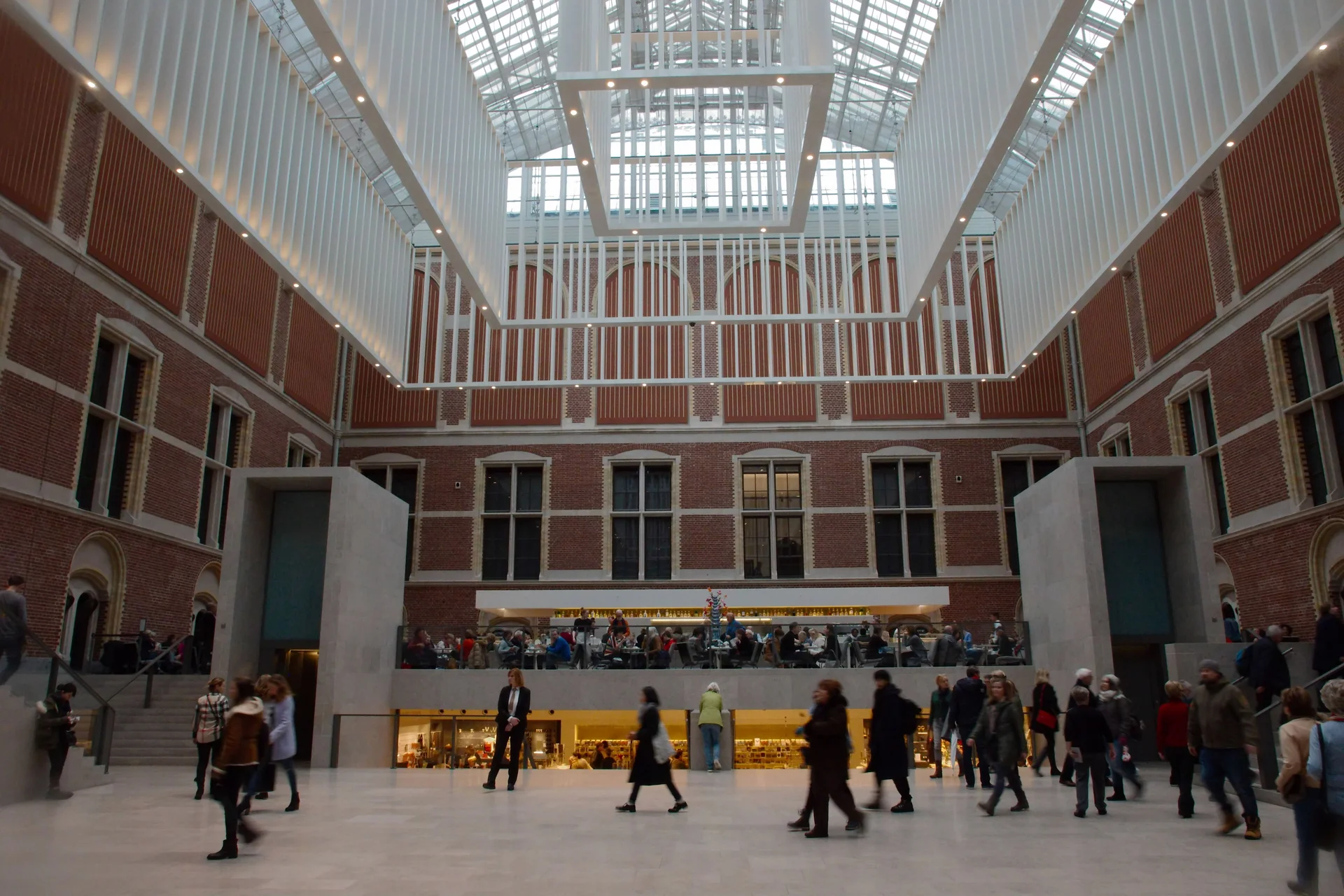
The Rijksmuseum is one of Europe's great art museums. Book timed-entry tickets in advance to skip the walk-up queue.
Anne Frank House
The Anne Frank House is the most emotionally significant museum in the Netherlands and one of the most important in Europe. Walking through the actual secret annex where Anne Frank, her family, and four others hid from the Nazis for more than two years is a profoundly moving experience. The visit takes 60 to 90 minutes.
There is no walk-in option. The museum moved to online-only ticketing in 2018. Tickets are released every Tuesday at 10am CET for visits exactly six weeks later, and peak-season dates sell out within minutes of release. You cannot simply book ahead whenever you like — you need to be online on the right Tuesday, at 10am sharp. Book through the official Anne Frank House website. Some guided tour operators include guaranteed entry slots as part of their packages, which can be useful if you missed the official release window.
Anne Frank House guided tours with guaranteed entry are worth considering if official tickets are already sold out. Always verify the specific ticket type and entry method before purchasing.
Rijksmuseum
The Rijksmuseum is the Netherlands' national museum and one of Europe's greatest art institutions. Its collection of Dutch Golden Age paintings includes Rembrandt's The Night Watch (Rembrandt's largest canvas, painted in 1642) and Vermeer's The Milkmaid. The building itself, a grand neo-Gothic structure designed by Pierre Cuypers, is worth seeing even before you step inside.
The museum uses a timed-entry system. Buying tickets online avoids the walk-up queue, which can reach 45 to 90 minutes during peak season (April through August). A guided tour adds significant context, especially for navigating the Dutch Masters rooms efficiently. The museum's audio guide app is a solid self-guided alternative.
Rijksmuseum guided tours with timed-entry tickets typically run 2 hours and include a knowledgeable local guide who brings the paintings to life far better than any label.
Van Gogh Museum
The Van Gogh Museum holds the world's largest collection of Van Gogh's work: more than 200 paintings, 500 drawings, and 700 personal letters. It tells the story of his life chronologically across four floors, making it an unusually coherent and moving experience compared to most art museums. It consistently ranks among the most visited museums in the world.
Timed-entry tickets are mandatory. Walk-up queues regularly reach 60 minutes or more in summer. The museum recommends booking at least 2 weeks ahead in shoulder season and as far in advance as possible in summer. Mornings (when the museum opens) and late afternoons tend to be slightly less crowded than midday.
Van Gogh Museum timed-entry tickets and guided tours are available through several operators, with some including expert guides who provide context beyond the museum's signage.
Other Museums Worth Visiting
The Stedelijk Museum (contemporary art and design) and the Amsterdam Museum are significantly less crowded than the big three and usually available on the day. The Royal Palace on Dam Square is an underrated gem (its interior is surprisingly grand) and tickets are far easier to obtain. The Jewish Historical Museum and the Dutch Resistance Museum are both excellent and rarely overcrowded.
If you're planning to visit four or more museums in 2 to 3 days, the I amsterdam City Card bundles entry to more than 70 museums (including the Rijksmuseum and Stedelijk Museum) with unlimited public transport and one free canal cruise. Note: the Van Gogh Museum left the City Card programme in June 2022 and now requires a separate ticket. It does not include the Anne Frank House, which must always be booked separately.
🚤 Canal Boat Tours: Amsterdam From the Water
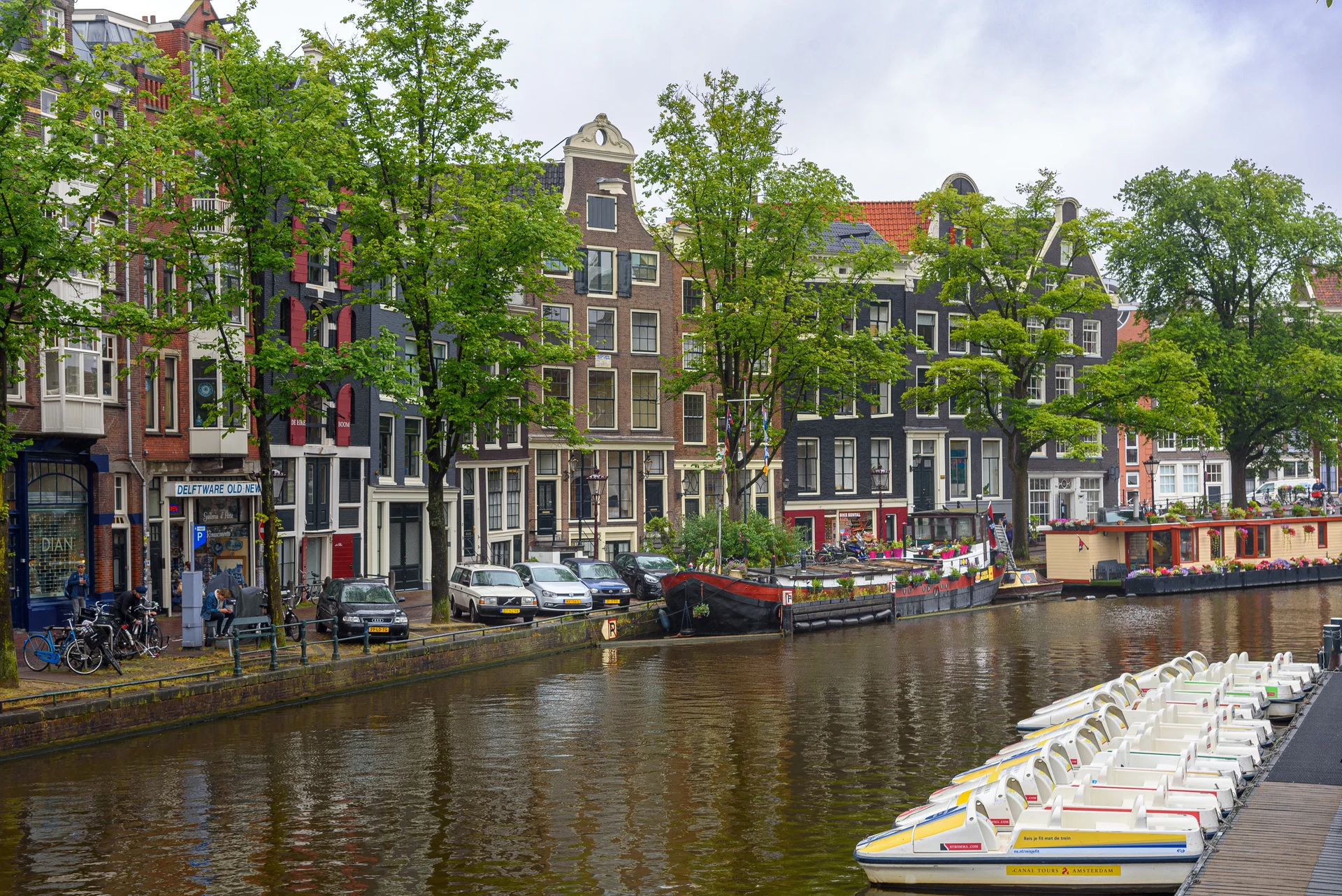
Amsterdam's canal ring is a UNESCO World Heritage Site, and the best way to understand why is from the water. Walking beside the canals is lovely. Floating through them, looking up at the gabled merchant houses built in the 17th century, is something else entirely. A canal tour should be near the top of every Amsterdam itinerary.
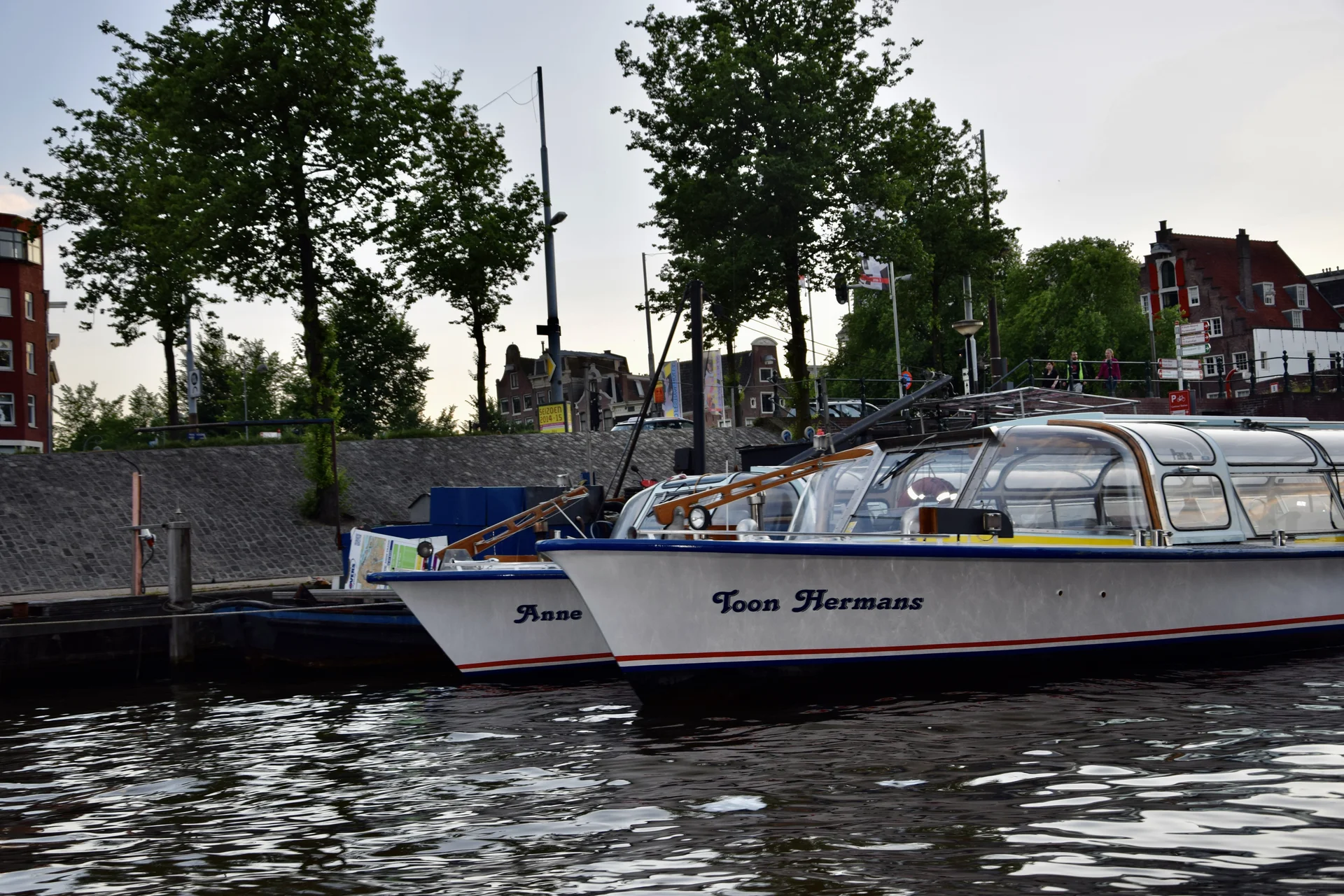
A canal cruise is the best way to understand Amsterdam's UNESCO-listed canal ring.
Classic Canal Cruise
The classic 1-hour canal cruise is Amsterdam's most popular tourist experience, and for good reason. Boats depart frequently throughout the day from several points near Centraal Station, Rembrandtplein, and Leidseplein. Most are glass-roofed for year-round use, with audio commentary in multiple languages. It is a comfortable, relaxed introduction to the city's history and layout.
Classic Amsterdam canal cruises with commentary are available throughout the day. Book a morning slot for softer light and fewer crowds on the water.
Hop-On Hop-Off Canal Boat
The hop-on hop-off canal boat is part city tour, part practical transport. It stops near the major museums, the Jordaan, and Rembrandtplein, so you can use it to get between sights while also seeing the city from the water. A day pass makes sense if you have a full day and don't want to think about navigation.
Evening Dinner Canal Cruise
If you're visiting Amsterdam as a couple, the evening dinner canal cruise is one of the most memorable experiences in the city. The canals are lit at dusk, the boat is small and intimate, and it's a genuinely different way to spend an evening compared to a restaurant. Most cruises run 2 to 2.5 hours with a set menu. Book at least 2 to 3 days in advance.
Amsterdam evening dinner canal cruises range from casual dining boats to more formal set-menu experiences. Read recent reviews to confirm what's currently included.
Private Boat Rental
For small groups (typically 4 to 8 people), renting a private open boat is the most social and independent way to experience the canals. You navigate yourself (no licence required for most small electric boats), pick your own route, and stop wherever you like. It's wildly popular in summer. Book several days ahead for peak season slots.
Private canal boat rentals in Amsterdam are a great option for groups who want flexibility over a guided experience.
Top-Rated Activities in Amsterdam
🌷 Day Trips From Amsterdam: Windmills, Tulips & Historic Cities
Amsterdam is one of Europe's best-positioned day-trip hubs. Most of the Netherlands' highlights are within 30 to 60 minutes by train or coach, which means you can fit a genuinely excellent day trip into any 3 or 4-day visit without it feeling rushed. Here are the best options, organised by what they offer.
Keukenhof's tulip fields are open mid-March to mid-May only. Book ahead, as tickets sell out.
| Destination | Travel Time | Best For | Book Ahead? |
|---|---|---|---|
| Keukenhof | 45–60 min (coach) | Tulip fields (seasonal, Mar–May only) | Yes, tickets sell out |
| Zaanse Schans | 15–20 min (train/coach) | Working windmills, year-round | Recommended |
| Volendam & Marken | 30–40 min (coach) | Traditional Dutch villages | Optional |
| Delft & The Hague | 45–60 min (train) | History, Delft Blue pottery, North Sea | Optional |
| Rotterdam | 40–50 min (train) | Modern architecture, vibrant food scene | Not needed |
| Haarlem | 15 min (train) | Charming canals, relaxed pace | Not needed |
| Kinderdijk | 1.5 hrs (tour or train+ferry) | UNESCO windmill landscape | Recommended |
Day trip options from Amsterdam at a glance
Day trip options from Amsterdam at a glance
Keukenhof Tulip Gardens (Mid-March to Mid-May Only)
Keukenhof is the world's largest flower garden: 32 hectares of tulips, daffodils, hyacinths, and other bulb flowers planted in 7 million individual bulbs each year. It is open for roughly 8 weeks in spring and it is genuinely one of the most spectacular natural sights in Europe during that window. Outside of those 8 weeks, the garden is closed.
Tickets sell out regularly during peak bloom (usually the last week of March through the second week of April). Book in advance. A guided day trip from Amsterdam is the easiest option as it handles transport and includes entry.
Keukenhof tulip gardens day trips from Amsterdam typically include coach transport and entry and are the most hassle-free way to visit.
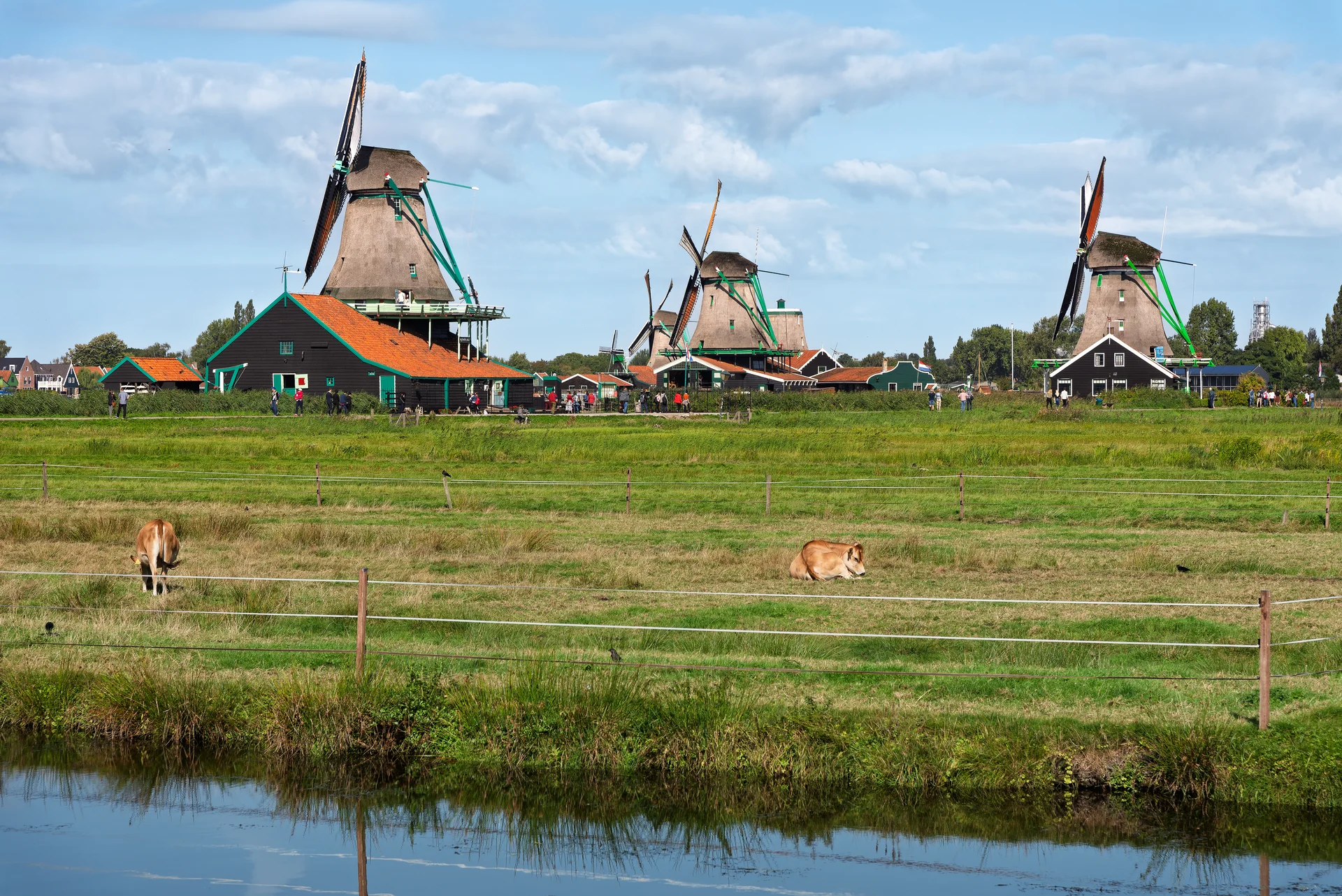
Zaanse Schans Windmills
Zaanse Schans is a living open-air museum of working 17th and 18th-century windmills about 17 minutes from Amsterdam Centraal by train, then a 15-minute walk or a short bus ride to the site. Eight windmills are on site, and you can climb inside some of them, watch traditional craftspeople making Gouda cheese and wooden clogs, and walk along the River Zaan with barely a tourist bus in sight if you arrive early. It is the most accessible windmill experience in the Netherlands and the best one for a half-day visit.
Zaanse Schans windmills guided tours from Amsterdam often combine the windmills with cheese and clog workshops, making for a fuller morning.
Volendam & Marken
Volendam is a traditional Dutch fishing village with colourful harbour houses and a strong sense of history. Marken, a small island connected to the mainland by a causeway, has well-preserved wooden houses in traditional Dutch style. The two are typically combined in a single day trip, often with a short ferry crossing between them. It is a more touristic experience than Zaanse Schans but genuinely picturesque.
Volendam and Marken day tours from Amsterdam often include Zaanse Schans or other windmill sites for a full Dutch countryside day.
Delft & The Hague
Delft is one of the most beautiful small cities in the Netherlands: a compact historic centre with canals, a Gothic church, and the home of the famous Delft Blue pottery tradition. Johannes Vermeer was born here. The city is usually much quieter than Amsterdam and completely walkable. Combining it with The Hague (40 minutes south of Amsterdam by train) adds the North Sea coast, world-class museums, and Dutch political history to your day.
Delft and The Hague guided day trips from Amsterdam are an excellent option if you want context and local insight.
Kinderdijk UNESCO Windmills
Kinderdijk is a UNESCO World Heritage Site with 19 historic windmills in a single landscape, the largest concentration of old windmills in the Netherlands. It is more scenic and photogenic than Zaanse Schans but harder to reach independently (it requires a combination of train, metro, and ferry). A guided tour from Amsterdam is the easiest way to visit.
Kinderdijk UNESCO windmills tours from Amsterdam typically combine the windmill landscape with a boat tour of the polder water system.
Where to Stay in Amsterdam
Book through this map and you help support our travels, at no extra cost to you. We earn a small commission, and it means a lot.
🧀 Food, Drink & Dutch Culture Experiences
Dutch food culture is more interesting than its reputation suggests, and Amsterdam's food scene has evolved dramatically in the last decade. The city's market culture, its Indonesian culinary heritage (from centuries of trade), and its genuinely world-class cheese and craft spirits scene are all worth exploring.
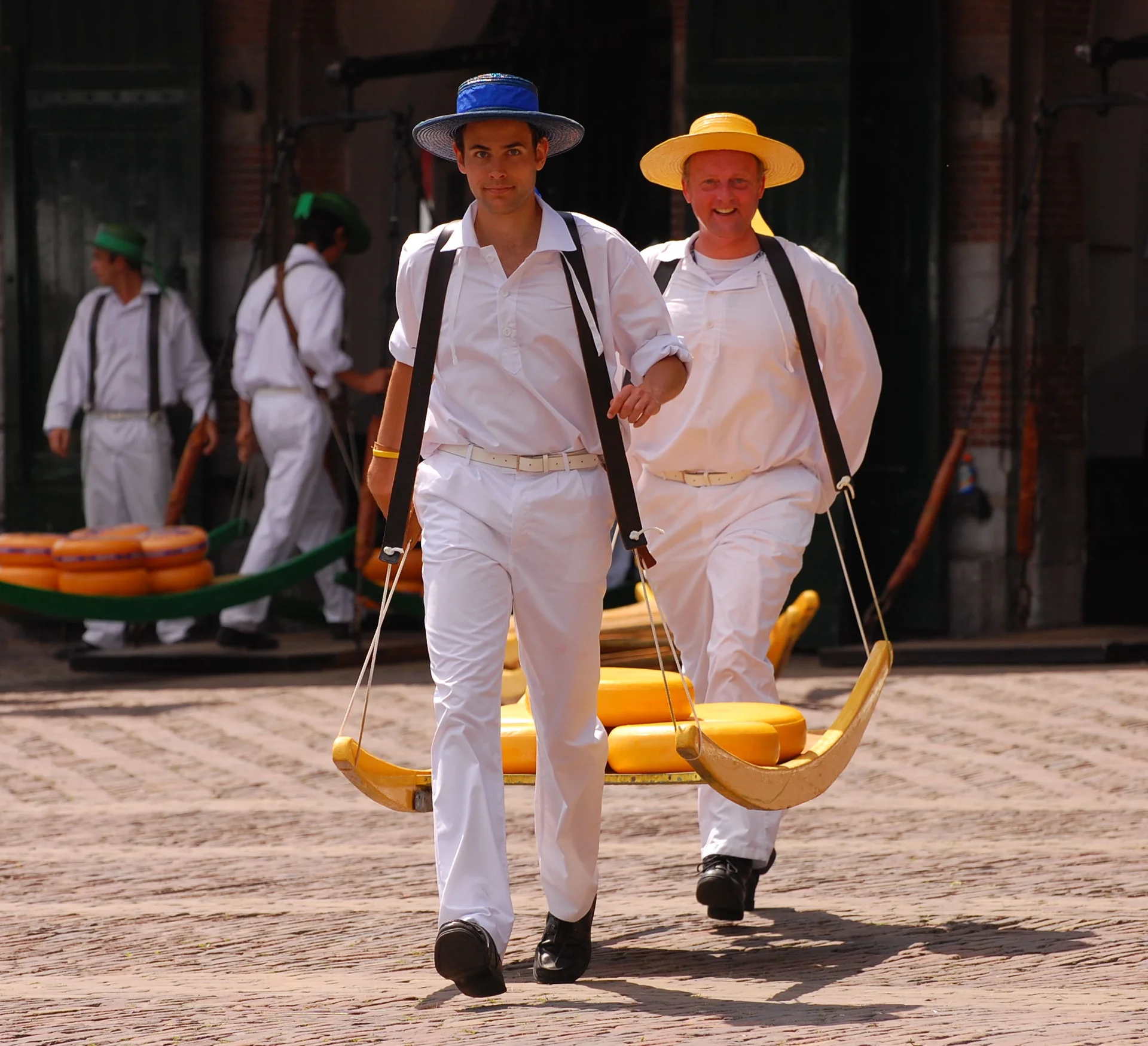
Aged Gouda, fresh stroopwafels, and raw herring are the Dutch food experiences worth seeking out in Amsterdam.
Dutch Foods to Try
Before you plan your food experiences, know what to eat. Stroopwafels fresh off a market waffle iron (not packaged from a supermarket) are completely different and worth seeking out. Raw herring (haringbroodje) with onions and pickles is the original Dutch fast food and tastes far better than it sounds. Bitterballen (deep-fried crispy balls of beef ragout) are the classic Dutch bar snack. Poffertjes (miniature pancakes served with butter and icing sugar) are a Dutch street staple. Aged Gouda from a specialist cheese shop, rather than the young rubbery stuff sold to tourists, is a revelation.
Amsterdam Food Tours
A guided food tour is the most efficient way to experience multiple Amsterdam neighbourhoods and their local food scenes in a single morning or afternoon. The best tours combine the Jordaan, De Pijp's Albert Cuyp Market, and the old city centre, covering Dutch classics alongside Indonesian rijsttafel, Surinamese roti, and international street food that reflects the city's multicultural history.
Amsterdam food and neighbourhood walking tours typically run 3 hours and cover 6 to 10 stops. Check the itinerary carefully to see which neighbourhoods are included.
Heineken Experience
The Heineken Experience is less a beer education and more a high-production brand museum inside the 1867 brewery building that served as Heineken's main Amsterdam production site. There are interactive exhibits, a virtual reality rollercoaster experience, and beer tastings at the end. It's fun rather than serious, and genuinely popular. Worth visiting with the right expectations: it's entertainment, not craft beer culture. Book in advance as popular time slots sell out on busy days.
Heineken Experience Amsterdam tickets with priority entry often include skip-the-walk-up-queue access, which is useful on busy weekends.
Jenever (Dutch Gin) Tasting
Jenever is the Dutch spirit that gave birth to gin. It is older, maltier, and more complex than modern gin, and tasting the progression from young (jonge) to aged (oude) jenever at a traditional proeflokal (tasting house) is a wonderful and very Dutch experience. Wynand Fockink, tucked in an alley near Dam Square and operating since 1679, is the most atmospheric option in the city. A. van Wees distillery in the Jordaan is another excellent choice.
Amsterdam Dutch spirits and jenever tasting experiences sometimes combine jenever with Dutch cheese, which is an excellent pairing.
🏘️ City Tours & Neighbourhoods Worth Exploring
Amsterdam's neighbourhoods each have a distinct personality, and the best way to discover them is on foot or by bike. A guided tour is invaluable on a first visit for context and stories. After that, wandering independently is the real reward.
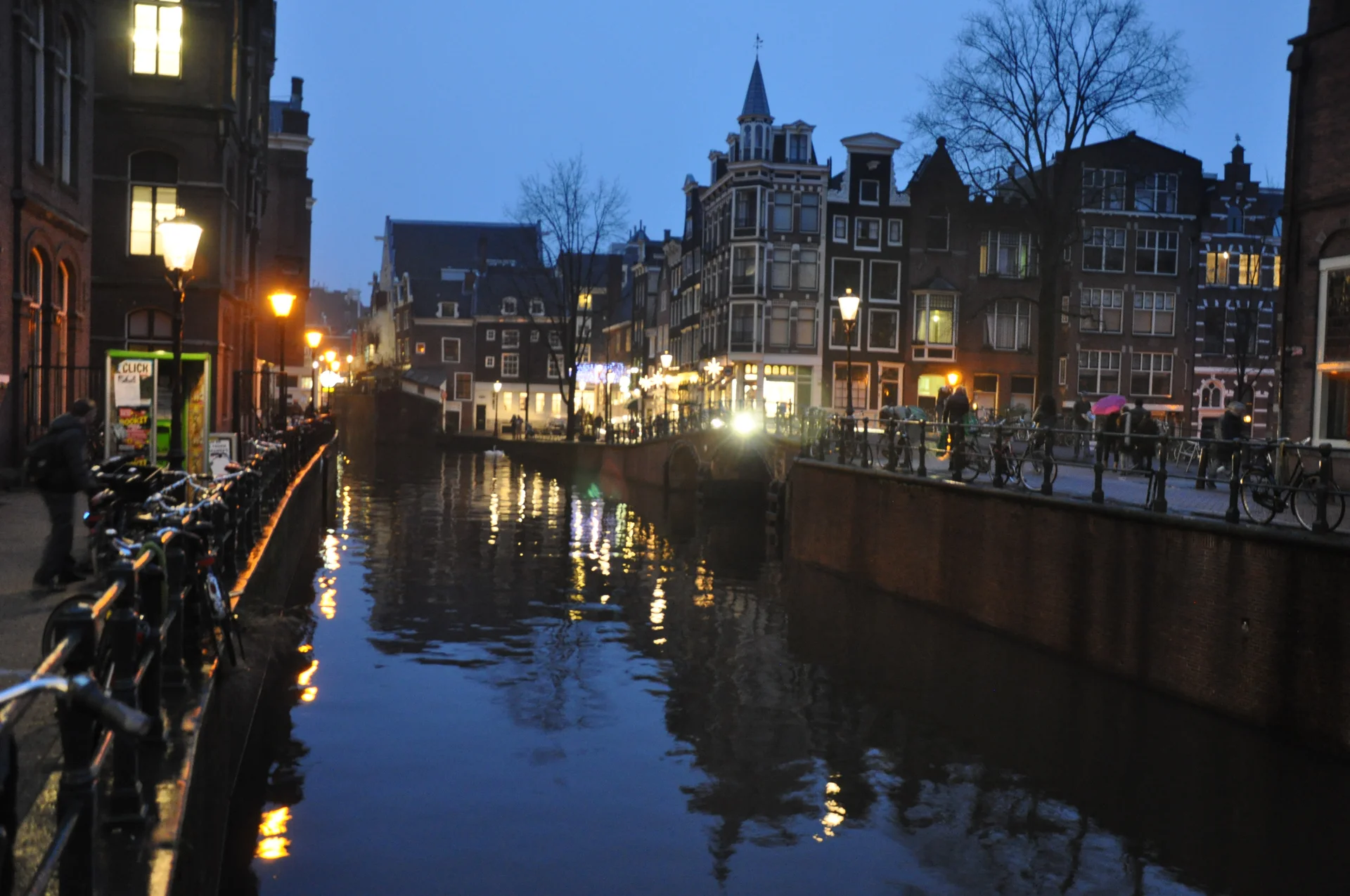
The Jordaan is Amsterdam's most photogenic neighbourhood, with narrow canals, independent boutiques, and brown cafes.
The Jordaan
The Jordaan is Amsterdam's most photogenic neighbourhood and the one most visitors want to explore. Built in the 17th century as a working-class district, it is now home to independent galleries, boutique shops, brown cafes (bruine kroegen, the traditional Dutch pub), and some of the prettiest canals in the city. It is especially beautiful in the morning before the tourists arrive, and in the evening when the canal lights reflect on the water.
De 9 Straatjes (The Nine Streets)
Nine narrow streets connect the main Amsterdam canals between the Jordaan and the city centre. They're lined with vintage shops, specialist bookstores, artisan cheese shops, and independent cafes. It is one of the best areas in the city for browsing without purpose. No booking required.
De Pijp
De Pijp is Amsterdam's most multicultural neighbourhood, home to the Albert Cuyp Market (the largest outdoor market in the Netherlands, open Monday to Saturday), a thriving cafe culture, and some of the city's best independent restaurants. It is where many Amsterdam residents actually live and eat. It is lively, messy in a good way, and completely free to explore.
Guided City Tours
A walking tour on your first morning in Amsterdam is one of the best investments you can make. A knowledgeable local guide covers history, architecture, neighbourhood dynamics, and practical city tips in 2 to 3 hours and sets you up for the rest of your visit. Bike tours cover significantly more ground and let you experience Amsterdam the way residents do.
Amsterdam city highlights guided walking tours run most mornings and are a great way to start any visit. Amsterdam bike tours through the Jordaan and city centre cover the Jordaan, the canals, and Amsterdam Noord and give you a genuine feel for how the city operates.
Red Light District Cultural Tour
Amsterdam's Red Light District (De Wallen) is historically one of the oldest parts of the city, with churches, medieval houses, and a complex social history that goes far beyond its reputation. A guided cultural tour of the area covers the history of the neighbourhood from a city planning and social policy perspective, which is genuinely fascinating and far more nuanced than most visitors expect.
Amsterdam Red Light District cultural and history walking tours approach the neighbourhood from a historical and social context angle. These are educational tours, not voyeuristic ones.
Amsterdam Noord & Vondelpark
Amsterdam Noord is the city's emerging creative neighbourhood, reachable by a free 5-minute ferry from behind Centraal Station. The NDSM Wharf (a former shipyard turned arts hub) and the EYE Film Museum (with its striking angular architecture and panoramic views over the IJ waterway) are both worth the crossing. Vondelpark, Amsterdam's main city park, is free and beautiful in spring and summer. It is where Amsterdam residents picnic, jog, and relax on weekends.
🌙 Evening & After-Dark Experiences
Amsterdam's evening options extend well beyond its international nightclub reputation. The city has one of Europe's most interesting live music scenes, world-class classical performance venues, theatrical experiences, and canals that look completely different lit up at dusk. Here are the evening experiences worth planning.
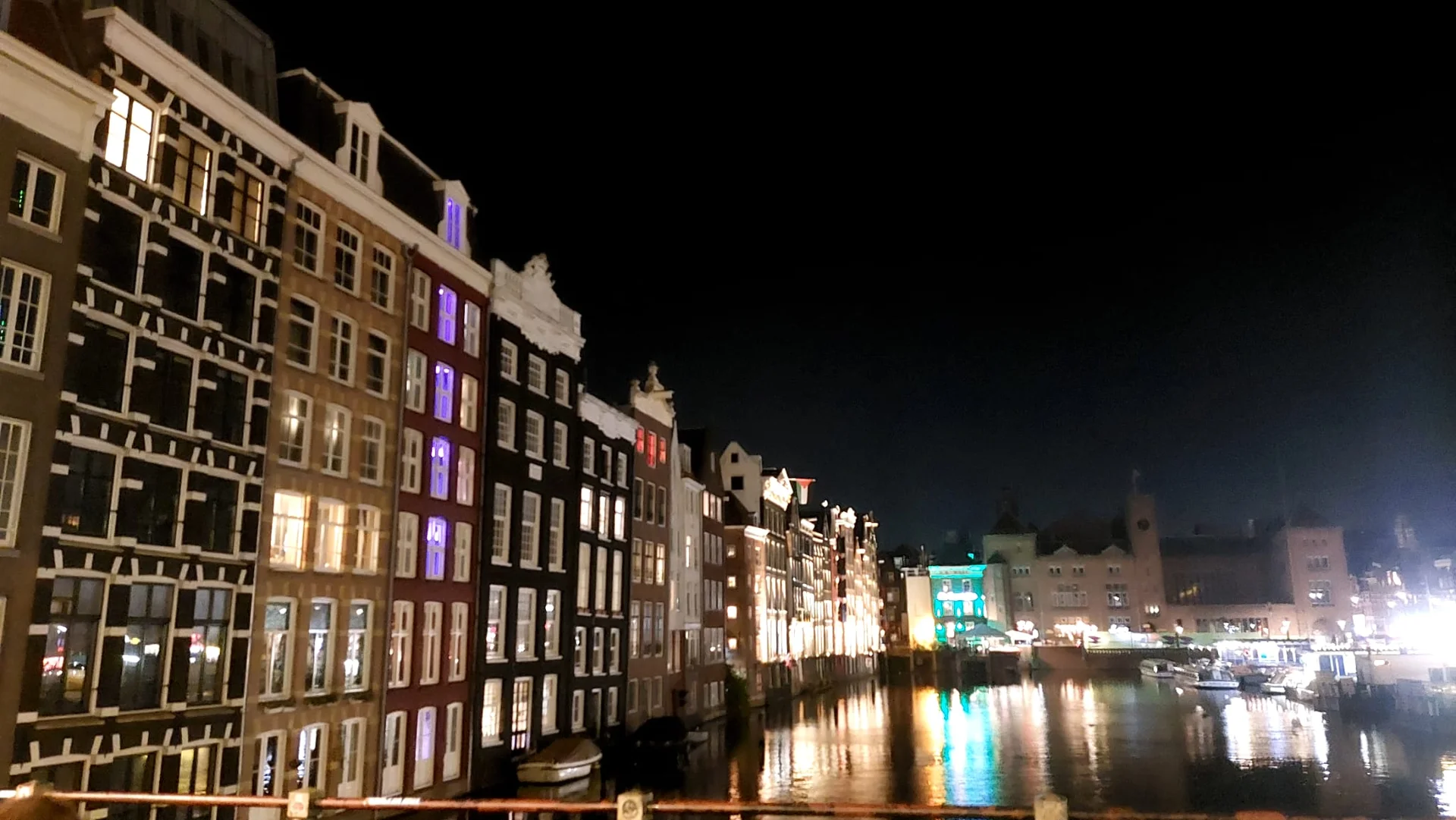
Amsterdam's canal ring is illuminated at night, making for one of the city's most atmospheric evening walks or cruises.
Evening Dinner Canal Cruise
An evening dinner cruise on Amsterdam's lit canals is the city's most romantic experience and genuinely one we recommend above almost everything else for couples. The pace is unhurried, the setting is beautiful, and it is a fundamentally different evening from a restaurant. Most cruises run 2 to 2.5 hours with a 3 to 4 course set menu. Book 2 to 3 days ahead minimum; longer in summer.
Amsterdam evening dinner canal cruises range from more casual dining boats to formal set-menu experiences. Read reviews carefully to confirm the current menu and boat quality.
Amsterdam Dungeon
The Amsterdam Dungeon is a theatrical walk-through experience covering the darkest chapters of Amsterdam's history: the Spanish Inquisition, the Plague, the trials of Cornelis de Witt. It is horror-comedy in the tradition of the London and Edinburgh Dungeons, with live actors, sets, and a couple of rides. It is fun for groups and couples who enjoy that kind of thing, and the evening slots tend to be the most atmospheric.
Amsterdam Dungeon entrance tickets are typically available online at a discount compared to the door price.
Evening Canal Walk
Simply walking the Jordaan canals and the city centre at dusk is one of Amsterdam's most photogenic and atmospheric experiences, and it costs nothing. The city lights its bridges and canal houses from sunset to midnight. A guided evening walking tour adds stories and takes you to the best vantage points, which is worth it on a short visit.
Amsterdam evening canal walking tours typically run around sunset and cover the Jordaan and the historic canal ring.
Live Music & Classical Concerts
Bimhuis is one of Europe's most respected jazz and improvised music venues, with a serious international booking programme and very reasonable ticket prices. The Concertgebouw is a world-class classical concert hall, and its free Wednesday lunchtime Open Lunch Concerts (running September through June, free reservation required via the Concertgebouw website). Both are worth an evening if your visit aligns with the programme.
📋 Planning Your Amsterdam Visit
Amsterdam's most important rule is simple: book the big museums before you book anything else. The Anne Frank House in particular requires planning months ahead in peak season. Once that is sorted, the rest of the city opens up remarkably well, and even spontaneous decisions (a walk through the Jordaan, a canal-side lunch, a ferry to Amsterdam Noord) tend to pay off.
For a 3-day visit, a solid approach is: Day 1 for museums (Rijksmuseum or Van Gogh Museum in the morning, Anne Frank House if you have a ticket); Day 2 for a canal cruise and a neighbourhood walk; Day 3 for a day trip. Add evenings as you like from the options above.
Use GetYourGuide to browse and book Amsterdam tours and tickets as your first stop for anything that requires advance booking. It is where we book everything from museum tours to day trips, and the free cancellation policy on most listings takes a lot of the risk out of planning ahead.
If Amsterdam is part of a wider European trip, our complete guide to skip-the-line tickets in Europe covers fast-track access strategies for the continent's biggest attractions, from the Eiffel Tower to the Colosseum. For another iconic European destination with world-class museums and cities within easy reach, our 7-day Switzerland itinerary is a great companion read.
Frequently Asked Questions
How many days do you need in Amsterdam?
3 to 4 days is the sweet spot for a first visit. That covers the major museums, a canal cruise, one day trip, and time to explore at least one neighbourhood properly. With 2 days you can do the highlights if you pre-book everything. A week lets you see the city at a relaxed pace and add multiple day trips.
Do you need to book Amsterdam museum tickets in advance?
Yes, for the three main museums. The Anne Frank House has no walk-in option at all and sells out months ahead in peak season. The Rijksmuseum and Van Gogh Museum use timed-entry systems where online tickets bypass the walk-up queue, which can be 45 to 90 minutes in summer. Other museums are generally available on the day.
What is the best time to visit Amsterdam?
Late March to May for tulip season and mild weather. June through August is peak season with long days but larger crowds and higher prices. September through November offers autumn colours, fewer tourists, and better rates. December has Christmas markets and a cosy atmosphere. January and February are the quietest months.
What are the best day trips from Amsterdam?
Keukenhof (mid-March to mid-May only) for tulip gardens; Zaanse Schans for working windmills year-round (about 17 minutes by train from Amsterdam Centraal); Volendam and Marken for traditional Dutch village atmosphere; Delft for history and Delft Blue pottery; Rotterdam for striking modern architecture; Haarlem for a charming walkable canal city just 15 minutes by train; Kinderdijk for a UNESCO windmill landscape.
Is the Anne Frank House worth visiting?
Yes, it is one of the most moving museum experiences in Europe. Walking through the actual secret annex where Anne Frank and her family hid for over two years is profoundly sobering. There is no walk-in option. Tickets are released every Tuesday at 10am CET for dates exactly six weeks later and sell out within minutes during peak season. The visit takes 60 to 90 minutes and is suitable for adults and older children.
Is Amsterdam worth visiting for just a weekend?
Absolutely. A 3-day Amsterdam weekend works well if you pre-book your museum tickets. A good structure: Day 1 for the Rijksmuseum or Van Gogh Museum; Day 2 for the Anne Frank House and a canal cruise; Day 3 for a day trip to Zaanse Schans or Haarlem and an evening neighbourhood walk. Pre-booking is essential for the museums.
What is the Amsterdam City Card and is it worth it?
The I amsterdam City Card includes free entry to more than 70 museums (including the Rijksmuseum and Stedelijk Museum), unlimited public transport, and one free canal cruise. Note: the Van Gogh Museum left the programme in June 2022 and requires a separate ticket. It is worth it if you plan to visit four or more included museums in 2 to 3 days. It does not include the Anne Frank House, which must always be booked separately through the official Anne Frank House website.