
Where to Stay in Budapest: Best Areas & Hotels (2026)
This article contains affiliate links. If you make a purchase through these links, we may earn a small commission at no extra cost to you. This helps us keep creating free content for you!
Budapest is one of the few capitals in Europe where locals give directions by number. Not by neighbourhood name, not by landmark, but by district: the fifth, the seventh, the thirteenth. Get the number right and you wake up a five-minute walk from the Danube. Get it wrong and you are either commuting in from a residential suburb or trying to sleep above a ruin bar at 3am on a Saturday.
The best areas to stay in Budapest are District V (Belváros-Lipótváros, for first-timers who want to walk to everything), District VII (the Jewish Quarter, for nightlife and the best value in the centre), District VI (Terézváros and Andrássy út, for elegance and the thermal baths), District I (the Buda Castle district, for romance and views), and District XIII (Újlipótváros, for a genuinely local feel on longer stays). Four of those five are in Pest, on the flat eastern bank, which is where the overwhelming majority of visitors should sleep.
We compared every Budapest base on the same five criteria: walkability to the sights, transport access, hotel cost, food and nightlife, and atmosphere. That comparison is this guide. If you have not yet worked out what to do once you land, see our 10-day Budapest itinerary and our guide to the best things to do in Budapest.
🗺️ Budapest at a Glance: Buda, Pest & the District Numbers
Budapest became one city in 1873, when hilly Buda on the west bank merged with flat, dense Pest on the east. The Danube still splits the two, and the difference is immediately obvious. Buda is green, quiet, residential, and steep, with the Castle District perched above the river. Pest is a grid of grand 19th-century apartment blocks, boulevards, cafés, and almost all of the city's restaurants, bars, and hotels.
The districts are numbered in Roman numerals and printed on every street sign and postcode, so you will see them constantly. District I is the Castle District in Buda. Districts V, VI, and VII form the Pest core, wrapped by the Nagykörút (the Grand Boulevard). District XIII sits just north of Parliament along the river. Anything above roughly XIV is outer city and not worth considering for a short visit.
Transport is excellent and genuinely cheap. There are four metro lines, including the M1 yellow line running the length of Andrássy út, which opened in 1896 and is the oldest underground railway in continental Europe. Trams 4 and 6 loop the Grand Boulevard around the clock, and tram 2 runs along the Pest riverbank past Parliament, which is one of the best-value sightseeing rides in Europe. A 24-hour travelcard costs around 2,500 forint (roughly 6.50 euros), and you do not need a car at any point.
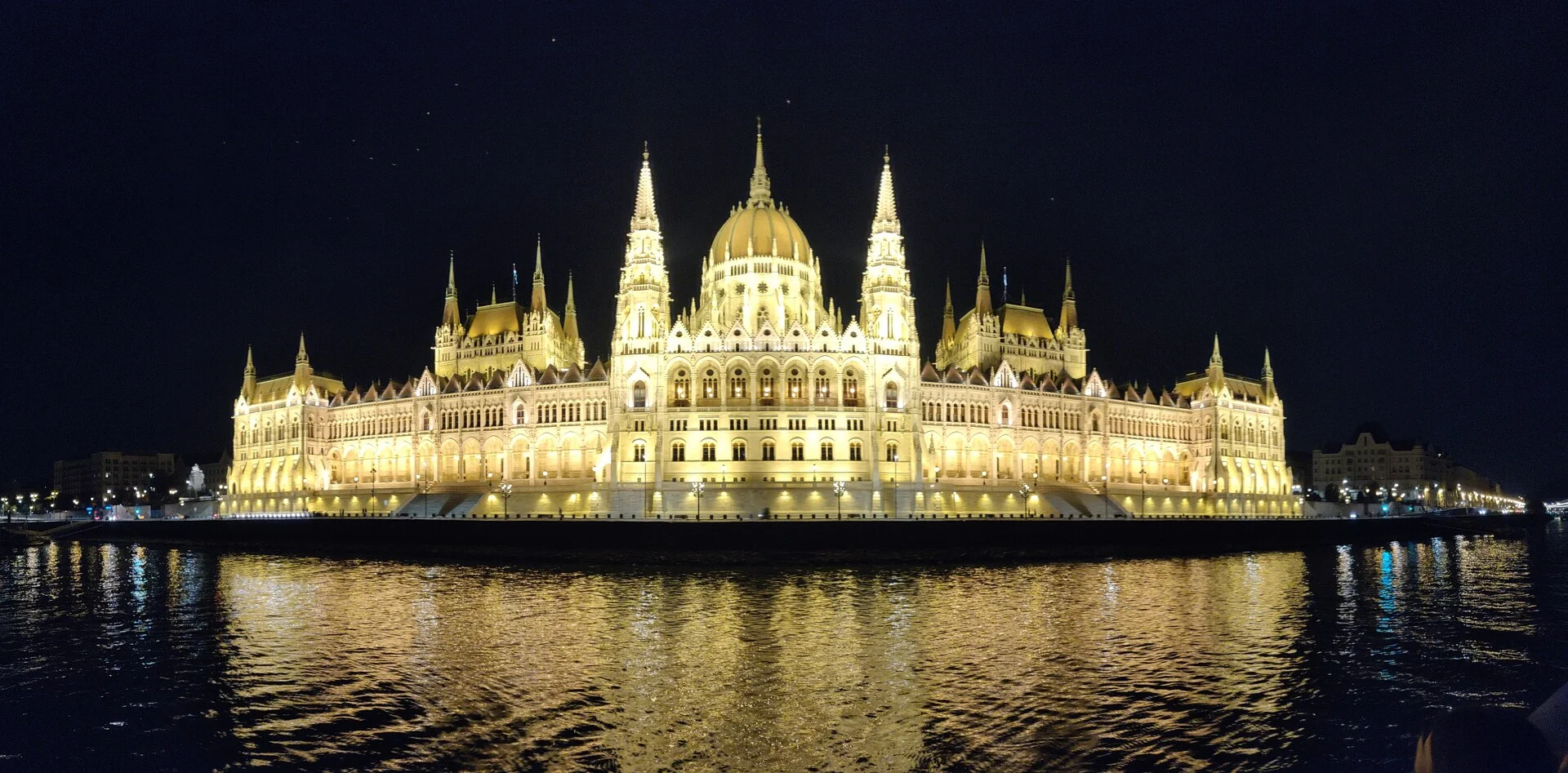
For a first evening that orients you fast, a 1-hour evening Danube sightseeing cruise with a drink takes in the lit-up Parliament, the Chain Bridge, and Buda Castle from the water in a single hour. If you would rather cover ground on day one, the grand city tour with a Parliament visit links both banks and gets you inside the Parliament building.
Where to Stay in Budapest
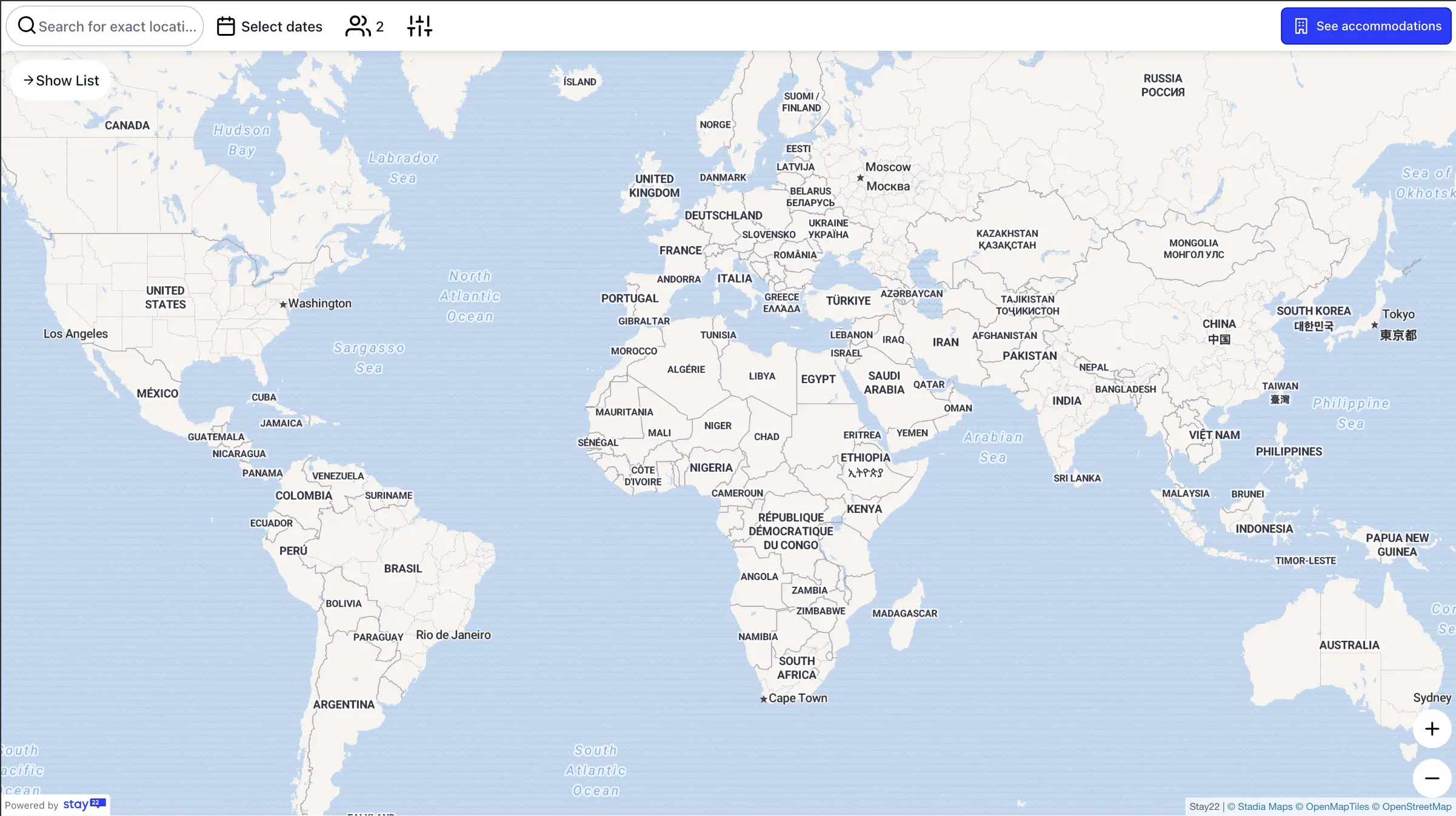
Book through this map and you help support our travels, at no extra cost to you. We earn a small commission, and it means a lot.
🏛️ District V (Belváros-Lipótváros): Best for First-Timers
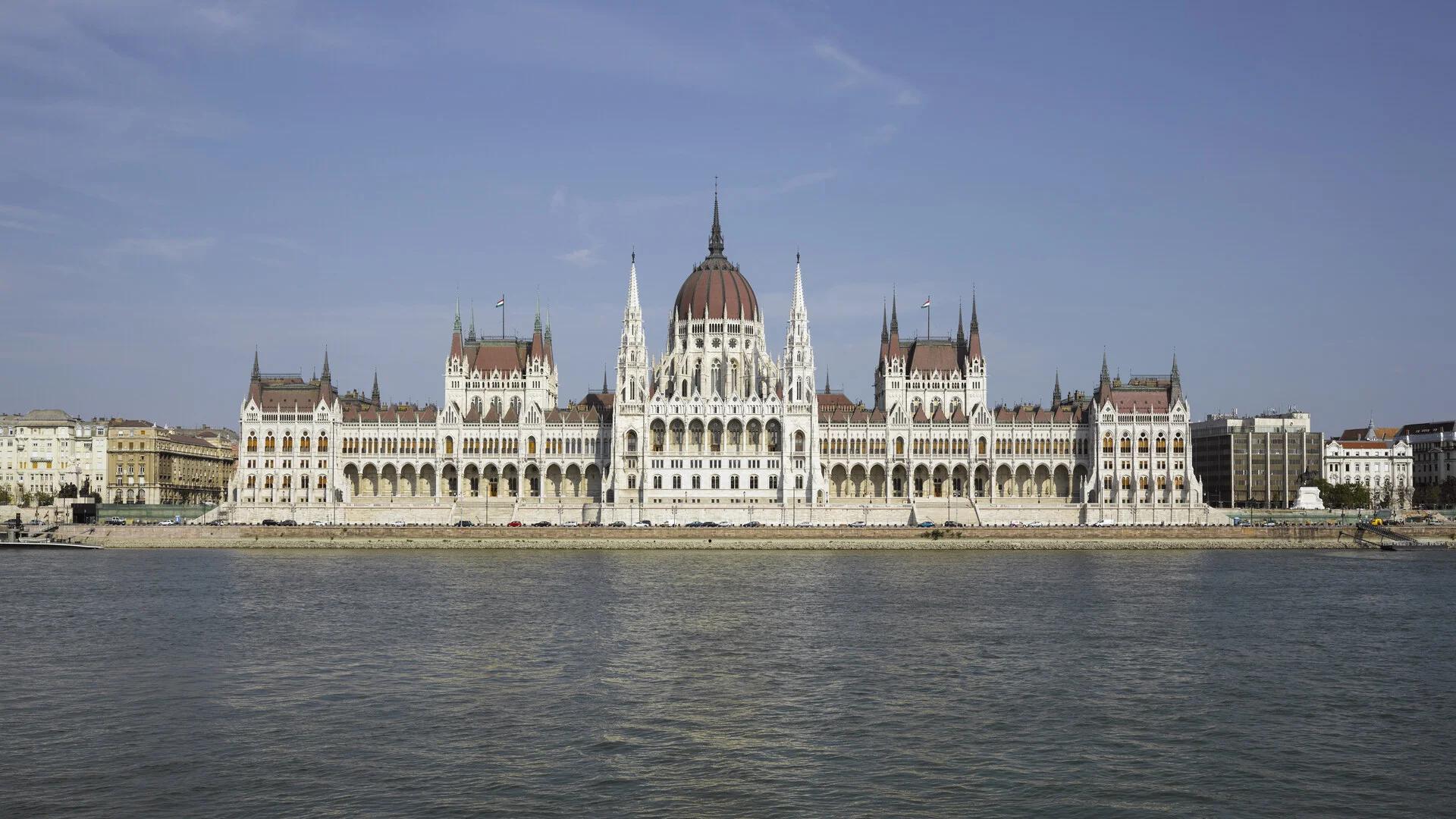
District V is the best Budapest base for first-time visitors. The Inner City (Belváros) and Leopold Town (Lipótváros) together hold the Hungarian Parliament, St. Stephen's Basilica, Vörösmarty Square, the Danube promenade, the Shoes on the Danube Bank memorial, and the Pest end of the Chain Bridge. Everything on that list is within a 15-minute walk of everything else, which means you can plan a first trip entirely on foot.
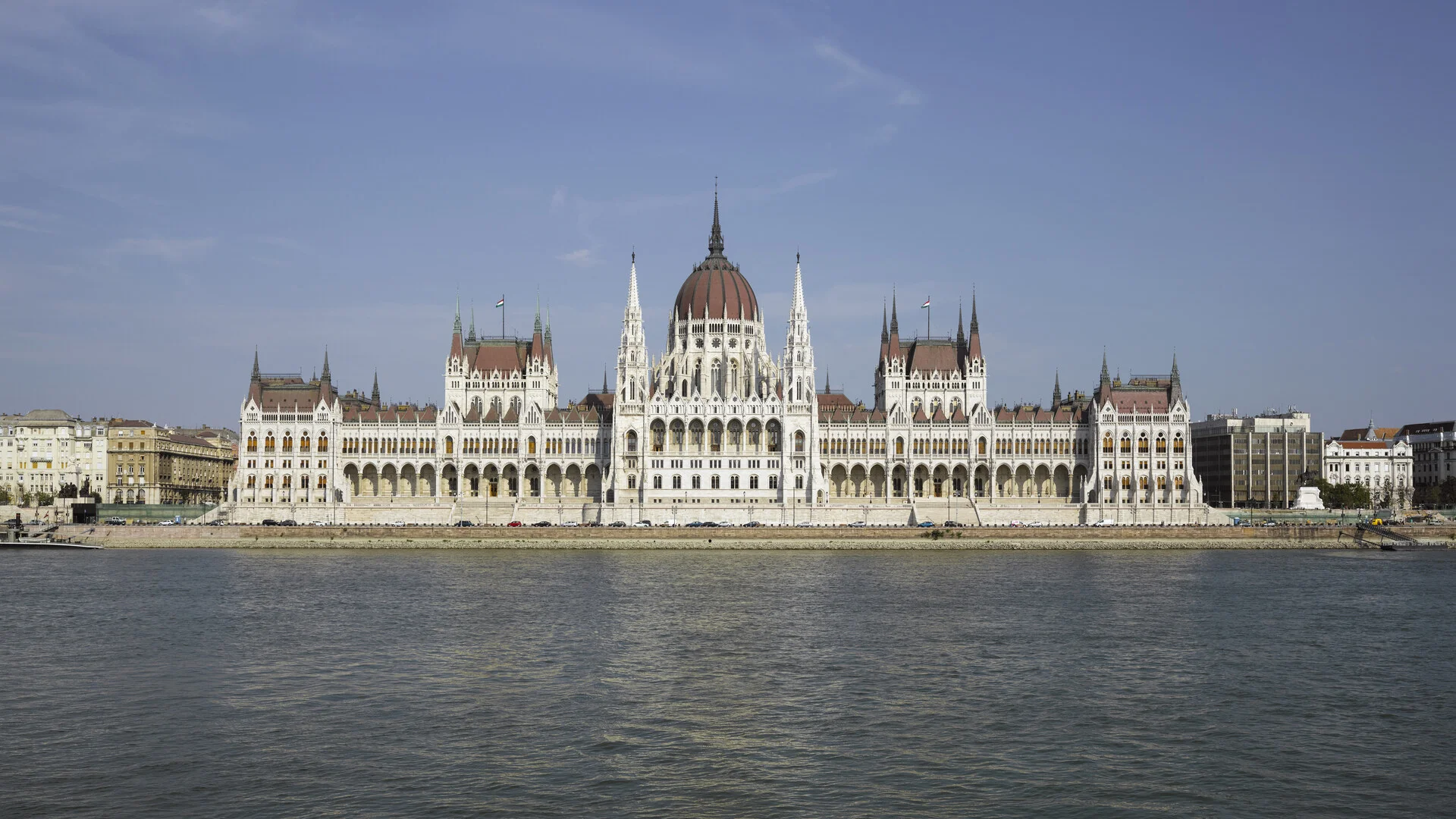
District V holds the Parliament, St. Stephen's Basilica, and the Danube promenade, the most walkable base in Budapest for a first visit.
It is also the most polished and best-connected part of the city, with three metro lines meeting at Deák Ferenc tér and a noticeably calmer, safer feel late at night than the party districts. The trade-off is price and a certain lack of grit: District V has the highest hotel rates in Budapest, and the restaurants along the pedestrianised Váci utca are aimed squarely at tourists. Walk two streets inland from Váci and the quality improves sharply while the prices drop.
Best for: first-time visitors, couples, short 2 to 3-day trips, anyone who wants to walk to the major sights.
Trade-offs: the highest prices in the city, tourist-focused dining on Váci utca, quieter after dark than the nightlife districts.
Hotel tiers: luxury, the Aria Hotel Budapest, a music-themed 5-star with a rooftop bar a hundred metres from the Basilica (~200 to 340 euros); upscale, the spectacular art nouveau Párisi Udvar Hotel in a restored 1913 arcade (~180 to 300 euros); browse the full range on Booking.com District V hotels.
The two headline sights are on your doorstep here. The 45-minute guided tour of the Hungarian Parliament gets you into the domed hall and past the Crown Jewels, and it sells out days ahead in summer, so book early. A St. Stephen's Basilica ticket with panoramic terrace access buys the best 360-degree view in Pest for a few euros.
Top-Rated Activities in Budapest
🍸 District VII (Jewish Quarter): Best for Nightlife & Value
District VII (Erzsébetváros), the old Jewish Quarter, is the best Budapest base for nightlife and the best value in the city centre. This is where the ruin bars were born: derelict pre-war courtyard buildings taken over in the early 2000s and filled with mismatched furniture, art installations, and cheap drinks. Szimpla Kert is the original and still the most famous. The district also holds the Dohány Street Synagogue, the largest in Europe, and the densest run of street food, third-wave coffee, and late-night eating in Budapest.
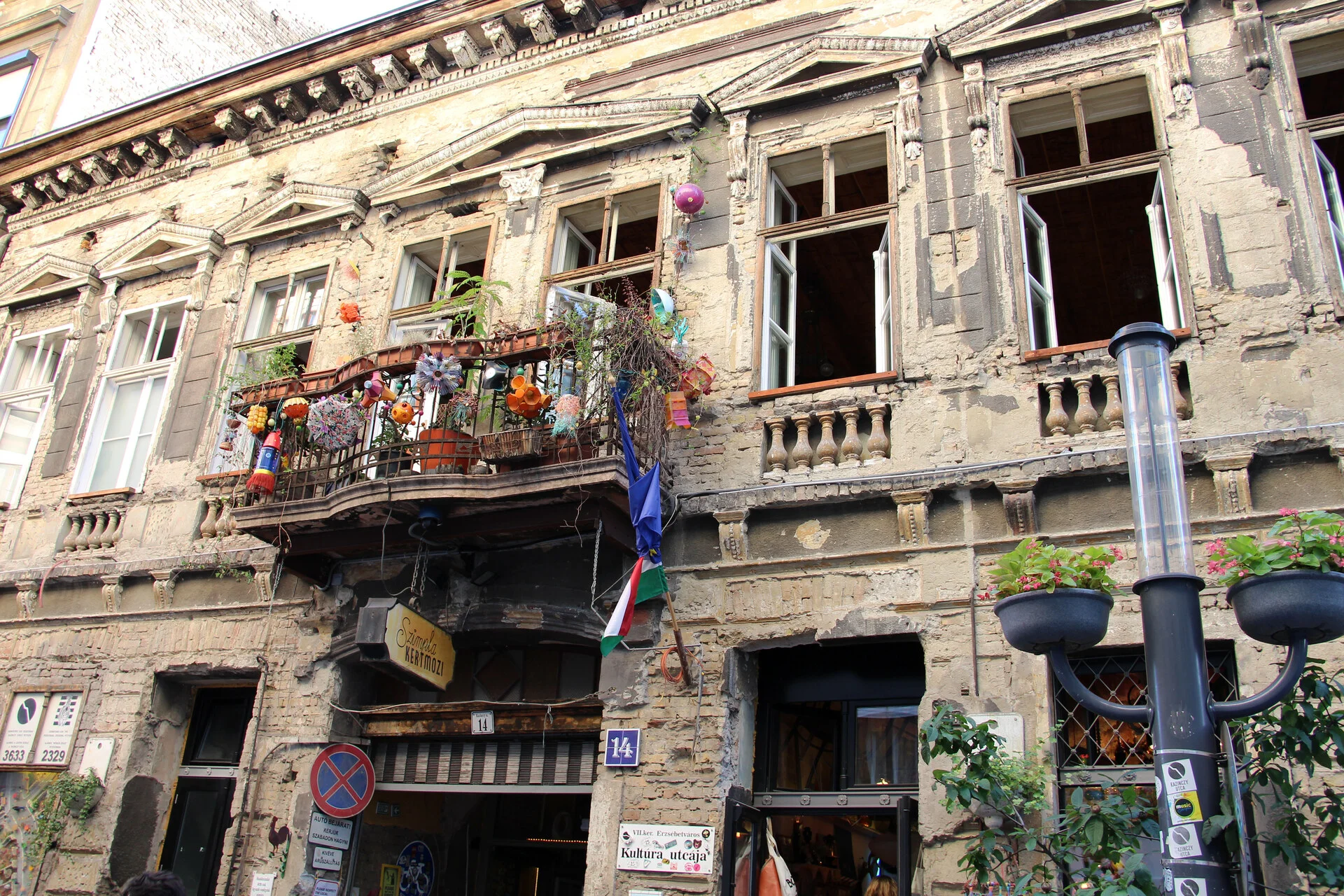
District VII is the home of Budapest's ruin bars, including Szimpla Kert, and the best-value central base in the city.
You are 10 minutes on foot from St. Stephen's Basilica and 15 from the Parliament, but paying noticeably less than in District V. The trade-off is noise, and it is a real one rather than a token caveat. The streets immediately around Kazinczy utca and Gozsdu Udvar run loud until roughly 3am on Friday and Saturday. The fix is easy if you plan for it: take a courtyard-facing or upper-floor room, or stay toward the quieter outer edge of the district near the Erzsébet körút ring road, where trams 4 and 6 run.
Best for: nightlife, solo travellers, groups, foodies, budget-conscious visitors who still want to be central.
Trade-offs: genuine street noise at weekends, a party-heavy atmosphere that will not suit everyone, some scruffy blocks.
Hotel tiers: upscale, the art deco Continental Hotel Budapest, built on the site of the old Hungária Baths and complete with a rooftop pool (~120 to 200 euros); for hostels, apartments, and the best budget rates in the centre, browse Booking.com District VII hotels.
The district rewards a guided introduction, because much of its history is not visible from the street. The Jewish heritage guided tour with a Dohány Street Synagogue ticket covers the synagogue, the museum, and the ghetto memorials. For the other side of the neighbourhood, a ruin bars and street food walking tour is the efficient way in, or go straight for a ruin bar pub crawl with entry tickets included.
🎭 District VI (Terézváros): Best for Elegance & the Baths
District VI is the elegant middle ground, and for many travellers it is the smartest compromise in Budapest. Its spine is Andrássy út, the UNESCO-listed boulevard that runs dead straight for two and a half kilometres from Deák Ferenc tér to Heroes' Square, lined with plane trees, embassies, and the Hungarian State Opera House. The M1 yellow line runs directly underneath it, so the entire district is effectively one metro stop from anywhere.
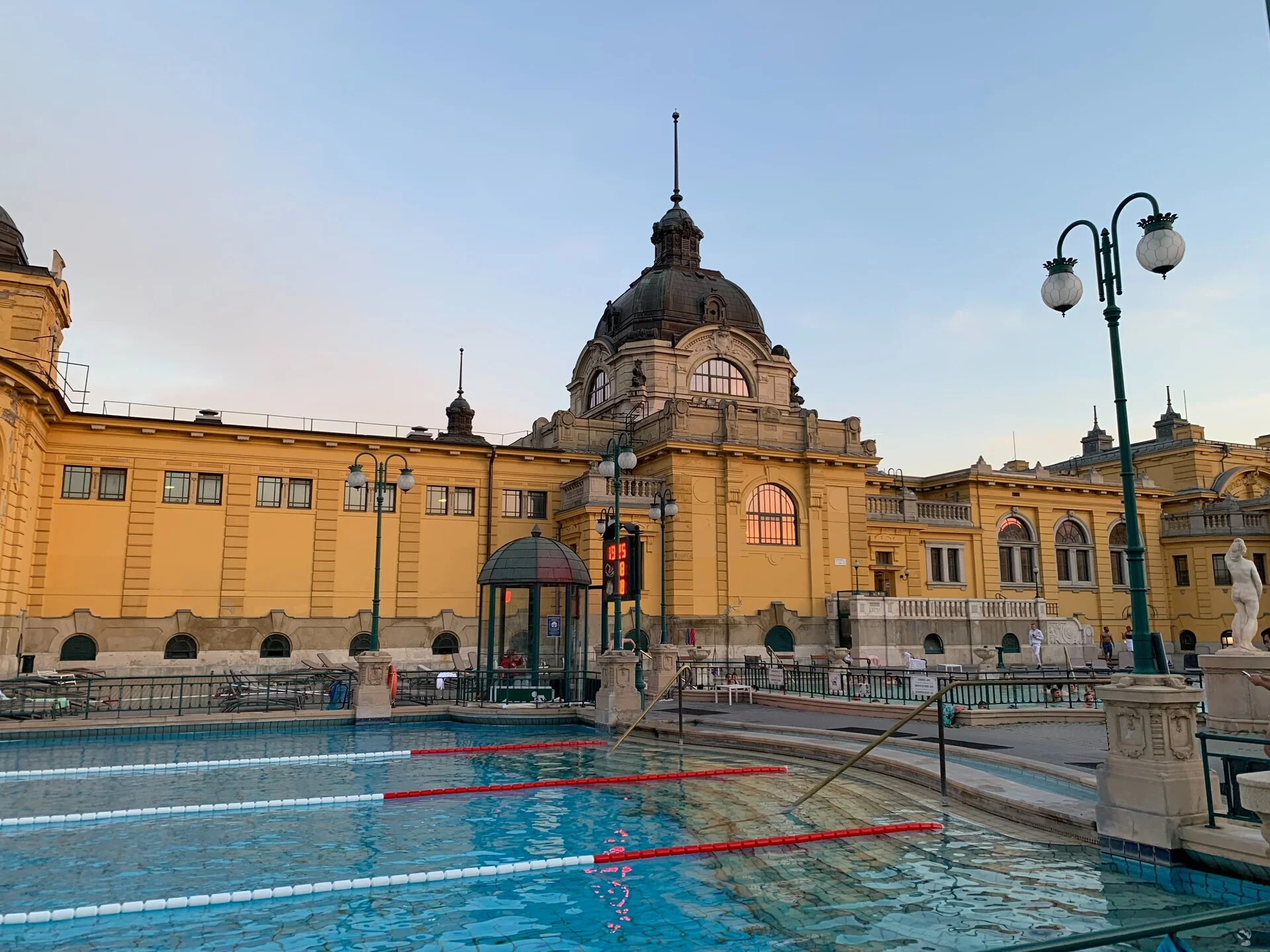
Andrássy út runs from central Pest out to Heroes' Square, City Park, and the Széchenyi Thermal Baths at the far end of District VI.
Follow Andrássy to its end and you arrive at Heroes' Square, City Park, Vajdahunyad Castle, and the Széchenyi Thermal Baths, the enormous neo-baroque complex that is the single most photographed thing in Budapest. Staying in District VI puts all of that on one straight line. On price it sits neatly between the two neighbours: more refined and quieter than District VII, meaningfully cheaper than District V, and only a 10-minute walk from the Basilica.
Best for: couples, culture and opera lovers, bath-goers, second-time visitors, anyone wanting elegance without District V prices.
Trade-offs: fewer headline sights inside the district itself, some stretches of Andrássy are quiet at night, the baths are a walk or a metro ride away.
Hotel tiers: luxury, the theatrical Mystery Hotel Budapest in a restored 19th-century palace near the Opera (~160 to 260 euros); boutique, the adults-only Casati Hotel in an 18th-century building off Andrássy (~90 to 150 euros); browse the area on Booking.com District VI hotels.
The Opera House reopened in 2022 after a six-year restoration and the guided tour of the Hungarian State Opera House is the easiest way inside without buying a performance ticket. At the far end of the boulevard, a Széchenyi Baths full-day entrance pass saves queueing at the ticket window, which matters most on winter weekends when the outdoor pools are busiest.
🏰 District I (Buda Castle): Best for Romance & Views
District I, the Castle District on the Buda side, is the best Budapest base for romance and views. Up on the hill are Buda Castle, Matthias Church, the Fishermen's Bastion with its white fairy-tale turrets, and a grid of cobbled medieval lanes lined with pastel houses. The view from the Bastion back across the river to the Parliament is the defining Budapest panorama, and staying up here means you get it at sunrise and after dark with nobody else around.
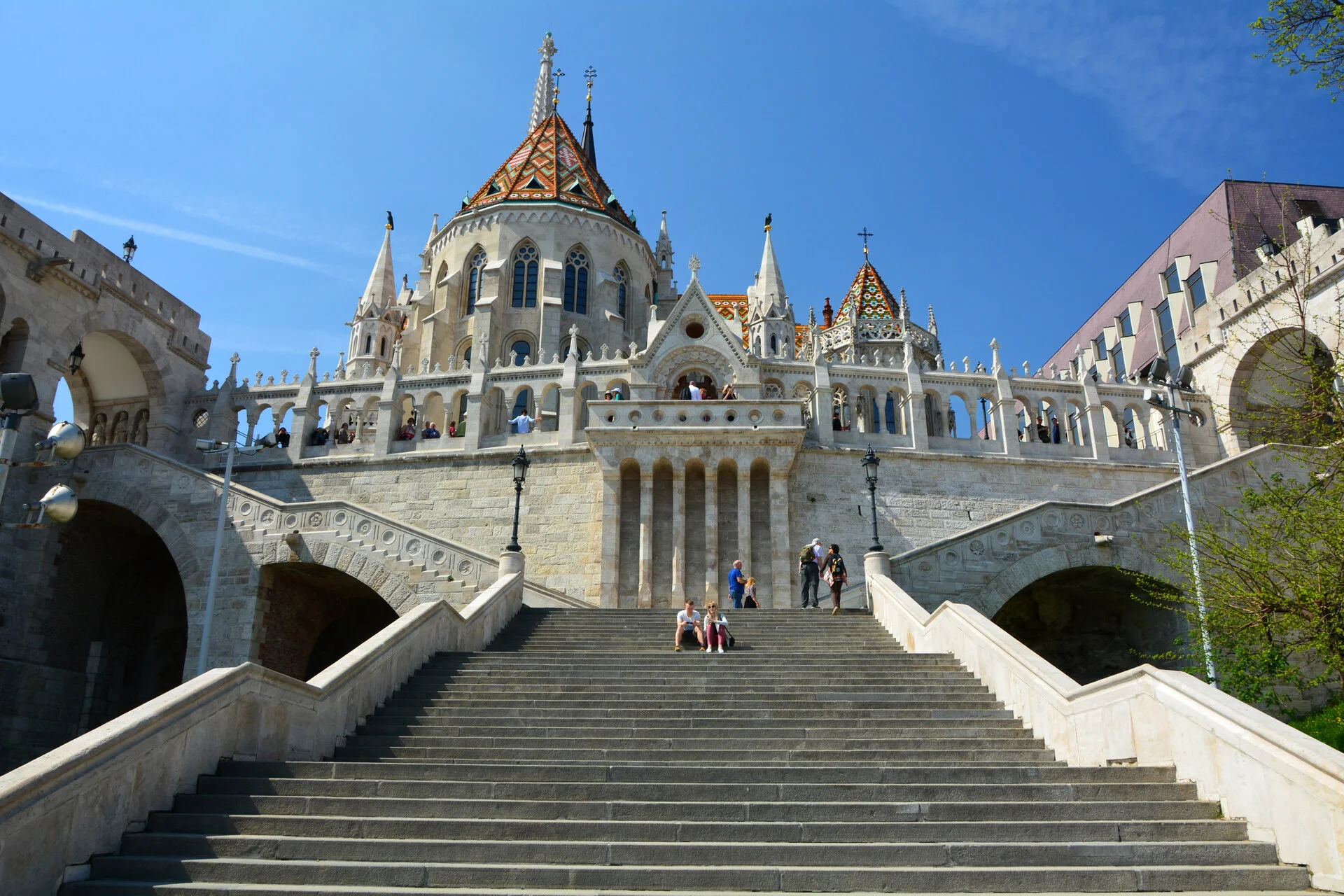
District I on Castle Hill holds Buda Castle, Matthias Church, and the Fishermen's Bastion, the quietest and most atmospheric base in Budapest.
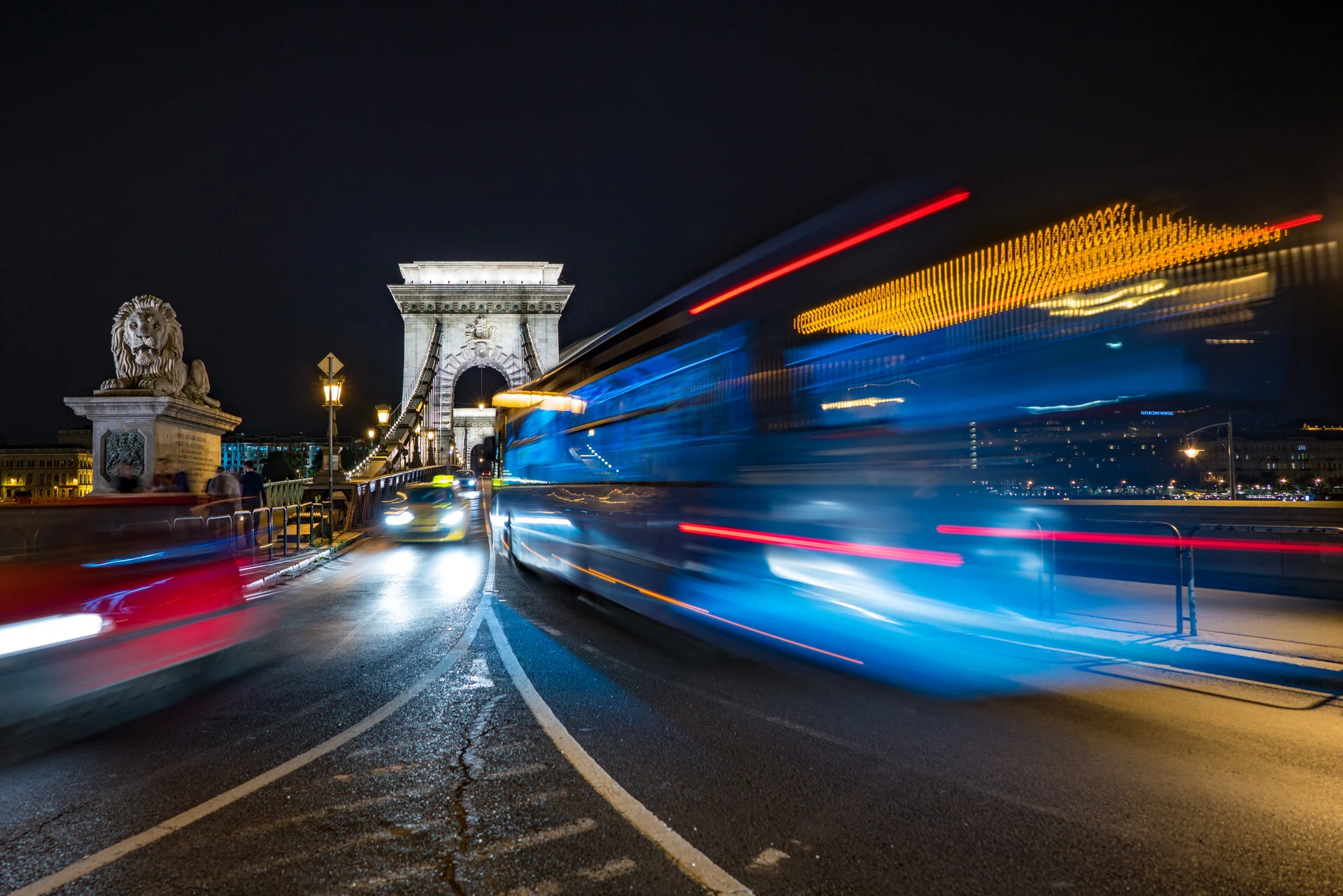
That emptiness is exactly the trade-off. Castle Hill fills with day-trippers between about 10am and 6pm and then empties completely, which is wonderful for atmosphere and inconvenient for dinner. Restaurant choice is thin and prices are inflated, the streets are steep and cobbled, and getting to the Pest nightlife means the funicular, bus 16, or a 20-minute walk across the Chain Bridge. For a first short trip we would stay in Pest. For a second visit, an anniversary, or a stay where the view matters more than the convenience, District I is the most memorable choice in the city.
Best for: couples, photographers, repeat visitors, anyone who wants quiet and the best views in Budapest.
Trade-offs: steep cobbled streets, limited and expensive dining, empties at night, a bridge or funicular from the Pest action.
Hotel tiers: luxury, the Hilton Budapest, built into the ruins of a medieval Dominican cloister next to the Fishermen's Bastion with direct Danube views (~180 to 300 euros); boutique, the 11-room Baltazár Boutique Hotel on a quiet lane behind Matthias Church (~130 to 210 euros); browse the hill on Booking.com Castle District hotels.
The castle complex is bigger and more layered than it looks, so a Buda Castle District guided walking tour is worth the two hours. For the recently restored interiors, the Buda Castle walk including St. Stephen's Hall covers the reconstructed ceremonial room that reopened to the public in 2021.
🌳 District XIII (Újlipótváros): Best for a Local Feel
District XIII, and specifically the Újlipótváros stretch immediately north of the Parliament, is the best Budapest base for a genuinely local feel. This is a Bauhaus-era residential quarter of 1930s apartment blocks, with Pozsonyi út as its high street: bookshops, bakeries, unfussy neighbourhood restaurants, and cafés full of people who actually live there rather than visitors. Szent István Park runs down to the Danube, and the southern tip of Margaret Island, Budapest's great car-free green space, is a few minutes away.
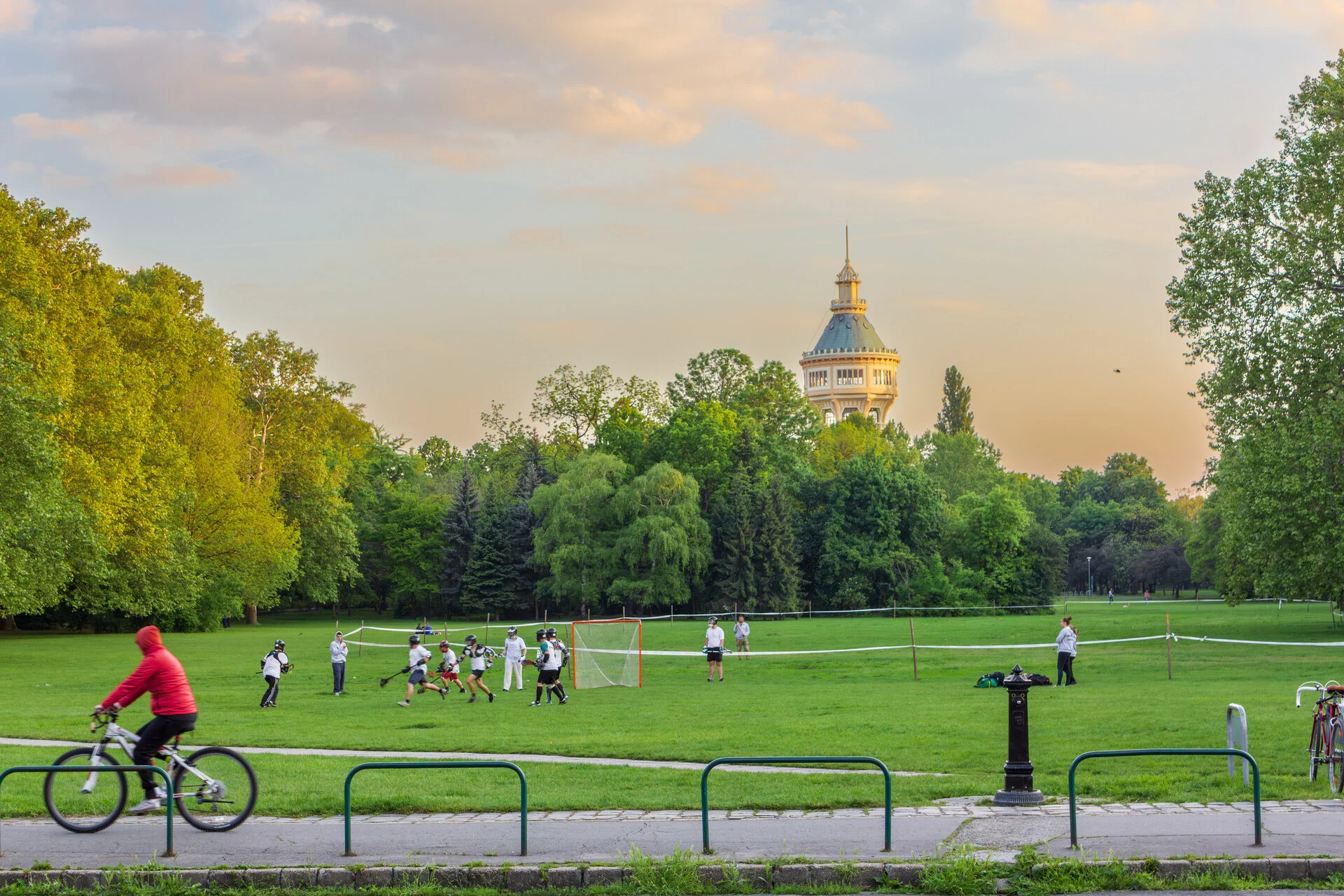
Margaret Island and the leafy streets of Újlipótváros make District XIII the calmest well-priced base within walking distance of the Parliament.
The practical case is strong: you are a 15-minute walk or two tram stops from the Parliament, prices are well below District V, and the streets are quiet at night. Tram 2 runs along the river into the centre, and the M3 metro covers the rest. The trade-off is that there is very little to see inside the district itself, and the hotel inventory is thinner than in the core, with more apartments and serviced flats than traditional hotels. For a first two-day trip that is a drawback. For a week, a family, or a return visit, it is the most liveable choice in Budapest.
Best for: longer stays, families, repeat visitors, runners and walkers, anyone who wants a real neighbourhood rather than a tourist district.
Trade-offs: few sights of its own, thinner hotel selection, a walk or tram ride to the main attractions, quiet in the evenings.
Hotel tiers: mid-range, the riverside Danubius Hotel Helia, a spa hotel facing Margaret Island with thermal pools and Danube-view rooms (~90 to 150 euros); for the apartments and serviced flats that dominate here, browse Booking.com District XIII hotels.
The river is the reason to stay on this side of Pest, and the easiest way to enjoy it is from the water: a Budapest by night sightseeing cruise with a welcome drink boards a short walk downstream and passes the floodlit Parliament from the best possible angle.
📊 Quick Comparison: Which Budapest Area Is Best for You?
Use this comparison to match your travel style to a Budapest base. Mid-range price refers to a typical 3 to 4-star hotel room in shoulder season (April to May or September to October).
| Area | Best for | Mid-range | To the centre | Vibe |
|---|---|---|---|---|
| District V | First-timers, couples | €110–190 | In the centre | Polished, riverside |
| District VII | Nightlife, value | €70–130 | 10 min walk | Loud, buzzing |
| District VI | Elegance, the baths | €85–150 | 10 min / M1 | Grand, leafy |
| District I (Buda) | Romance, views | €120–210 | Bridge / funicular | Quiet, historic |
| District XIII | Local feel, long stays | €70–120 | 15 min / tram | Residential, calm |
Budapest base comparison: each district's best traveller fit, mid-range hotel pricing, distance to the centre, and overall vibe.
Budapest base comparison: each district's best traveller fit, mid-range hotel pricing, distance to the centre, and overall vibe.
Quick decision guide: if it is your first trip and you want to walk to everything, choose District V. If you want nightlife and the best value in the centre, choose District VII. If you want elegance, the Opera, and the thermal baths on one straight line, choose District VI. If you want romance, quiet, and the best views in the city, choose District I in Buda. If you are staying a week or travelling with family, choose District XIII. Wherever you land, the classic escape from the city is the Danube Bend and Szentendre day trip with lunch, and if Budapest is one stop on a bigger trip, our Vienna, Budapest and Prague trip planner covers the whole route.
🏨 Top Budapest Hotels by Budget
Budapest is one of the best-value capital cities in Europe, and the gap between what you pay here and what the same room costs in Vienna or Prague is still striking. Here is our shortlist by budget tier, all bookable on Booking.com.
Luxury (€180+ per night)
- Aria Hotel Budapest (District V), a music-themed 5-star beside St. Stephen's Basilica, with a spa and one of the best rooftop bars in the city.
- Párisi Udvar Hotel (District V), set in a restored 1913 art nouveau arcade that is worth walking into even if you are not staying.
- Hilton Budapest (District I), built into a medieval cloister on Castle Hill with direct views over the Danube to the Parliament.
Mid-range (€90–180 per night)
- Mystery Hotel Budapest (District VI), a theatrical 5-star in a 19th-century palace a few minutes from the Opera House.
- Baltazár Boutique Hotel (District I), an 11-room boutique on a quiet cobbled lane behind Matthias Church.
- Continental Hotel Budapest (District VII), art deco rooms and a rooftop pool in the heart of the Jewish Quarter.
- Danubius Hotel Helia (District XIII), a riverside spa hotel with thermal pools facing Margaret Island.
Budget (€45–90 per night)
- Casati Hotel (District VI), an adults-only boutique in an 18th-century building just off Andrássy út, consistently one of the best-rated 3-stars in the city.
- The apartments, guesthouses, and design hostels of District VII, which offer the cheapest genuinely central beds in Budapest.
- Serviced flats around Újlipótváros in District XIII, the best value for anyone staying a week or more.
Check live rates and availability across every district on Booking.com Budapest hotels. Book two to three months ahead for May to September, the Formula 1 weekend in late July or August, and the December Christmas markets. From November to March you can usually book good central hotels a week or two out at a real discount.
❓ Frequently Asked Questions
Where is the best area to stay in Budapest for the first time?
District V (Belváros-Lipótváros) is best for first-timers, putting the Parliament, St. Stephen's Basilica, the Danube promenade, and the Chain Bridge within a 15-minute walk. It is also the safest and best-connected district. The trade-off is price, at roughly 110 to 190 euros for a mid-range room. For lower rates 10 minutes away on foot, District VII and District VI are the best value alternatives.
Is it better to stay in Buda or Pest?
Pest, for around 90% of visitors. It is flat, dense, and walkable, and holds almost all the restaurants, bars, transport, and hotels, plus the Parliament, the Basilica, the Jewish Quarter, and Andrássy út. Buda (District I) is quieter and more atmospheric with the best views, but has far fewer restaurants and is less practical for a short trip. Stay in Buda for romance and views, in Pest for everything else.
What is the cheapest area to stay in Budapest?
District VII (the Jewish Quarter) is the cheapest central area, with budget hotels and hostels from around 45 to 80 euros and the densest run of ruin bars and street food in the city. District XIII (Újlipótváros) offers similar value with a calmer, residential feel from about 70 euros. Both are within a 15-minute walk of the Parliament.
Is the Jewish Quarter in Budapest too noisy to sleep in?
It can be, on the streets right around Kazinczy utca and Gozsdu Udvar, where the ruin bars run until roughly 3am on Friday and Saturday. Book a courtyard-facing or upper-floor room, or stay on the quieter outer edge near the Erzsébet körút ring road. Midweek and in winter the noise is far less of an issue, and the district's value and location are hard to beat.
Do you need a car in Budapest?
No. Budapest has four metro lines (including the M1 yellow line, the oldest underground in continental Europe), extensive trams with lines 4 and 6 on the ring road and line 2 along the Danube, and a 24-hour travelcard for about 2,500 forint (roughly 6.50 euros). Parking in the central districts is scarce and paid, so a car is a liability rather than an asset.
How far in advance should you book Budapest hotels?
Two to three months ahead for May to September, the Formula 1 weekend in late July or August, and the December Christmas markets, when the best-value District V and District VI hotels sell out first. From November to March Budapest is far more forgiving, and good central hotels are often available a week or two out at a significant discount.
Five districts, five different trips. District V for first-time, walk-everywhere convenience. District VII for nightlife and the best central value. District VI for elegance, the Opera, and the thermal baths. District I in Buda for romance and the city's best views. District XIII for a real neighbourhood on a longer stay. The Pest core is compact enough that even the value districts leave you a 15-minute walk or two tram stops from the Parliament, so there is no wrong answer here, only a better fit.
Once you have a base, Budapest is an easy city to enjoy slowly: a soak at the baths, a long walk down Andrássy, and dinner on the water. A Danube dinner cruise with live music and a folk dance show is the classic last night, and the Széchenyi Thermal Bath Palm House pass is the upgrade worth paying for if you want a lounger and space to breathe. For the full city plan see our 10-day Budapest itinerary, and to compare live rates across every district, browse Booking.com Budapest hotels.