
10-Day Budapest Itinerary: City + Best Day Trips (2026)
This article contains affiliate links. If you make a purchase through these links, we may earn a small commission at no extra cost to you. This helps us keep creating free content for you!
Budapest is the rare European capital where you can soak in a 16th-century Ottoman thermal bath in the morning, tour the largest synagogue in Europe at midday, and drink in a courtyard bar built inside a bombed-out tenement at night, all within a 20-minute walk. It's two cities stitched together by the Danube: hilly, royal Buda on the west bank; flat, grand, restless Pest on the east. Ten days lets you do both sides properly, soak in four or five different thermal baths without rushing, and take the day trips almost no first-timer fits in: the artists' town of Szentendre, the citadel-and-basilica drama of the Danube Bend, the baroque wine town of Eger, and the Habsburg fairytale of Gödöllő.
We spent ten days in Budapest and the surrounding region, and this guide is the itinerary we wish we'd had walking in. It's structured as five days in the city and five days exploring outward, with explicit GetYourGuide tours, thermal bath skip-the-line tickets, and the ruin-bar and wine-cellar stops worth planning around. Budapest is also the best-value capital in Central Europe, noticeably cheaper than Vienna or Prague, which makes ten days here surprisingly affordable.
For more on the city itself, see our complete guide to the best things to do in Budapest. For the wider Central Europe trip, our Vienna, Budapest, Prague itinerary is the natural next step.
10 Days in Budapest: Itinerary at a Glance
| Day | Focus | Travel | Highlight |
|---|---|---|---|
| 1 | Pest landmarks | In Budapest | Parliament + Basilica dome |
| 2 | Buda Castle Hill | In Budapest | Fisherman's Bastion panorama |
| 3 | Thermal baths | In Budapest | Széchenyi + Gellért |
| 4 | Jewish Quarter | In Budapest | Great Synagogue + ruin bars |
| 5 | Danube + Margaret Island | In Budapest | Evening Danube cruise |
| 6 | Szentendre | 40 min each way | Artists riverside town |
| 7 | Danube Bend | Day tour | Visegrád + Esztergom |
| 8 | Eger | 2 hr each way | Castle + Bull's Blood wine |
| 9 | Gödöllő | 45 min each way | Sisi's Royal Palace |
| 10 | Final day + departure | In Budapest | Last bath + New York Café |
10-day Budapest itinerary at a glance
10-day Budapest itinerary at a glance
Best season: April to June and September to October are ideal. The thermal baths are magical in winter steam, and December has some of Central Europe's best Christmas markets (Vörösmarty tér, St. Stephen's Basilica). Avoid July and August if heat bothers you, though the outdoor baths stay great year-round.
🏛️ Day 1: Pest Landmarks, Parliament + Basilica + Andrássy Avenue
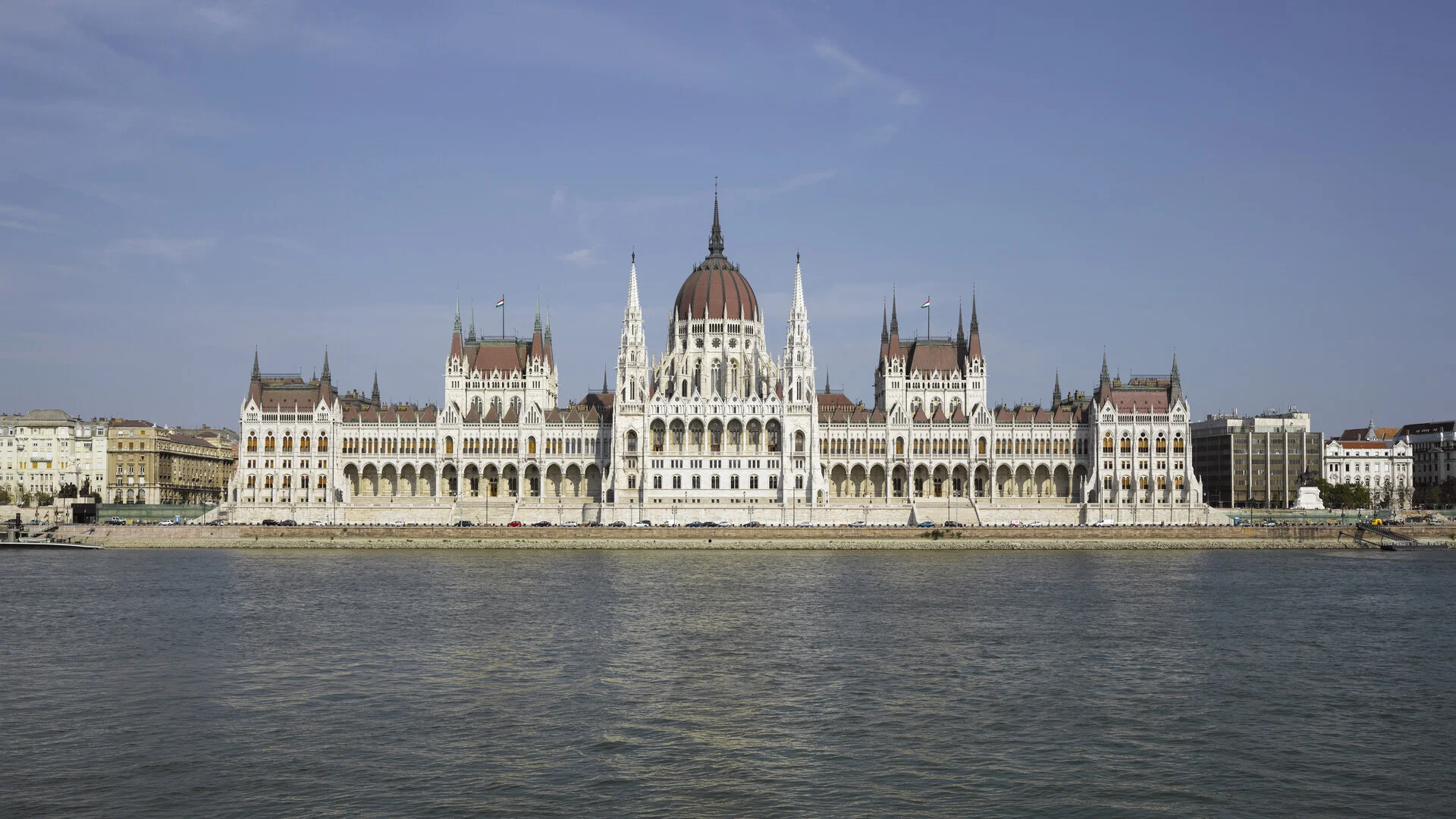
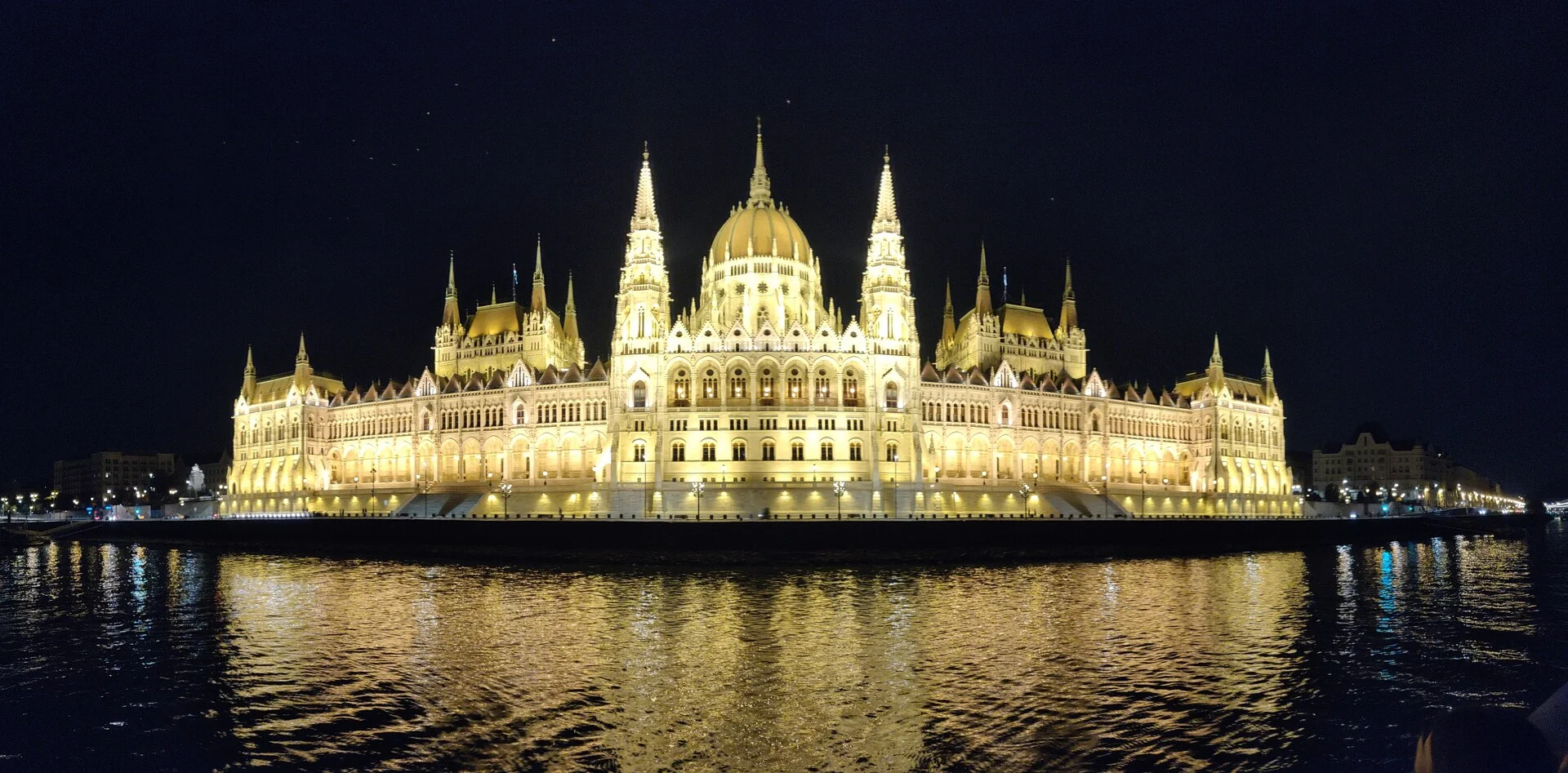
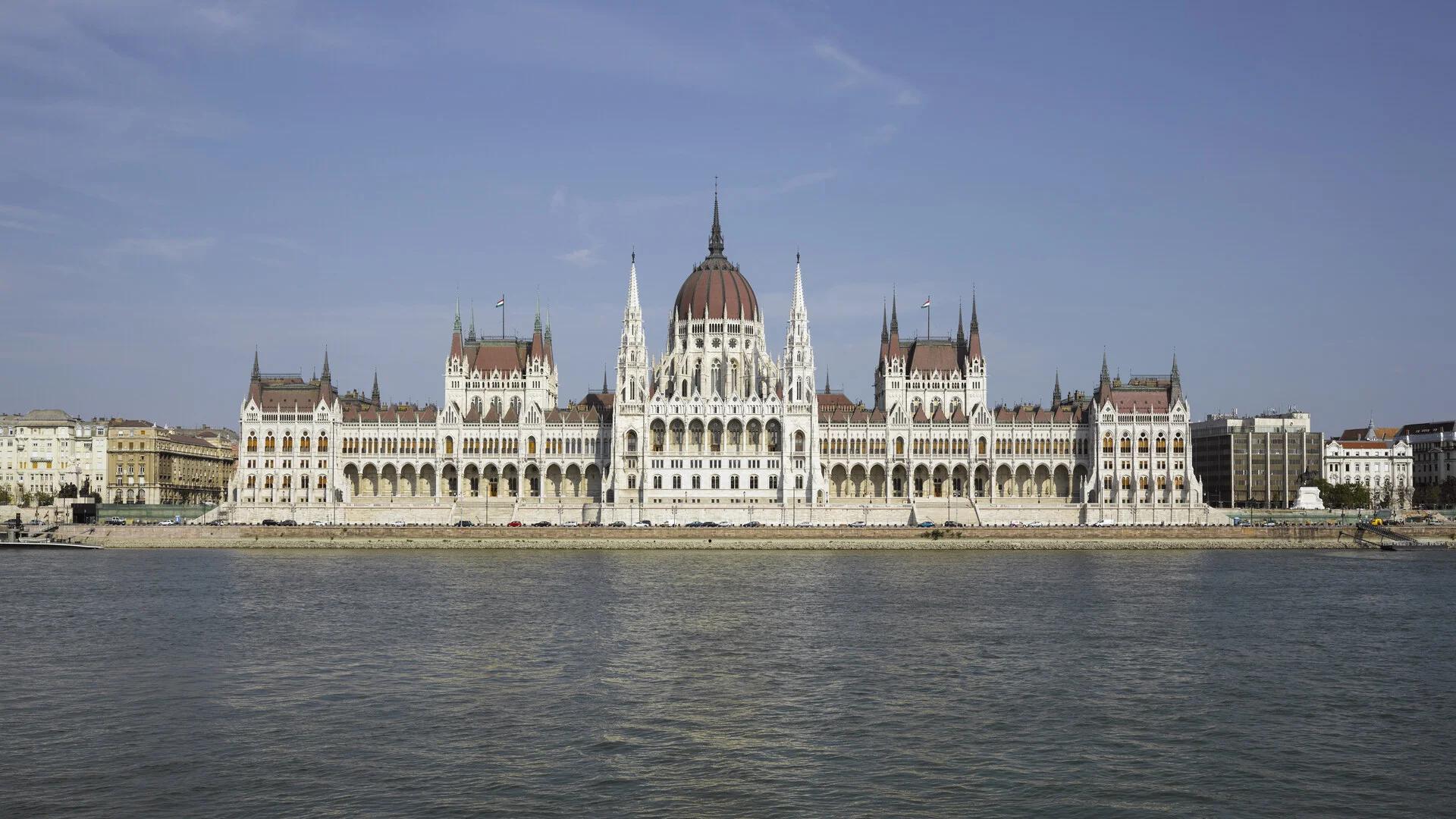
The Hungarian Parliament Building on the Pest embankment
Get into the city from Liszt Ferenc Airport (BUD) on the 100E airport bus to Deák Ferenc tér (around 3.50 EUR, 40 minutes) or a pre-booked private transfer (25 to 30 EUR). There's no direct metro from the airport.
- 🛬 Book a private Budapest airport transfer for a smooth arrival
- 🏨 Drop bags in District V (Belváros), the most central base for a 10-day trip (see our where to stay section)
Start with the Hungarian Parliament Building, the third-largest parliament in the world and arguably the most beautiful building on the Danube. The interior tour (Holy Crown of Hungary, the gilded central hall, 96-meter dome) must be booked ahead; it sells out daily in summer. Then walk to St. Stephen's Basilica, climb the dome for the rooftop panorama, and see the mummified right hand of Hungary's first king (the "Holy Right").
- 🎟️ Parliament skip-the-line guided tour
- ⛪ St. Stephen's Basilica dome + tower ticket
- 🚶 Pest evening walking tour
Walk Andrássy Avenue (UNESCO-listed, Budapest's grand boulevard) up to Heroes' Square and City Park. Welcome dinner: goulash and Hungarian wine at Getto Gulyás or Hungarikum Bisztró. Start with a shot of pálinka, the fruit brandy that opens every Hungarian meal.
🏰 Day 2: Buda Castle Hill + Fisherman's Bastion + Gellért Hill
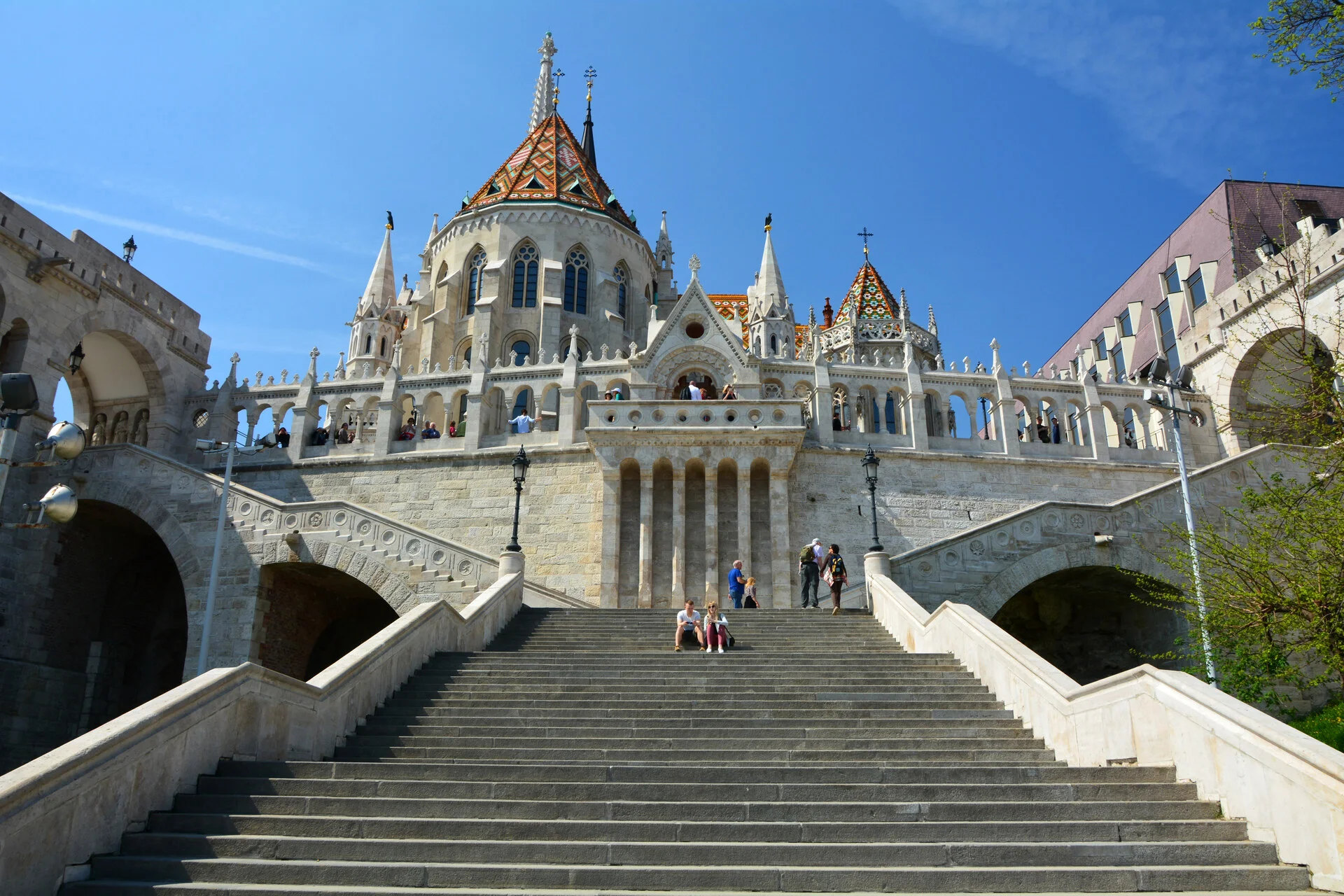
Fisherman's Bastion, the fairytale terrace above the Danube
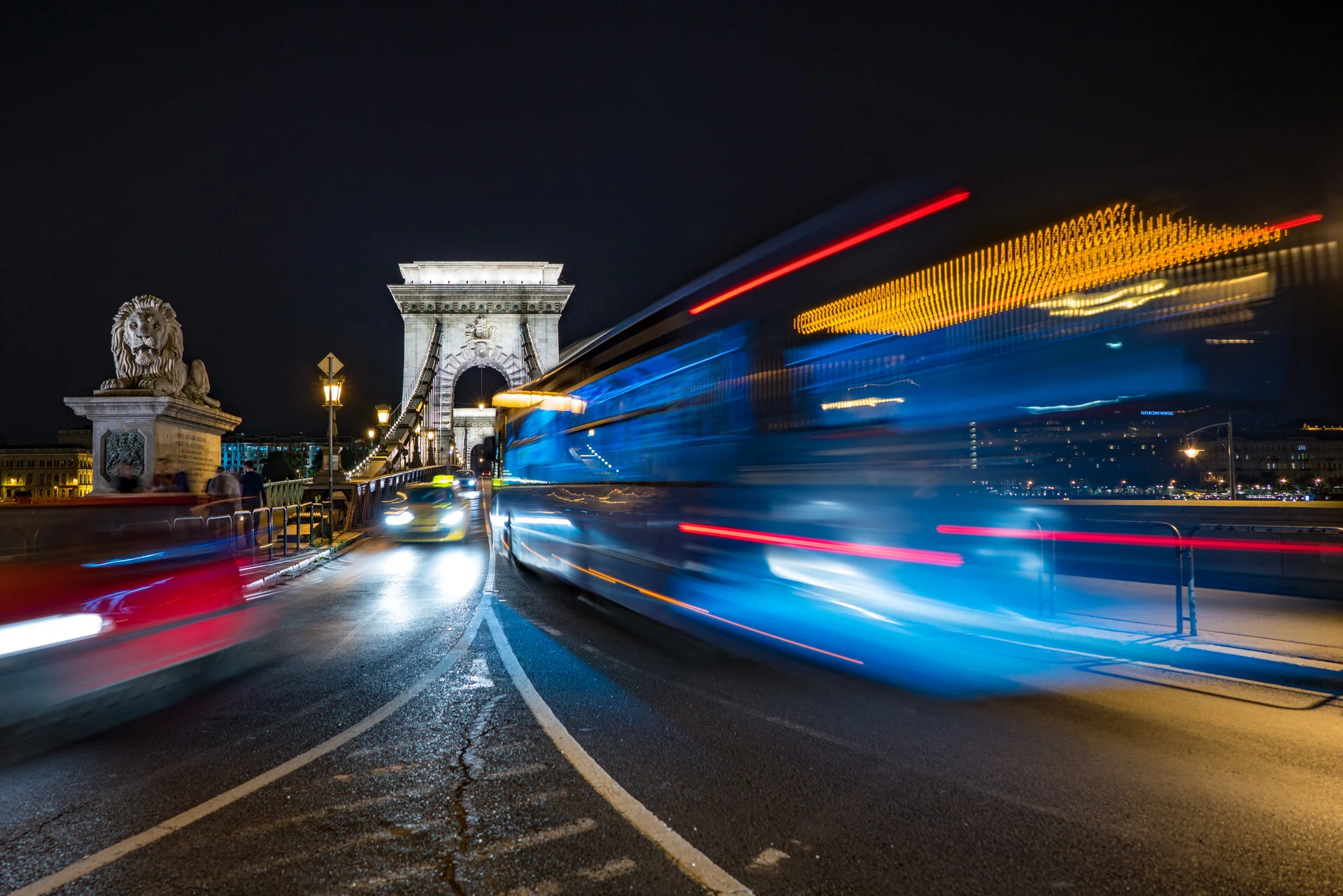
Cross the Chain Bridge (Budapest's oldest, 1849) to the Buda side and take the funicular up Castle Hill. The Buda Castle complex holds the Hungarian National Gallery and the Budapest History Museum, but the real draw up here is the views.
Walk north along the hill to Matthias Church (the diamond-patterned tiled roof, where Habsburg kings were crowned) and the adjacent Fisherman's Bastion, the neo-Romanesque terrace of white turrets that frames the single best panorama of the Parliament and the Danube. Go early or near sunset; the midday crowds are heavy and the upper terraces charge a small fee.
- 🚡 Buda Castle funicular + Castle District walking tour
- ⛪ Matthias Church + Fisherman's Bastion ticket
- 🪖 Hospital in the Rock nuclear bunker tour
Late afternoon, walk or take the bus to the Citadella on Gellért Hill for the sunset view back over both cities and all the Danube bridges lit up. Dinner back down in Buda or back across in central Pest.
Top-Rated Activities in Budapest
♨️ Day 3: Thermal Baths Day, Széchenyi + Gellért
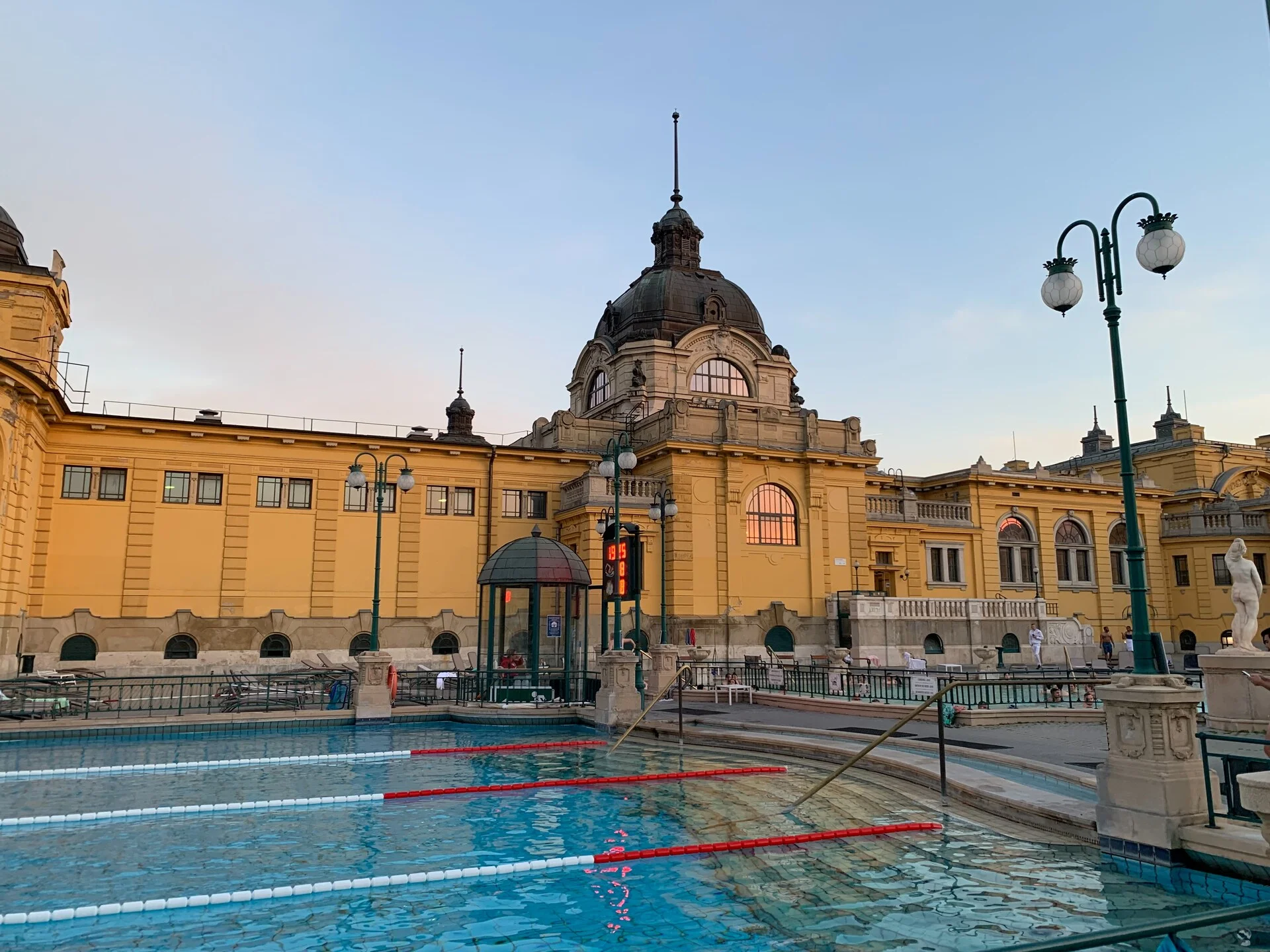
Széchenyi Baths, the giant neo-baroque thermal palace
This is the day people fall in love with Budapest. The city sits on more than 120 thermal springs, and bathing culture here is 2,000 years old (the Romans started it, the Ottomans perfected it). With ten days you can do the three best baths without rushing.
Morning: Széchenyi Baths. The giant neo-baroque yellow palace in City Park, with 18 pools and the famous outdoor thermal pool where old men play chess on floating boards in the steam. It's the iconic Budapest bath experience. Go at opening (7am) to beat the crowds.
Afternoon: Gellért Baths. More elegant and less hectic, an Art Nouveau masterpiece of stained glass and mosaic tile inside the Hotel Gellért. The architecture alone is worth the ticket.
- ♨️ Széchenyi Baths fast-track ticket
- 🏛️ Gellért Baths skip-the-line ticket
- 🎉 Széchenyi night bath Sparty ticket (the weekend pool party, if that's your speed)
For something completely different, the Rudas Baths preserve the original Ottoman octagonal pool under a 1550 domed cupola. The rooftop hot tub at sunset, looking over the Danube, is one of Budapest's signature experiences. Check the schedule first: Rudas has gender-segregated weekdays and mixed weekends.
🕯️ Day 4: Jewish Quarter, Great Synagogue + Ruin Bars
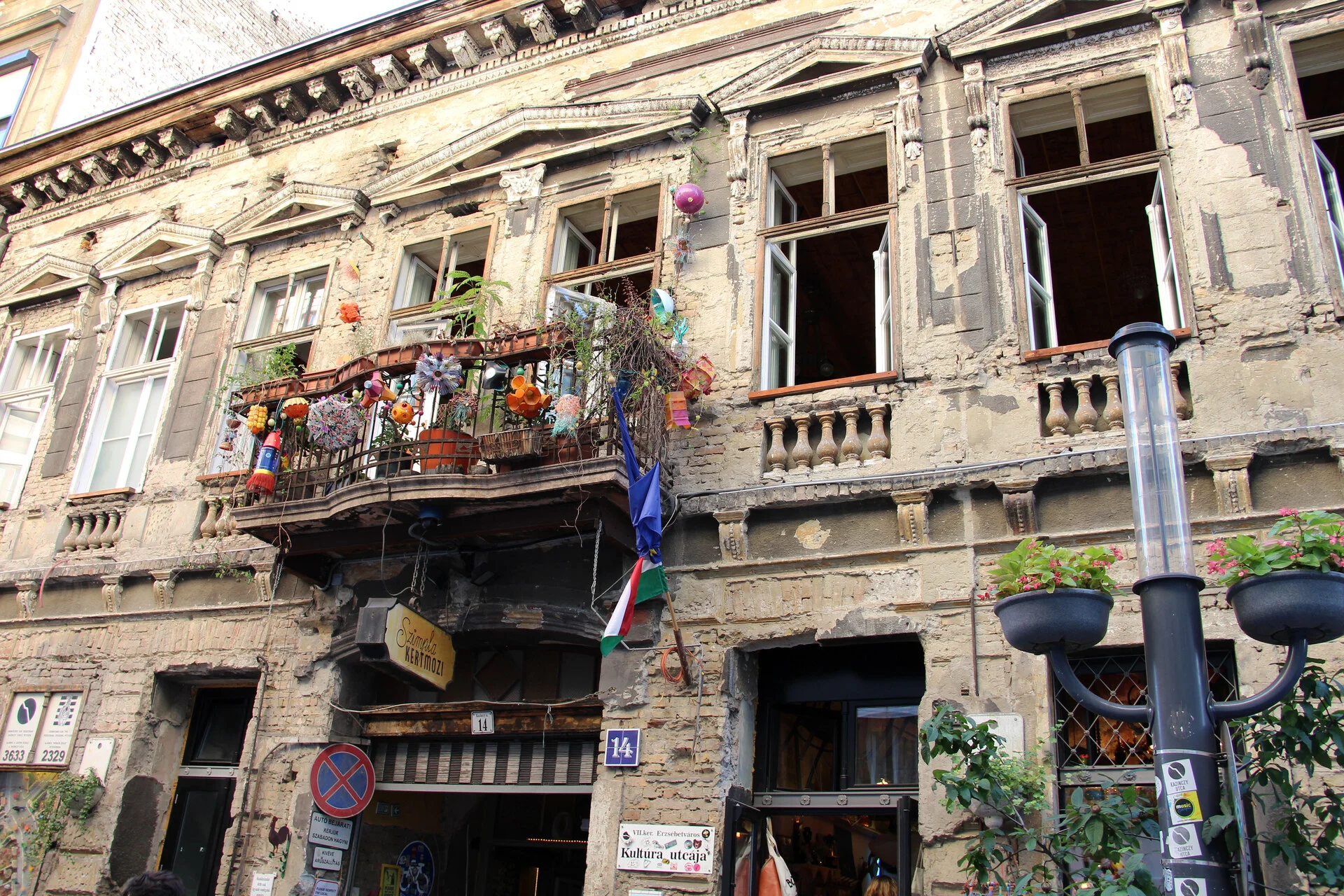
Szimpla Kert, the original Budapest ruin bar
The Dohány Street Synagogue is the largest synagogue in Europe and the second-largest in the world (Moorish revival, 1859, seats 3,000). The complex includes the Holocaust Memorial, a metal weeping willow whose leaves are inscribed with the names of victims, and the Hungarian Jewish Museum. This is the emotional heart of District VII, and it deserves a slow morning.
- 🕯️ Great Synagogue skip-the-line + Jewish Quarter tour
- 🍻 Ruin bar crawl with a local guide
- 🥖 Jewish Quarter food tour
Spend the afternoon walking District VII: street art and murals, the old ghetto wall fragments, kosher delis, and the lángos and craft-beer spots that have made this Budapest's most creative neighborhood. Stop for a lángos (deep-fried dough, sour cream, cheese, garlic) as a late snack.
In the evening, the ruin bars. Start at Szimpla Kert, the original, opened in 2002 inside a derelict pre-war building, now a labyrinth of mismatched furniture, art installations, and a dozen tiny bars. It's touristy but genuinely unlike anywhere else on earth. Go early evening before it fills, then wander the smaller ones nearby (Mazel Tov, Instant-Fogas).
🚢 Day 5: Danube + Margaret Island + Evening Cruise
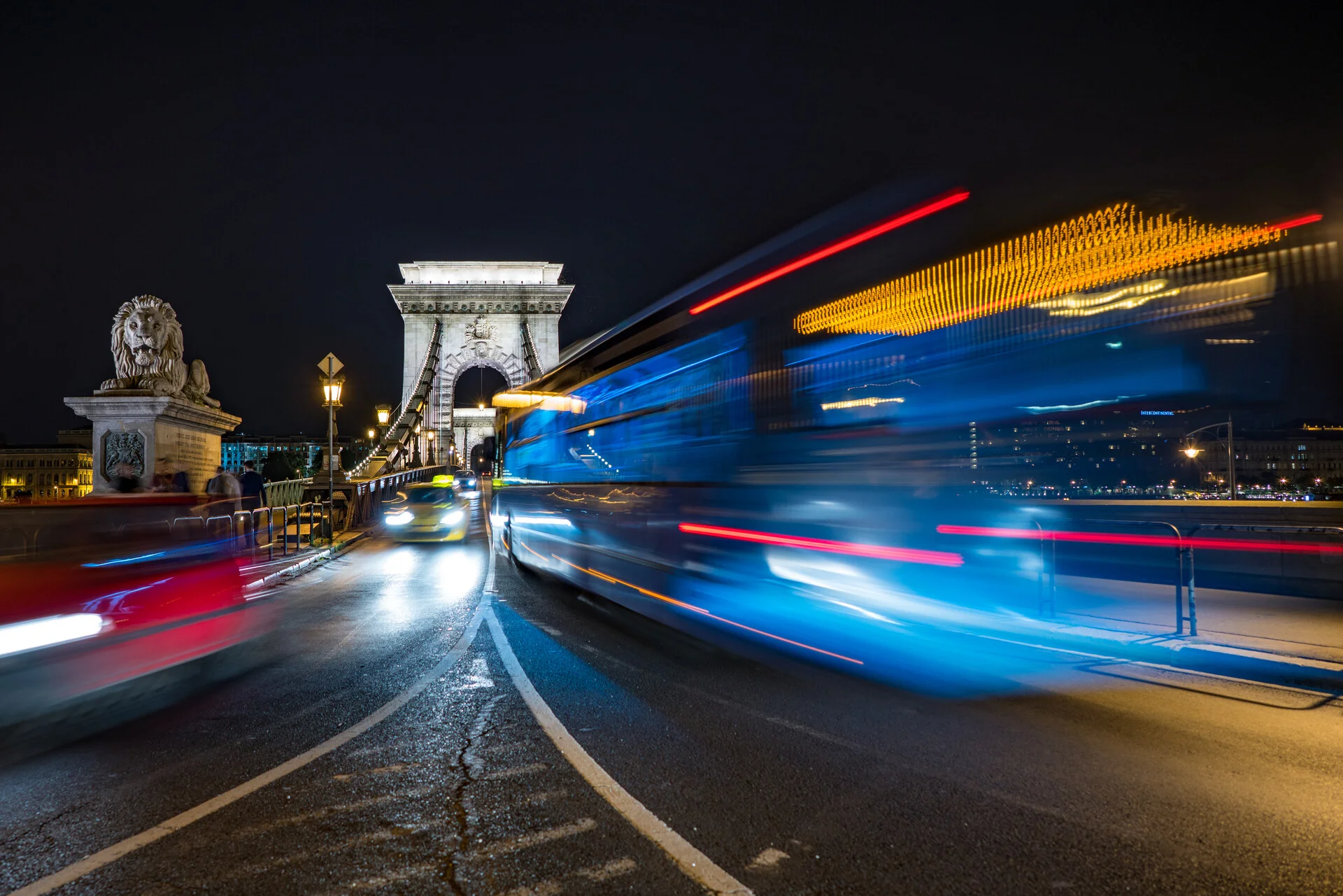
The Széchenyi Chain Bridge, Budapest's oldest
Start at the Central Market Hall (Nagyvásárcsarnok), the cathedral-sized 1897 indoor market. Ground floor: paprika in every grade, Tokaji wine, salami, embroidered linen. Upstairs: the best lángos counters in the city and cheap, excellent Hungarian street food for lunch.
Walk or tram up to Margaret Island, the 2.5 km car-free park island in the middle of the Danube. Rent a bike or a pedal-cart, see the medieval convent ruins, and time your visit for the musical fountain (choreographed water shows on the hour). It's where Budapest goes to breathe.
On the Pest embankment, the Shoes on the Danube Bank memorial is essential and sobering: 60 pairs of iron shoes commemorating Jews shot into the river by the Arrow Cross militia in 1944 to 1945. Pause here.
Keep the afternoon free (a spa return is a popular choice), then end the day with a Danube dinner cruise. Budapest's UNESCO-listed riverfront, with the Parliament and Castle floodlit, is one of the great night views in Europe, and it lands best from the water.
Where to Stay in Budapest
Book through this map and you help support our travels, at no extra cost to you. We earn a small commission, and it means a lot.
🎨 Day 6: Day Trip to Szentendre
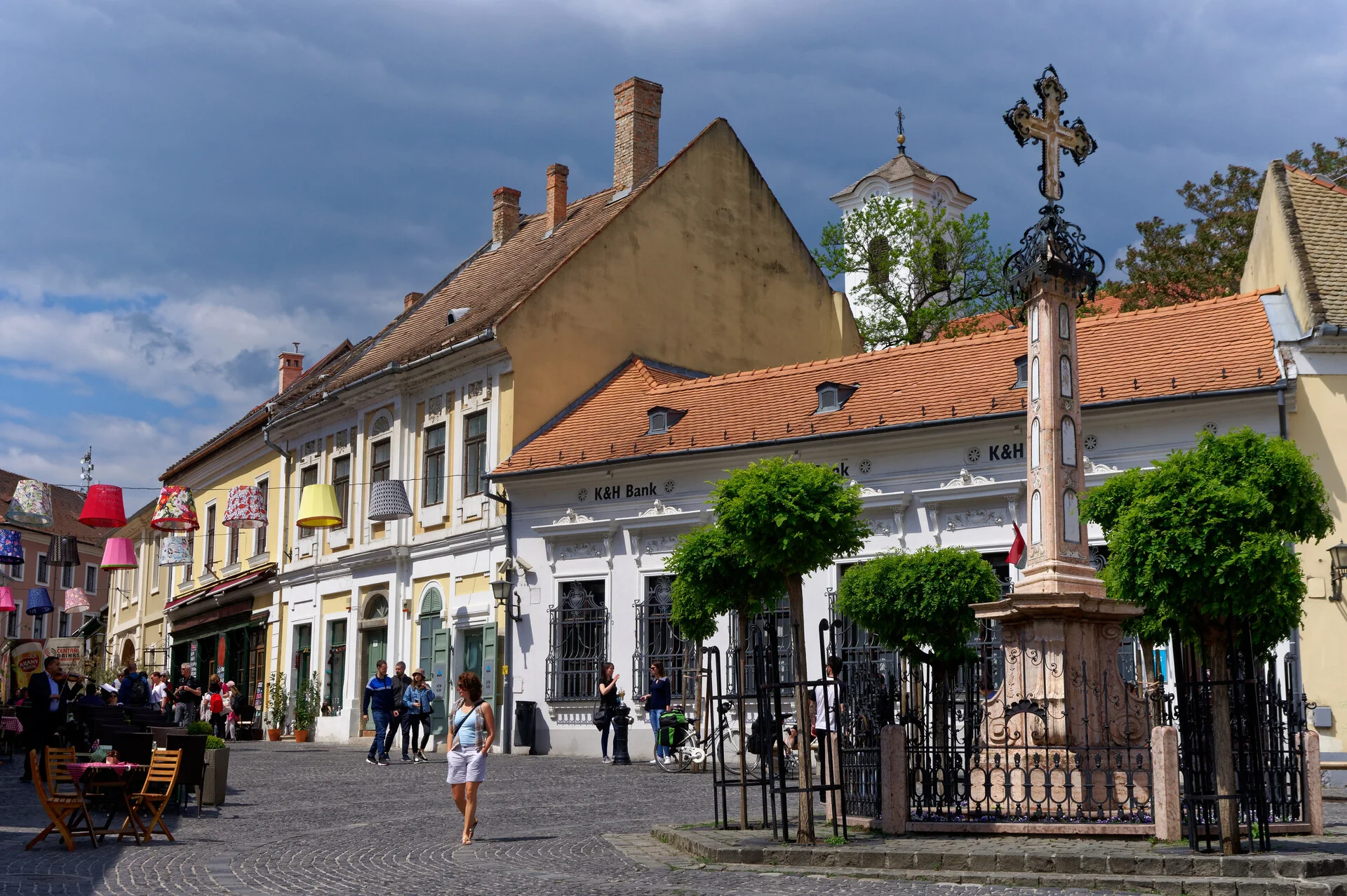
Szentendre's colorful baroque main square
Szentendre is the easiest day trip from Budapest, a riverside artists' town 40 minutes north on the HÉV suburban train from Batthyány tér (a single transit-zone ticket plus a small supplement, around 3 EUR each way). It makes a perfect relaxed half-day.
The baroque old town is a tangle of cobbled lanes, Serbian Orthodox churches (a legacy of refugees who settled here in the 1690s), galleries, and craft shops. Highlights:
- Fő tér (Main Square): the postcard-colored heart of town, anchored by the 1763 plague cross
- Belgrade Cathedral: the Serbian Orthodox cathedral, a quiet, ornate surprise
- Marzipan Museum: exactly as odd and delightful as it sounds (a full-size marzipan Michael Jackson features)
- Skanzen (Hungarian Open-Air Museum): just outside town, a huge open-air museum of relocated village architecture from across Hungary, worth it if you have a full day
Lunch is wine and lángos on the Danube promenade. Because it's only a half-day, pair it with a relaxed afternoon back in Budapest, or a return thermal-bath soak. For the deeper day-trip context, see our Central Europe itinerary.
⛪ Day 7: Day Trip to the Danube Bend (Visegrád + Esztergom)

The Danube Bend from the Visegrád Citadel
North of Budapest, the Danube makes a dramatic 90-degree turn through forested hills. The Danube Bend packs two of Hungary's most important historic sites into one day. The organized day tour is the easiest way to do it (it combines both plus a Danube boat leg); the DIY version is bus/train plus a ferry.
- Visegrád: the hilltop Citadel with the iconic panorama of the river bending below, plus the Renaissance Royal Palace ruins of King Matthias Corvinus in the village
- Esztergom: Hungary's religious capital and the seat of its first king. The Esztergom Basilica is the largest church in Hungary; climb the dome for a view across the Danube into Slovakia (the Mária Valéria Bridge literally crosses the border)
- 🚌 Danube Bend full-day tour from Budapest (Visegrád + Esztergom + Szentendre)
- ⛴️ Danube Bend cruise day trip
If you'd rather DIY: trains run to Esztergom from Nyugati station (1.5 hours), and the MAHART ferry connects the Danube Bend towns in summer. A combined tour is genuinely worth it here because the logistics of linking Visegrád and Esztergom by public transport eat a lot of the day.
🍷 Day 8: Day Trip to Eger (Wine + Baroque Town)
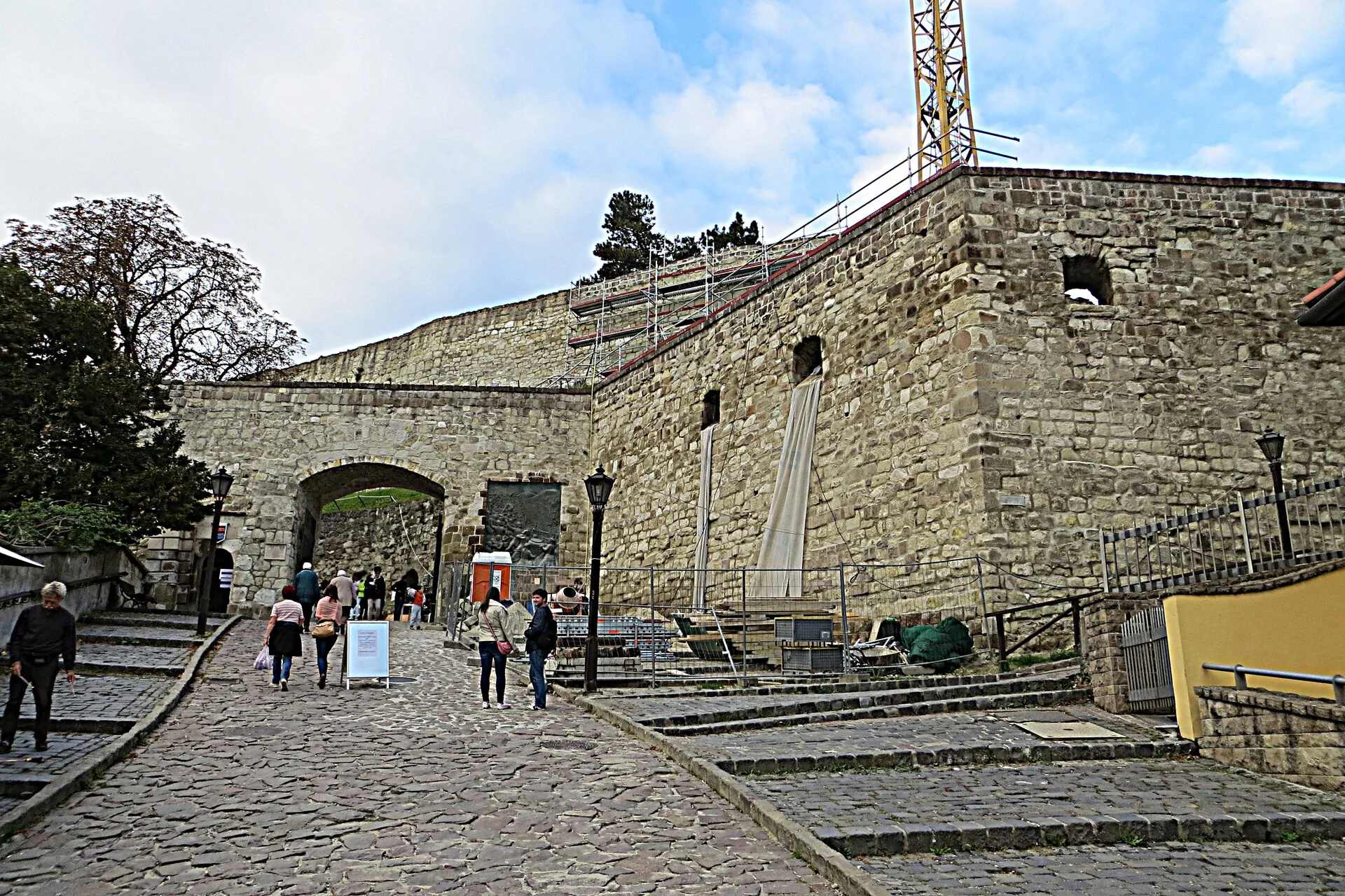
Eger Castle, the site of the legendary 1552 siege
Eger is the wine day trip. Two hours by direct train from Keleti station (around 10 EUR each way), a perfectly preserved baroque town wrapped around a castle with one of the great underdog stories in European history.
Eger Castle: in 1552, roughly 2,000 Hungarian defenders held off an Ottoman army of around 40,000 for 39 days. The legend says the defenders drank red wine before battle and the Turks, seeing the red stains on their beards, believed they were drinking bull's blood for strength. That's the origin story of Egri Bikavér ("Bull's Blood"), Hungary's most famous red.
The baroque old town also holds the northernmost Ottoman minaret in Europe (you can climb its 97 narrow steps) and a beautiful main square. But the real reason people come is the Valley of the Beautiful Women (Szépasszony-völgy): a horseshoe of dozens of family wine cellars cut into the hillside, where you taste Bikavér and Egri Csillag straight from the barrel for a couple of euros a glass.
- 🍷 Eger + wine tasting day tour from Budapest
- 🏰 Eger Castle + Valley of the Beautiful Women private tour
A guided tour handles the transport and the cellar introductions (and a designated driver, which matters here). Doing it independently is cheap and easy by train, but plan the wine valley as the late-afternoon finale and check the last train back.
👑 Day 9: Day Trip to Gödöllő (Sisi's Royal Palace)
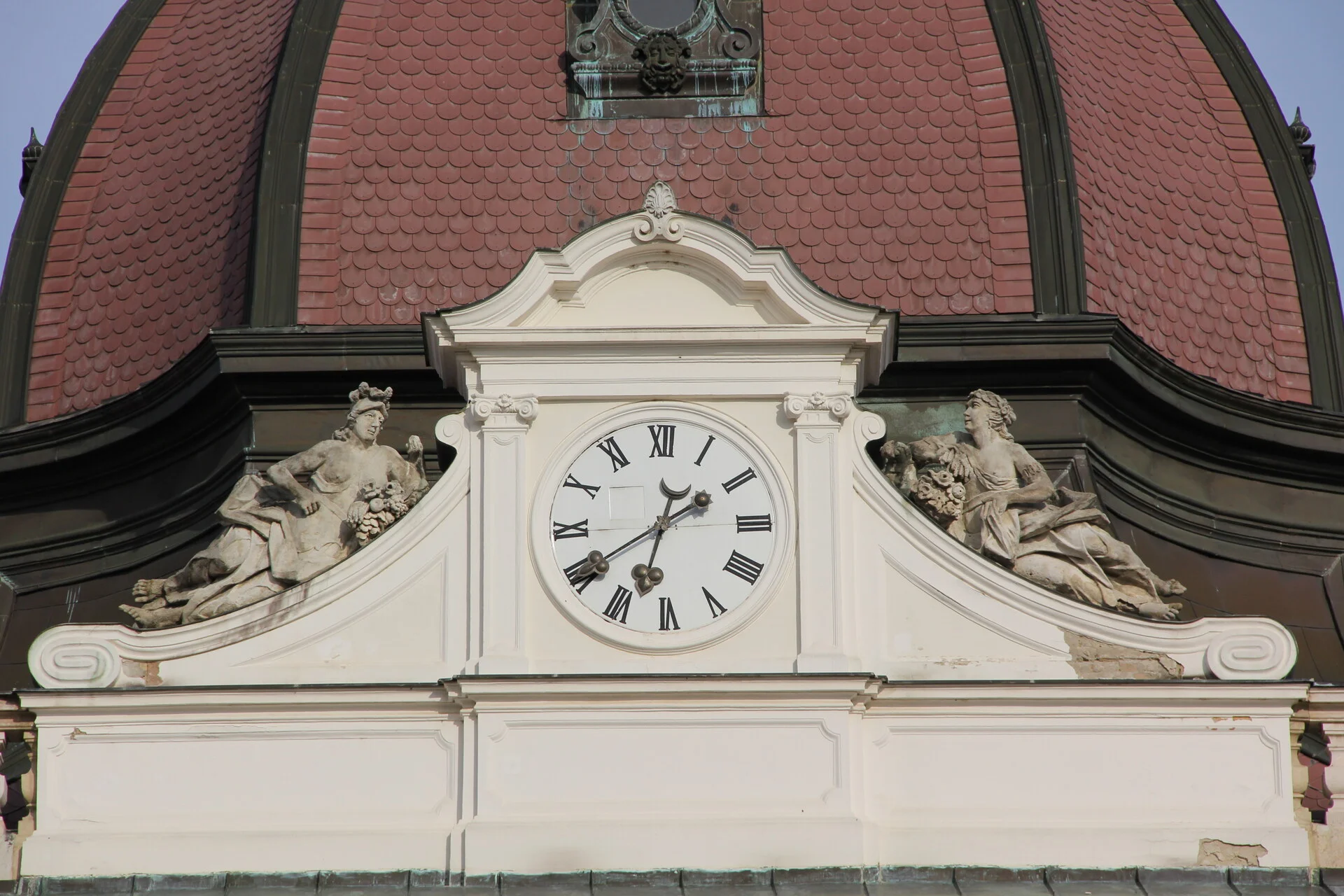
The Royal Palace of Gödöllő, Sisi's favorite residence
Gödöllő is a 45-minute ride on the HÉV suburban train from Örs vezér tere. The Royal Palace of Gödöllő (Grassalkovich Palace) is the largest Baroque palace in Hungary and was the favorite residence of Empress Elisabeth ("Sisi"), the Habsburg empress whose Vienna apartments you can also visit. If you're doing the wider Central Europe trip, this is the thread that ties Budapest back to Vienna.
Inside: Sisi's restored private apartments (her preferred lilac-and-violet color scheme intact), the ceremonial hall, and the Baroque court theatre, one of the few surviving in the world. The gardens are at their best in June and July when the surrounding region's lavender is in bloom.
- 👑 Gödöllő Palace day trip from Budapest
- 🏖️ Lake Balaton day tour from Budapest (the summer alternative)
Seasonal swap: in high summer, many travelers prefer to trade Gödöllő for Lake Balaton, Central Europe's largest lake (about 1.5 hours by train). The Tihany peninsula, lavender fields, Balatonfüred wine, and beach swimming make it a great hot-weather day. We default to Gödöllő because it's year-round and weather-independent, and the Sisi connection ties the whole Habsburg story together.
✈️ Day 10: Final Day, Last Bath, Market, Departure
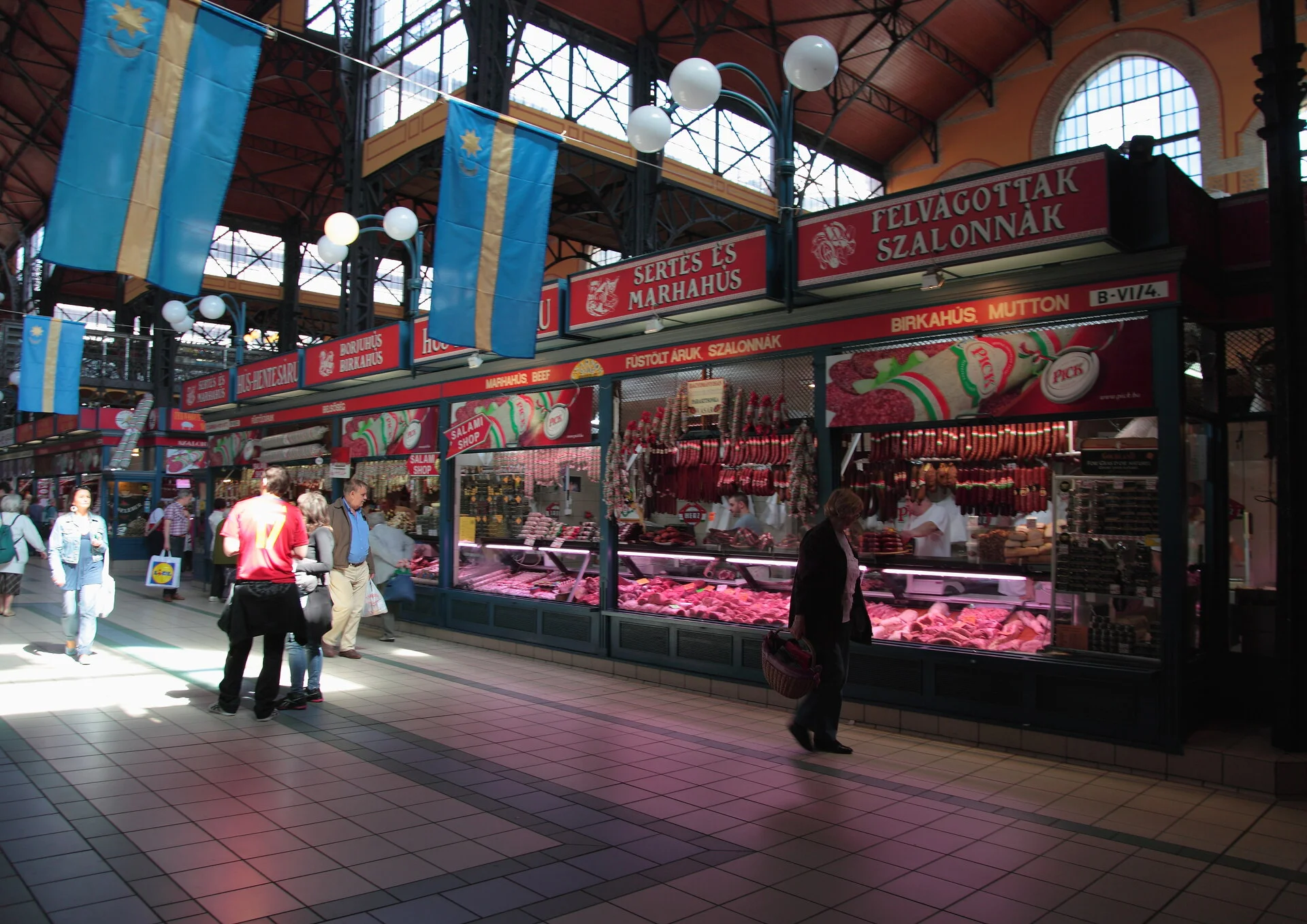
The Great Market Hall, perfect for last-day souvenirs
Start with one last thermal soak. The Rudas rooftop tub at opening (looking over the Danube with the city waking up) is the quiet, perfect goodbye, or simply return to Széchenyi for the full-scale finale.
Back to the Central Market Hall for souvenirs that actually travel: vacuum-sealed smoked paprika (sweet "édes" and hot "csípős"), a bottle of Tokaji Aszú dessert wine (the "wine of kings, king of wines"), Túró Rudi bars, and hand-embroidered Kalocsa linen.
For the farewell coffee, the New York Café bills itself as "the most beautiful café in the world" and genuinely leans into the claim: gilded ceilings, marble columns, chandeliers, and an Esterházy cake worth the tourist markup at least once. Get there before noon to avoid the longest queues.
- 🚖 Pre-book a Budapest airport private transfer for departure
Ten days, two cities across the Danube, the world's best urban thermal-bath culture, and four day trips most first-timers never reach. Budapest rewards slow travel more than almost any capital in Europe, and it does it for less money than Vienna or Prague. Continue the region with our 10-day Vienna itinerary or 10-day Prague itinerary.
🛏️ Where to Stay in Budapest: Best Neighborhoods
Budapest is one of the best-value capitals in Europe for hotel quality per euro. For a 10-day trip, stay central in Pest to minimize transit time.
- District V (Belváros / Lipótváros): our top pick. Walkable to Parliament, the Basilica, the Danube, and the metro. 90 to 180 EUR per night for very good hotels.
- District VI (Terézváros): Andrássy Avenue, the Opera House, excellent restaurants. 80 to 150 EUR.
- District VII (Erzsébetváros / Jewish Quarter): nightlife and ruin bars on your doorstep, which also means it's loud at night. 70 to 130 EUR.
- District I (Buda Castle side): quiet and scenic with fewer dining options and more uphill walking. 90 to 160 EUR.
Book via Booking.com for cancellation flexibility, and aim for 8.5+ review scores. Your euro stretches noticeably further here than in Vienna or Prague, so a tier of hotel that would be a splurge elsewhere is mid-range in Budapest.
🛏️ Choosing a district? We break down all five by traveller type, price, noise, and the best hotel in each in our full guide to where to stay in Budapest.
🚇 Getting to Budapest + Getting Around
Arriving at Liszt Ferenc Airport (BUD)
- 100E Airport Express bus: around 3.50 EUR, direct to Deák Ferenc tér in the center, 40 minutes. The standard option (there is no direct metro).
- Private transfer: 25 to 30 EUR door-to-door, best with luggage or after a late flight.
- Avoid unmarked taxis. Use Bolt (cheap and reliable in Budapest) or a pre-booked transfer.
Train Arrivals
Three main stations, all metro-connected: Keleti (east, trains from Vienna and Eger), Nyugati (north, Esztergom), and Déli (Buda side). International trains from Vienna take around 2.5 hours.
Public Transport in Budapest
The system is excellent and cheap. Metro Line 1 (the yellow line, opened 1896) is the oldest electrified underground on continental Europe and is UNESCO-listed; ride it as a sight in itself. Tram 2 runs along the Pest Danube embankment and is a sightseeing tour disguised as public transit. The HÉV suburban trains reach Szentendre and Gödöllő.
A 72-hour travelcard is around 13.50 EUR. The Budapest Card bundles unlimited transit with thermal-bath discounts and free or discounted attractions; do the math against your planned baths and museums.
💰 Budget Breakdown for 10 Days in Budapest
Budapest is the cheapest of the three Central Europe capitals (noticeably less than Vienna, somewhat less than Prague). Here's what to budget across tiers:
| Category | Budget | Mid-Range | Luxury |
|---|---|---|---|
| Accommodation (10 nights) | 350 | 700–1,100 | 2,200+ |
| Food & drink (per day) | 18–28 | 45–70 | 130+ |
| Public transport (10 days) | 20 | 20 | 20 |
| Thermal baths + activities | 120–180 | 280–420 | 650+ |
| Day trip costs (4 trips) | 120–180 | 280–420 | 550+ |
| Total (excl. flights) | ~$800 | ~$1,600 | ~$3,800+ |
Estimated budget for 10 days in Budapest per person (USD)
Estimated budget for 10 days in Budapest per person (USD)
Money-saving tips:
- The Budapest Card can pay for itself fast if you're doing multiple baths and museums; do the per-attraction math first
- Thermal-bath combo and online tickets skip the cashier queue and sometimes bundle a locker
- The napi menü (daily lunch menu) at Hungarian restaurants is often 40 to 50% cheaper than the same dishes at dinner
- Ruin bars are dramatically cheaper than cocktail bars; a beer at Szimpla costs a fraction of a rooftop-bar drink
- For Eger, the train is cheap and easy, but a guided tour buys you a designated driver for the wine valley
🛡️ Don't Forget Travel Insurance
We never travel without insurance. Heymondo covers medical expenses, trip cancellation, and stolen or damaged electronics, with 24/7 assistance through their app. As one of our readers, you get 5% off your policy.
Get 5% off your travel insurance →If you purchase through our link, we may earn a commission at no extra cost to you. Discount not available for US residents.
🍽️ What to Eat in Budapest: Hungarian Food Highlights
Hungarian food is paprika-forward, hearty, and built for cold winters and big appetites. The dishes to try at least once:
- Gulyás (goulash): in Hungary it's a soup, not a stew, beef and paprika and potato in a clear broth. The stew version foreigners expect is closer to pörkölt.
- Lángos: deep-fried flatbread with sour cream, grated cheese, and garlic. The Central Market Hall upstairs version is the benchmark.
- Chicken paprikash: chicken in a paprika-cream sauce with nokedli (small dumplings).
- Kürtőskalács (chimney cake): spit-roasted sweet dough rolled in sugar or cinnamon. Touristy but try one warm.
- Pálinka: fruit brandy, 40%+, the traditional welcome shot. Apricot (barack) is the classic.
Hungarian wine punches far above its global reputation:
- Tokaji Aszú: the legendary sweet dessert wine, "the wine of kings, the king of wines" (Louis XV's words)
- Egri Bikavér (Bull's Blood): the bold Eger red with the siege legend
- Furmint: the dry white that's having an international moment
- 🍷 Budapest food and wine walking tour for a guided intro to all of the above
Best traditional restaurants we'd send anyone to: Getto Gulyás and Hungarikum Bisztró (classic Hungarian), Rosenstein (the city's best traditional kitchen, family-run since 1996), and Bestia for a modern take. For café culture: New York Café, Gerbeaud, and Central Kávéház.
📌 Why Budapest Deserves the Full 10 Days
Most trips to Budapest are three nights, just enough to see the Parliament, cross the Chain Bridge, and dip into one bath. Ten days unlocks something different: the full thermal-bath culture (Széchenyi, Gellért, the Ottoman Rudas), both sides of the river properly, the weight of the Jewish Quarter, the creative chaos of the ruin bars, and four day trips, Szentendre, the Danube Bend, Eger wine country, and Sisi's Gödöllő, that almost no first-timer reaches. And it does all of it cheaper than anywhere else in Central Europe.
Book your Parliament interior tour and thermal bath fast-track tickets ahead; both sell out daily in summer. Everything else is flexible. Browse all Budapest tours and tickets on GetYourGuide to lock in the high-demand experiences.
Building the bigger trip? Our Vienna, Budapest, Prague itinerary covers the full Central Europe loop. For more on the city alone, see our complete things to do in Budapest guide.
❓ FAQ: Planning Your 10-Day Budapest Trip
Is 10 days too long for Budapest?
No, especially with day trips. 4 to 5 days covers the city and its baths; the remaining days unlock Szentendre, the Danube Bend, Eger wine country, and Gödöllő, none of which fit in a typical 4-day visit.
What is the best month to visit Budapest?
April to June and September to October. Thermal baths are magical in the winter steam, and December has excellent Christmas markets. Avoid July and August if heat bothers you, though the outdoor baths are still great then.
Do I need to book Budapest thermal baths in advance?
For Széchenyi and Gellért, yes in peak season and on weekends. A fast-track ticket skips the often-long cashier line and guarantees entry. Rudas requires checking the gender-segregated versus mixed schedule before you go.
How much does 10 days in Budapest cost?
Budget travelers: 60 to 90 USD per day per person. Mid-range: 130 to 180 USD per day. Luxury: 280+ USD per day. Budapest is the cheapest of the Central Europe capitals; day trip costs add 40 to 80 USD per person.
Széchenyi or Gellért thermal baths, which is better?
Széchenyi for the iconic scale and the outdoor pools (and the chess players). Gellért for the elegant Art Nouveau architecture. With 10 days you have time for both, plus the Ottoman-era Rudas for a third, very different experience.
What's the best day trip from Budapest if I can only do one?
The Danube Bend (Visegrád and Esztergom) for scenery and history in one trip, or Eger if you want wine and a great castle story. Szentendre is the easiest half-day. Most travelers regret not doing at least two.
Are the Budapest ruin bars worth it?
Yes. Szimpla Kert (the original, 2002) is touristy but genuinely unique, a labyrinth of mismatched furniture, art, and bars inside a derelict building. Go early evening before it fills, then explore the smaller ones nearby in District VII.
Is Budapest safe at night?
Yes, central Budapest is very safe. Standard precautions apply: watch for overpriced tourist-trap bars that pad bills, avoid unmarked taxis (use Bolt), and be alert for pickpockets on crowded trams and at major sights.