
Where to Stay in Vienna: Best Areas & Hotels (2026)
This article contains affiliate links. If you make a purchase through these links, we may earn a small commission at no extra cost to you. This helps us keep creating free content for you!
Pick the wrong Vienna base and you spend 40 minutes commuting in and out of the centre every day. Pick the right one and you walk out of your hotel into the imperial city: cathedral spires, coffee houses, and an opera house, all before your first U-Bahn ride. In a city this compact and this well-connected, the district you sleep in shapes the whole trip.
The best areas to stay in Vienna are the Innere Stadt (1st district, for first-timers who want to walk everywhere), Leopoldstadt (2nd, for value and families near the Prater), Neubau and Mariahilf (7th and 6th, for design, food, and younger travellers), Landstrasse (3rd, for couples and quick train access near the Belvedere), and Josefstadt (8th, for budget travellers who want a quiet local feel). Vienna's districts spiral outward from the Innere Stadt, so the lower the number, the closer to the centre.
We compared every central Vienna base on the same five criteria: walkability to the sights, U-Bahn access, hotel cost, food and café scene, and atmosphere. The result is this guide. If you have not yet planned what to see once you arrive, see our full 10-day Vienna itinerary and our guide to the best things to do in Vienna.
🗺️ Vienna at a Glance: Districts, the Ring & Getting Around
Vienna is divided into 23 numbered districts (Bezirke) that spiral outward like a snail shell. The 1st district, the Innere Stadt, is the historic core, ringed by the grand Ringstrasse boulevard built on the line of the old city walls. Districts 2 through 9 form the inner belt just outside the Ring, and almost every base worth choosing as a tourist sits in the 1st or in this inner belt. The higher the district number, the further from the centre, with a few exceptions across the Danube.
The single most important stay criterion in Vienna is U-Bahn proximity. The city has five subway lines (U1, U2, U3, U4, U6) that run every 2 to 5 minutes, plus a dense tram and bus network. A hotel within a 5-minute walk of a U-Bahn station effectively puts the whole city 15 minutes away. A 24-hour public transport ticket costs 8 euros, a 48-hour ticket 14.10 euros, and a 72-hour ticket 17.10 euros, all covering unlimited U-Bahn, tram, and bus rides in the central zone. For sightseeing on top of transport, the Vienna hop-on hop-off bus with the Giant Ferris Wheel and a Danube river cruise is a practical way to link the main sights on a first day.
The other key factor is the Ring. Anything inside or touching the Ringstrasse is walking distance to the Hofburg, the State Opera, and St. Stephen's Cathedral. The further outside the Ring you base, the more you rely on the U-Bahn, which is no hardship given how good it is, but it does shift the calculus toward cheaper rooms in exchange for a short ride. You do not need a car: parking is scarce, the 1st district is a restricted zone, and everything central is faster on foot or rail.
Where to Stay in Vienna
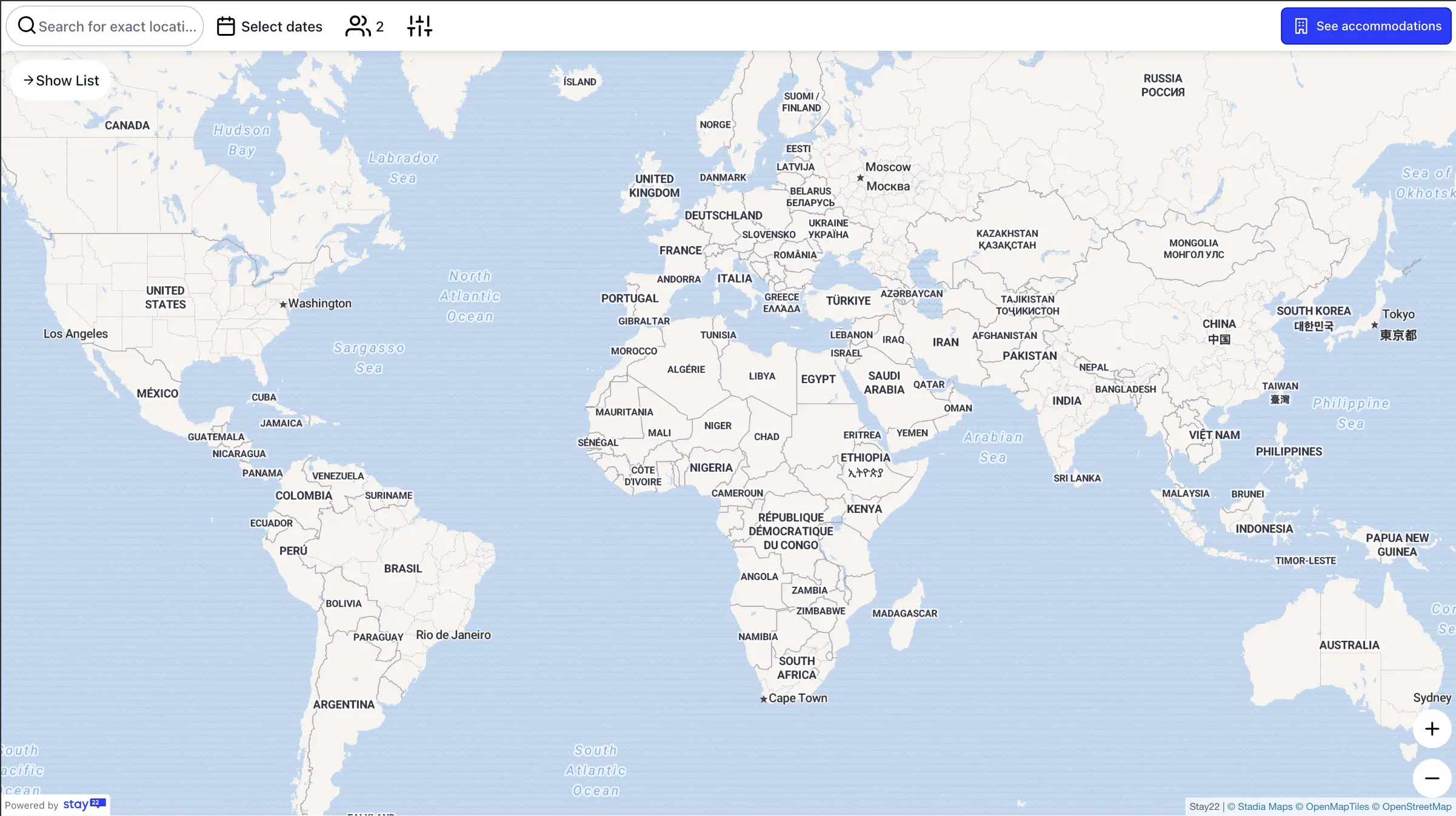
Book through this map and you help support our travels, at no extra cost to you. We earn a small commission, and it means a lot.
👑 Innere Stadt (1st District): Best for First-Timers
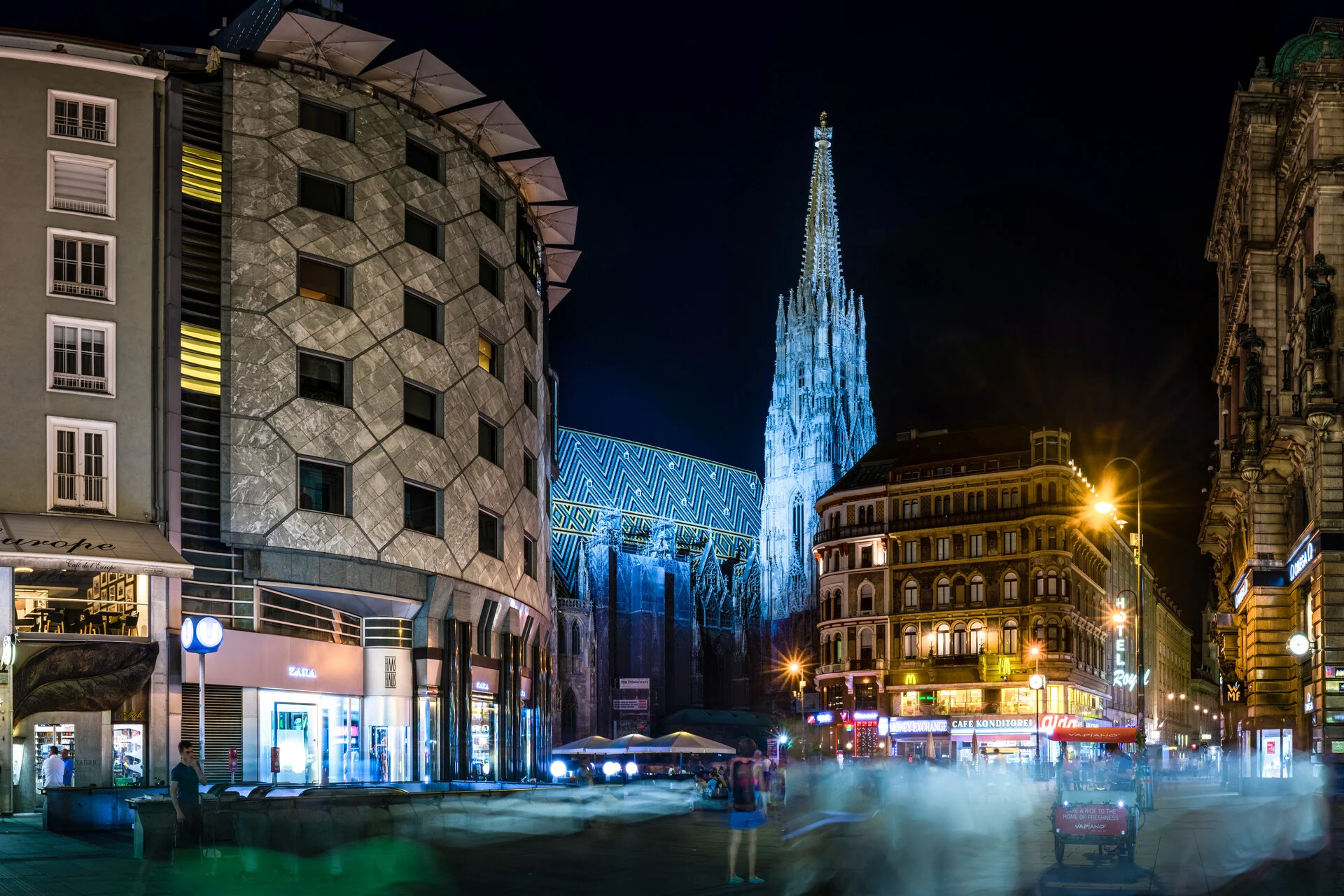
The Innere Stadt is the best Vienna base for first-time visitors. Staying inside the Ring means you walk to almost everything: St. Stephen's Cathedral, the Hofburg imperial palace, the State Opera, the Graben and Kohlmarkt shopping streets, and a dozen of the city's historic coffee houses are all within 10 to 15 minutes on foot. If you want to step out of your hotel into postcard Vienna and skip the U-Bahn entirely on most days, this is the choice.
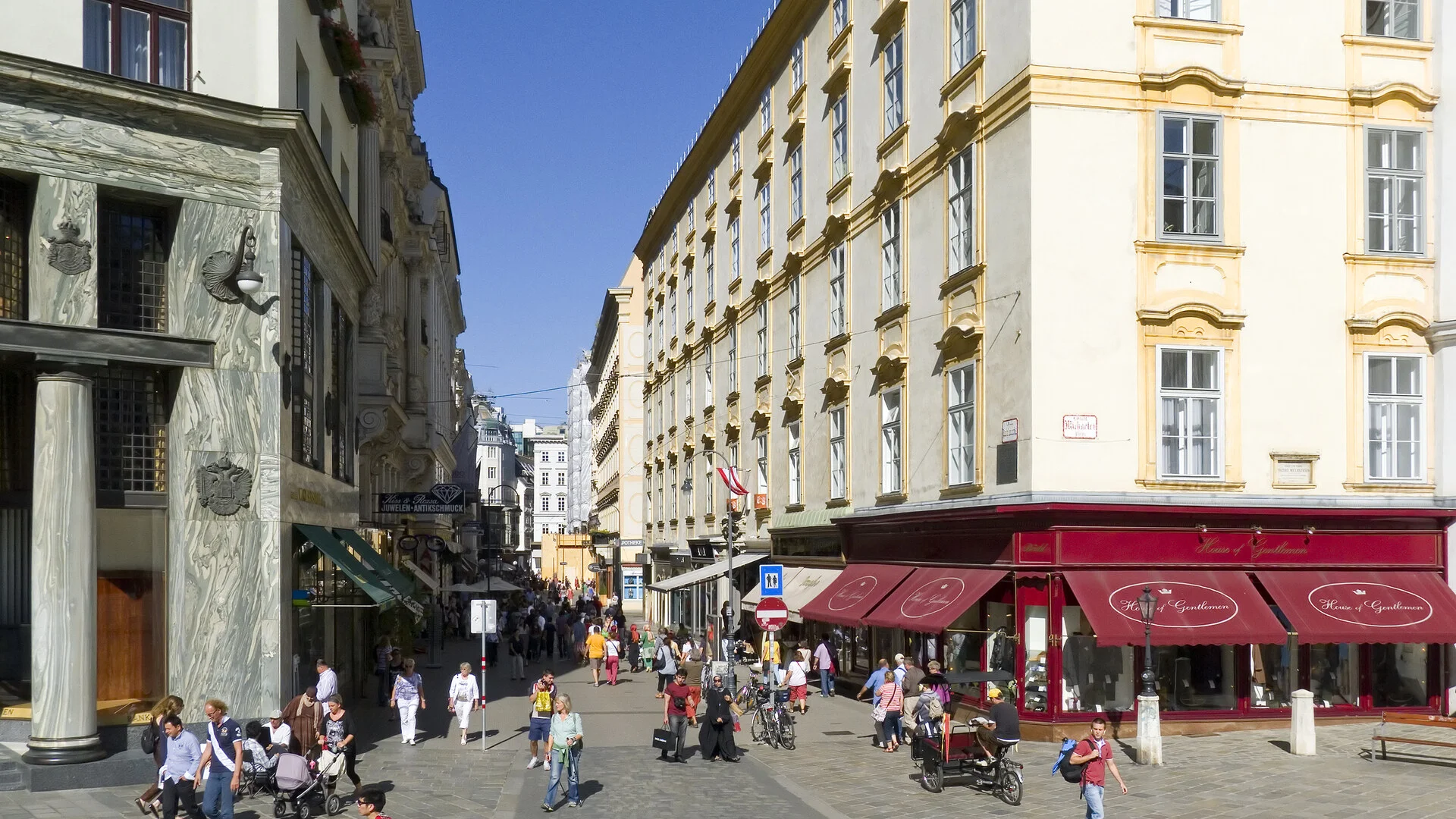
The Kohlmarkt and Graben sit at the heart of the Innere Stadt, Vienna's most walkable and most central base.
The 1st district is small and dense, so location within it matters less than in a bigger zone: almost any hotel here is walkable to the main sights. The area immediately around Stephansplatz is the liveliest (and noisiest at night); the streets near the Hofburg and the Ring are quieter and more refined. The trade-off is uniform: this is the most expensive base in Vienna, and genuine budget rooms inside the Ring are rare.
Best for: first-time visitors, travellers on a short 2 to 3-day trip, anyone who wants to walk to the imperial sights, couples celebrating a special occasion.
Trade-offs: the most expensive district, limited true budget options, some streets are busy with tourists by day and bar crowds at night.
Hotel tiers: luxury, the legendary Hotel Sacher Wien (5-star opposite the State Opera, home of the original Sachertorte, ~600 euros and up); boutique mid-range, Boutique Hotel am Stephansplatz (facing the cathedral, ~190 to 280 euros); browse the full range on Booking.com Innere Stadt hotels.
For an iconic Vienna experience straight from the centre, the Vienna State Opera skip-the-line guided tour takes you behind the scenes of the world's largest repertoire theatre, a 5-minute walk from most 1st-district hotels. For the imperial palaces, look at a Hofburg and Sisi Museum guided tour to understand the Habsburg story behind the architecture.
Top-Rated Activities in Vienna
🎡 Leopoldstadt (2nd District): Best for Value & Families
Leopoldstadt is the best-value central base in Vienna and the most family-friendly. It sits just across the Danube Canal from the Innere Stadt, so the historic centre is one U-Bahn stop or a 10-minute walk away, yet hotel prices run noticeably lower than inside the Ring. The district wraps around the Prater, Vienna's huge public park with the famous Giant Ferris Wheel, jogging paths, and open green space, which makes it a genuine breather from the dense centre.
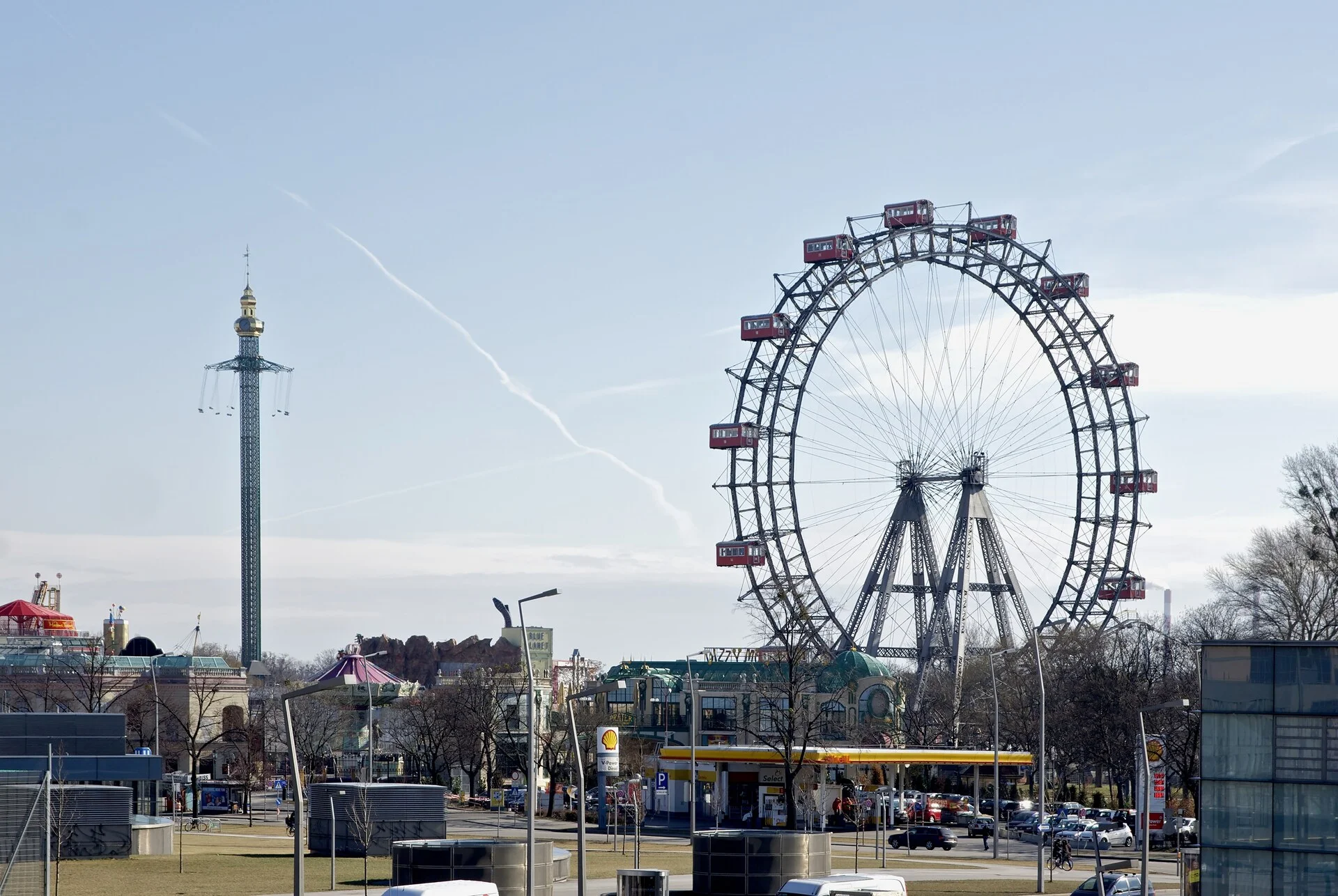
Leopoldstadt wraps around the Prater and its Giant Ferris Wheel, with quick U-Bahn access to the centre and lower hotel prices.
Once a quiet residential area, Leopoldstadt has become one of Vienna's most interesting districts, with a growing café and restaurant scene around the Karmelitermarkt and easy access to the Augarten park and its baroque gardens. Wide flat streets make it comfortable with a stroller, and apartment-style hotels are common, which suits families who want a kitchen and extra space.
Best for: families with kids, budget-conscious couples, travellers who want green space and lower prices without sacrificing a central location.
Trade-offs: fewer marquee sights within the district itself, a slightly less polished feel than the 1st on some streets.
Hotel tiers: mid-range and value, Hotel Vienna beim Prater (close to the Prater and U-Bahn, ~100 to 160 euros); browse the district on Booking.com Leopoldstadt hotels.
The Prater is on your doorstep here, so the Giant Ferris Wheel skip-the-line ride is an easy first evening, with views over the city from the historic wooden cabins. For a different angle on the city, a Danube sightseeing river cruise departs from the nearby canal and Reichsbrücke piers.
🎨 Neubau & Mariahilf (7th & 6th): Best for Design, Food & Younger Travellers
Neubau and the neighbouring Mariahilf are the best Vienna bases for younger travellers, foodies, and design lovers. The 7th district sits directly behind the MuseumsQuartier, one of the world's largest cultural complexes, and runs along Mariahilfer Strasse, Vienna's main shopping street. This is where the city feels most contemporary: independent boutiques, third-wave coffee, natural-wine bars, and the cobbled Spittelberg quarter of Biedermeier houses and restaurants.
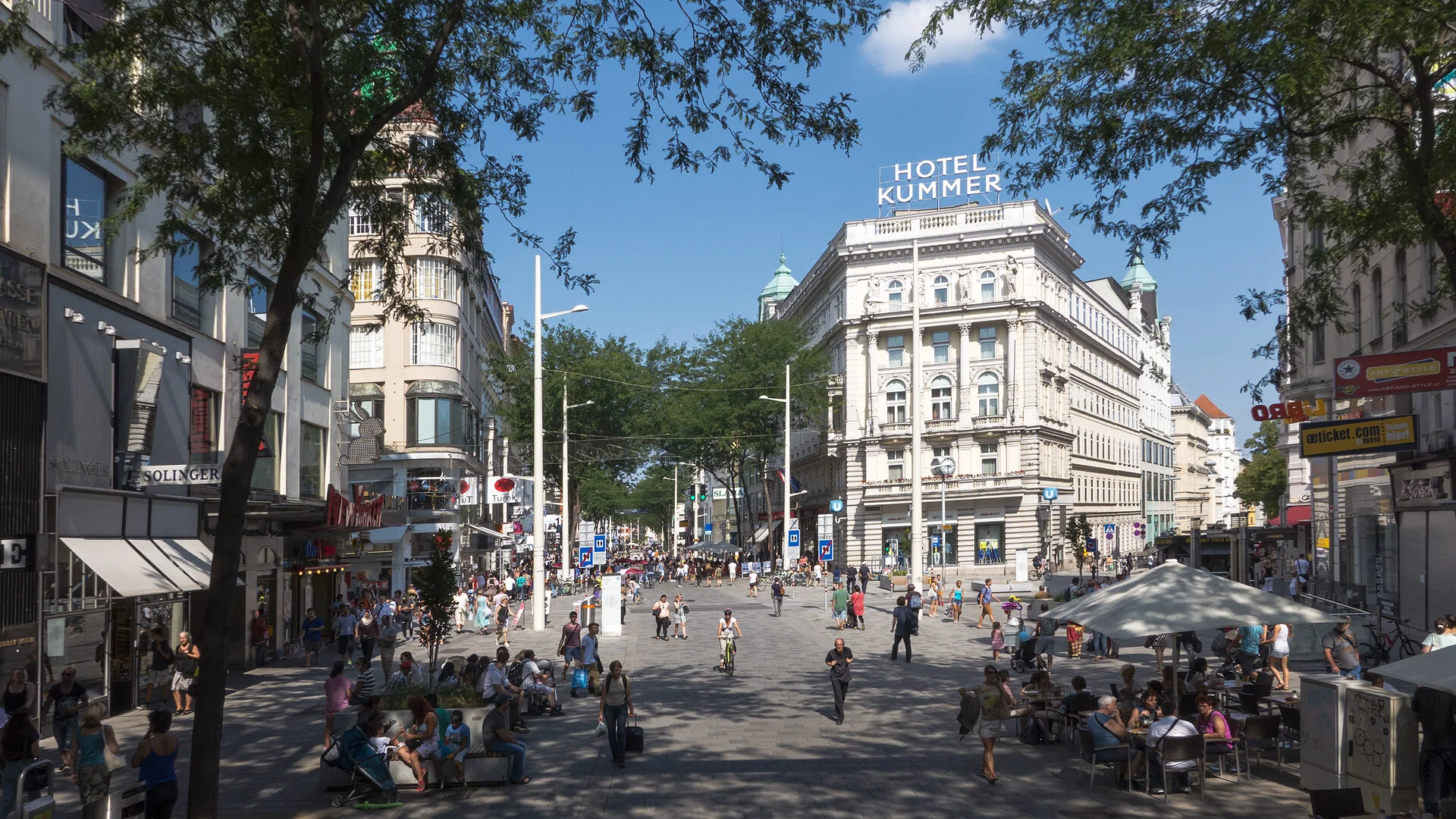
Neubau and Mariahilf line Mariahilfer Strasse and the MuseumsQuartier, Vienna's most design-forward and food-focused base.
The location is excellent value for what you get: you are two U-Bahn stops (U2 or U3) from the centre, beside the museums, and surrounded by Vienna's best casual dining, yet rooms run 20 to 30 percent below 1st-district prices. The Naschmarkt, Vienna's largest open-air market, runs along the southern edge of Mariahilf and is one of the city's great food destinations.
Best for: younger travellers, foodies, design and museum lovers, shoppers, repeat visitors who have already done the 1st-district sights.
Trade-offs: a longer (though still short) hop to the imperial core, a lively nightlife scene that can mean noise on the busiest streets.
Hotel tiers: design, the 25hours Hotel beim MuseumsQuartier (playful circus-themed rooms and a rooftop bar, ~150 to 230 euros); mid-range, Hotel Indigo Vienna - Naschmarkt (~140 to 200 euros); browse on Booking.com Neubau hotels.
The Naschmarkt is the obvious eat-your-way activity from this base: the Naschmarkt guided food tour walks you through the stalls with tastings. To pair Vienna's food with its café culture, the typical Austrian food tour with a coffee house visit covers the classics, from schnitzel to Sachertorte.
🌳 Landstrasse & Belvedere (3rd District): Best for Couples & Train Access
Landstrasse is the best Vienna base for couples and for travellers arriving or leaving by train. The 3rd district is home to the Belvedere palace and its baroque gardens, where Gustav Klimt's "The Kiss" hangs, and it sits next to Wien Hauptbahnhof, the central station with direct trains to Salzburg, Prague, Budapest, and the airport. It is leafy, refined, and quieter than the 1st, with the embassy quarter and elegant 19th-century streets, yet still a short tram or U-Bahn ride from the centre.
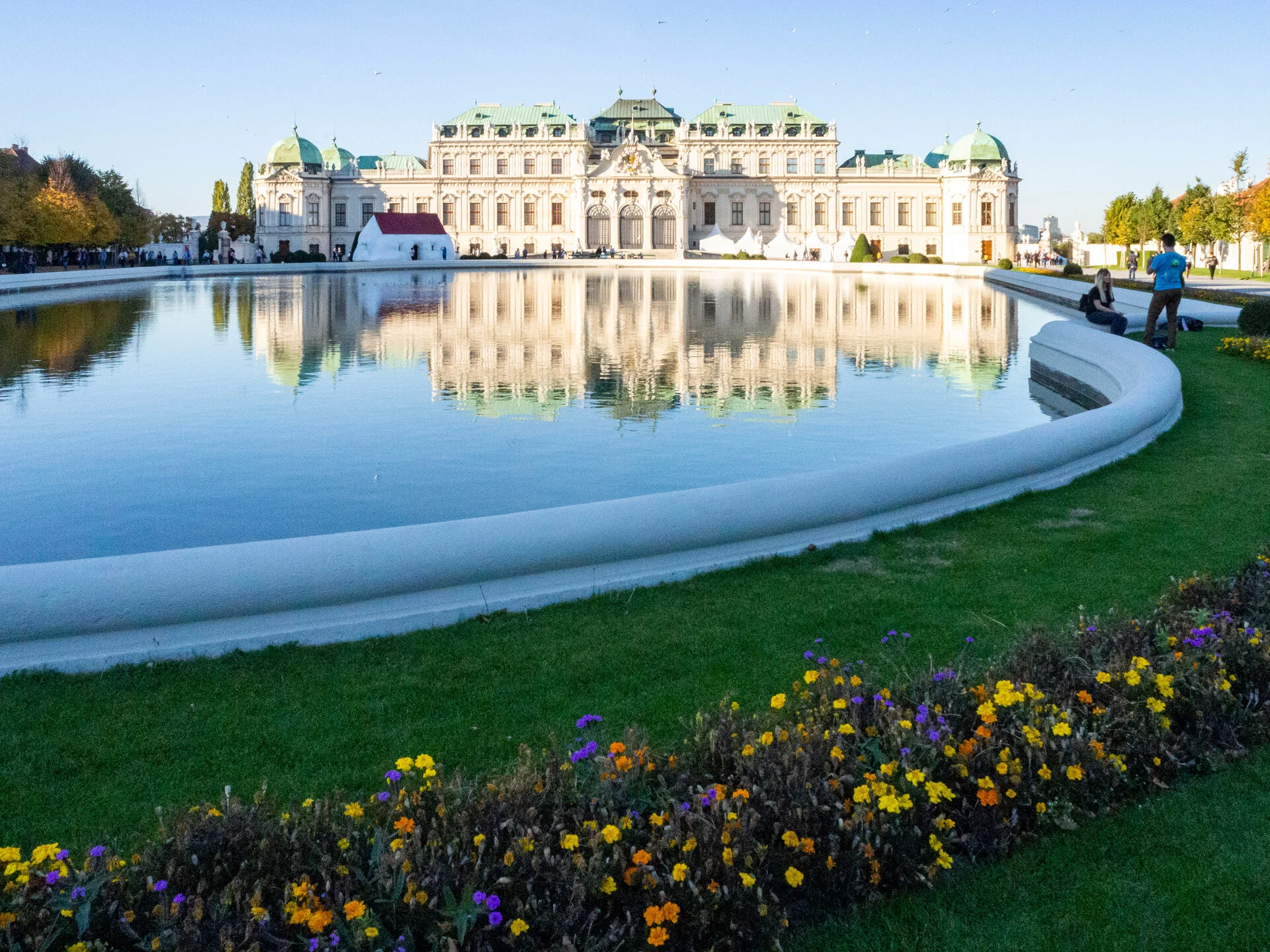
Landstrasse surrounds the Belvedere palace and sits beside Wien Hauptbahnhof, ideal for couples and onward train travel.
The district works especially well if you are combining Vienna with other cities by rail: being a few minutes from the Hauptbahnhof removes the cross-town scramble on travel days. The streets around the Belvedere and the Rennweg are calm and walkable, and trams roll straight into the Ring in about 10 minutes.
Best for: couples, art lovers, travellers arriving or departing by train, anyone combining Vienna with Salzburg, Budapest, or Prague.
Trade-offs: not as walk-everywhere as the 1st, the area immediately around the Hauptbahnhof is modern rather than charming.
Hotel tiers: design and value, Hotel Daniel Vienna (smart lifestyle hotel right beside the Belvedere and the station, ~120 to 190 euros); browse the district on Booking.com Landstrasse hotels.
The Belvedere is a 5-minute walk from many hotels here. A Upper Belvedere entry ticket to see Klimt's The Kiss is the efficient option, or the Belvedere skip-the-line tour with an official guide adds the story behind the collection.
🏛️ Josefstadt & Rathaus (8th): Best for Budget & Local Feel
Josefstadt is the best Vienna base for budget travellers who still want to feel central. Vienna's smallest district is a quiet, leafy residential quarter just outside the Ring behind the City Hall (Rathaus) and the university, with the historic Theater in der Josefstadt at its heart. You get a genuine local atmosphere, lower prices, and a 10 to 15-minute walk (or two tram stops) to the Ring and the Innere Stadt.
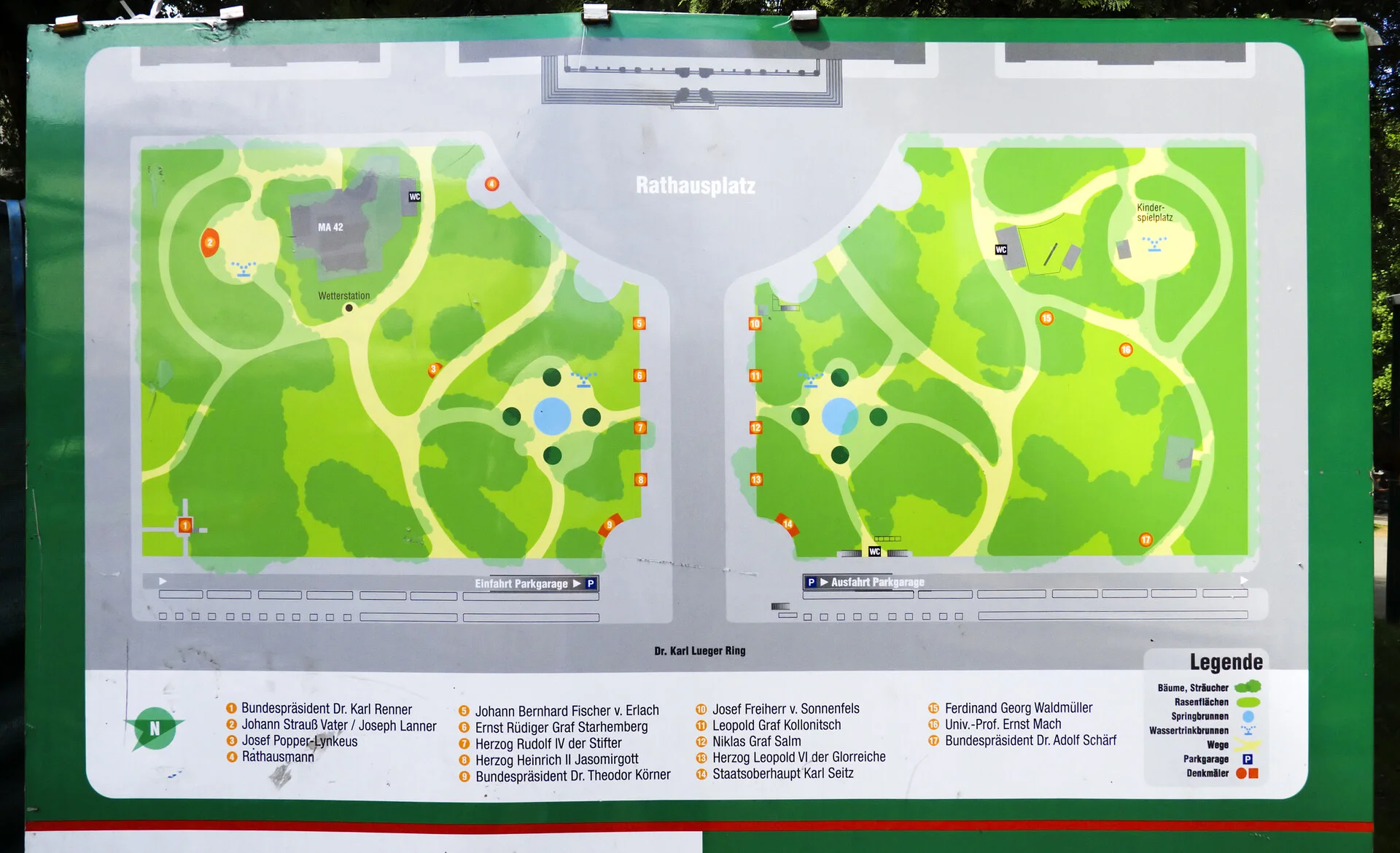
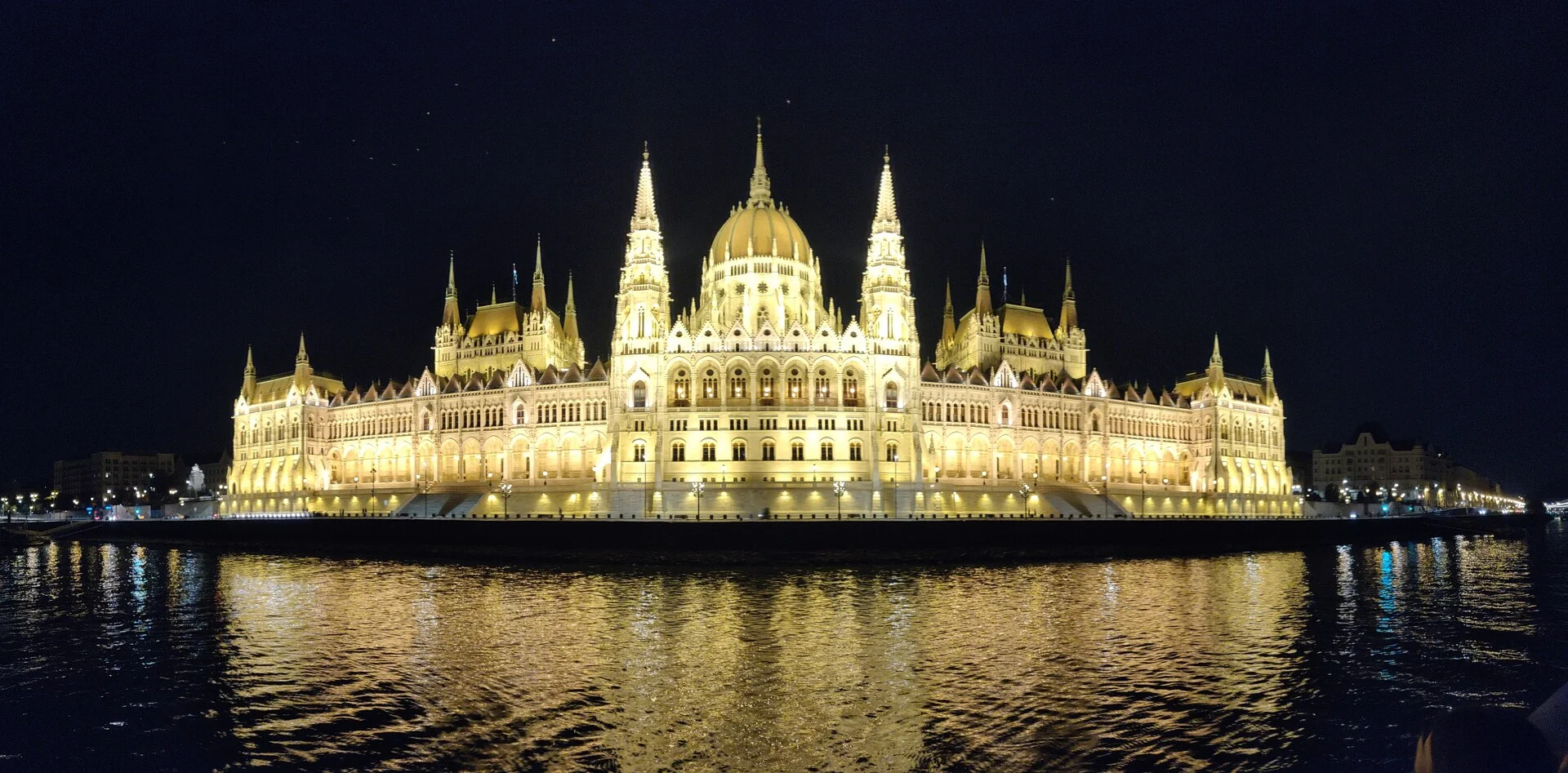
Josefstadt sits behind the neo-Gothic Rathaus, a quiet, well-priced base a short walk from the Ring.
This is also a strong choice for travellers who want a calmer evening, away from the busiest tourist streets, with neighbourhood wine taverns and cafes rather than crowds. For the cheapest rooms of all, the area around Westbahnhof (where Mariahilfer Strasse ends) adds reliable budget chains a short U-Bahn ride from the centre.
Best for: budget travellers, longer stays, visitors who want a quiet local base, anyone who values calm evenings over a doorstep-of-the-sights location.
Trade-offs: fewer sights in the immediate area, a short walk or tram ride to reach the imperial core.
Hotel tiers: mid-range, Hotel Josefshof am Rathaus (quiet 4-star near the City Hall, ~120 to 180 euros); budget, Leonardo Vienna Westbahnhof (~80 to 130 euros); browse on Booking.com Josefstadt hotels.
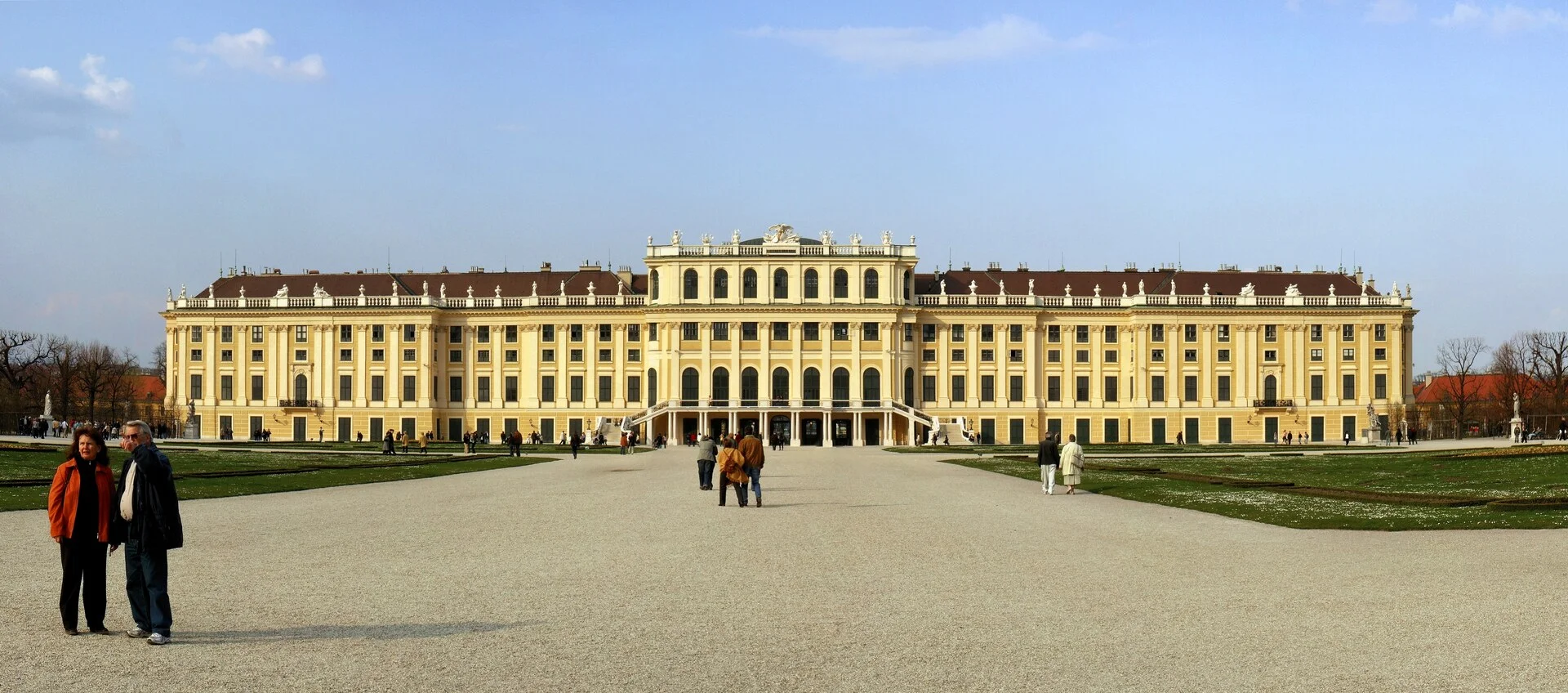
Vienna's top sight, Schönbrunn Palace, is a quick U-Bahn ride from this side of the city. The Schönbrunn Palace and Gardens skip-the-line tour is the best way to avoid the long ticket queues, and for a classic Vienna evening the Mozart and Strauss concert at Schönbrunn Palace pairs the music with the imperial setting.
📊 Quick Comparison: Which Vienna Area Is Best for You?
Use this comparison to match your travel style to a Vienna base. Mid-range price refers to a typical 3 to 4-star hotel in shoulder season (May to June or September).
| Area (district) | Best for | Mid-range | To the centre | Vibe |
|---|---|---|---|---|
| Innere Stadt (1st) | First-timers, couples | €180–280 | Walk | Imperial, lively |
| Leopoldstadt (2nd) | Families, value | €100–160 | 1 U-Bahn stop | Green, relaxed |
| Neubau / Mariahilf (7th/6th) | Foodies, design, young | €130–210 | 2 U-Bahn stops | Hip, creative |
| Landstrasse (3rd) | Couples, train travel | €120–190 | Tram ~10 min | Leafy, refined |
| Josefstadt (8th) | Budget, local feel | €90–160 | Walk ~10–15 min | Quiet, residential |
Vienna base comparison: each area's best traveller fit, mid-range hotel pricing, distance to the centre, and overall vibe.
Vienna base comparison: each area's best traveller fit, mid-range hotel pricing, distance to the centre, and overall vibe.
Quick decision guide: if it is your first trip and you want to walk to everything, choose the Innere Stadt. If you have kids or want value near green space, choose Leopoldstadt. If you love food, design, and a younger scene, choose Neubau or Mariahilf. If you are a couple or arriving by train, choose Landstrasse near the Belvedere. If you want the lowest prices with a local feel, choose Josefstadt. For a side trip out of the city, the full range of day trips from Vienna is easy to add from any of these bases.
🏨 Top Vienna Hotels by Budget
Vienna hotels span a wide range, from grand 5-star palaces to reliable budget chains. Here is our shortlist by budget tier, all bookable on Booking.com.
Luxury (€400+ per night)
- Hotel Sacher Wien (Innere Stadt), the legendary 5-star opposite the State Opera, home of the original Sachertorte and a museum-like collection of art.
- Boutique Hotel am Stephansplatz (Innere Stadt), a refined design hotel facing the cathedral, with one of the best central locations in the city (upper-mid to luxury depending on season).
Mid-range (€130–250 per night)
- 25hours Hotel beim MuseumsQuartier (Neubau), playful circus-themed rooms, a rooftop bar, and a perfect food-and-museum location.
- Hotel Daniel Vienna (Landstrasse), smart, modern, and right beside the Belvedere and the central station.
- Hotel Indigo Vienna - Naschmarkt (Mariahilf), contemporary rooms a short walk from the Naschmarkt and the opera.
Budget (€80–140 per night)
- Hotel Vienna beim Prater (Leopoldstadt), simple and well-located near the Prater and the U-Bahn, strong value for families.
- Hotel Josefshof am Rathaus (Josefstadt), a quiet 4-star near the City Hall at mid-to-budget rates.
- Leonardo Vienna Westbahnhof, a reliable budget chain a short U-Bahn ride from the centre.
Browse current rates and check live availability on Booking.com Vienna hotels. Book at least 2 to 3 months ahead for May to September and the December Christmas market season, and 4 to 6 months ahead if you are visiting for New Year or the January and February ball season.
❓ Frequently Asked Questions
Where is the best area to stay in Vienna for the first time?
The Innere Stadt (1st district) is best for first-timers. It puts St. Stephen's Cathedral, the Hofburg, and the State Opera within a 10-minute walk and every U-Bahn line passes through it. The trade-off is price. For lower rates a short ride from the centre, Leopoldstadt and Neubau are the best value alternatives.
Is the Innere Stadt or Neubau better for staying in Vienna?
The Innere Stadt is better for first-timers who want to walk to the imperial sights. Neubau (7th) is better for foodies, design lovers, and younger travellers: it sits by the MuseumsQuartier and Mariahilfer Strasse, has the best café and bar scene, and runs 20 to 30 percent cheaper while staying two U-Bahn stops from the centre.
What is the cheapest area to stay in Vienna?
Josefstadt (8th) and the streets around Westbahnhof have Vienna's lowest hotel prices, with budget hotels from around 70 to 90 euros. Leopoldstadt (2nd), one U-Bahn stop from the centre, is the best value for location, with solid 3 and 4-star hotels at 100 to 160 euros.
Do you need a car in Vienna?
No. Vienna has one of Europe's best public transport networks, with five U-Bahn lines, trams, and buses. A 24-hour ticket costs 8 euros and a 72-hour ticket 17.10 euros. A car is a liability in the centre: parking is scarce and the 1st district is a restricted zone.
How far in advance should you book Vienna hotels?
Two to three months ahead for May to September and the December Christmas markets. Landmark hotels sell out 4 to 6 months ahead for New Year and the January and February ball season. November and non-ball January weekends are easiest for last-minute stays.
Which area of Vienna is best for families?
Leopoldstadt (2nd district) is best for families. It surrounds the Prater park and its Ferris wheel, has wide flat streets that are easy with a stroller, connects to the centre in 5 minutes by U-Bahn, and has plenty of apartment-style hotels with kitchens.
The five Vienna bases serve different travellers. The Innere Stadt for first-time walk-everywhere convenience. Leopoldstadt for value and families near the Prater. Neubau and Mariahilf for food, design, and a younger scene. Landstrasse for couples and easy train connections by the Belvedere. Josefstadt for budget and a quiet local feel. Whichever you pick, target a hotel within a 5-minute walk of a U-Bahn station and book at least 2 to 3 months ahead for the busy seasons.
Once you have a base, Vienna is also a superb launchpad for the Danube. The Wachau Valley and Melk Abbey day trip with a Danube boat cruise is the classic escape, and the Wachau Valley wine-tasting day trip adds the region's white wines. For the full city plan, see our 10-day Vienna itinerary, and if you are combining capitals, our Vienna, Budapest and Prague trip planner. To check live rates across every district, browse Booking.com Vienna hotels.