
Best Things to Do in Florence, Italy (2026 Travel Guide)
This article contains affiliate links. If you make a purchase through these links, we may earn a small commission at no extra cost to you. This helps us keep creating free content for you!
Florence packs more world-changing art into one square mile than almost anywhere on Earth, and the Uffizi Gallery alone admits over 4 million visitors a year to stand before Botticelli's Birth of Venus. This is the city where the Renaissance was born, a compact open-air museum on the Arno where you can stare up at Michelangelo's David in the morning, climb a 600-year-old terracotta dome at midday, and watch the sun melt over the rooftops from a hillside terrace at night.
The best things to do in Florence include seeing Michelangelo's David at the Accademia, touring the Uffizi Gallery, climbing Brunelleschi's Dome at the Florence Cathedral, crossing the Ponte Vecchio, exploring Palazzo Vecchio and Piazza della Signoria, wandering the Pitti Palace and Boboli Gardens, catching sunset at Piazzale Michelangelo, and escaping into the Tuscan countryside on a day trip. The city is small, but the queues are not, which is exactly why a plan helps.
We have put together this complete guide to help you prioritize. We cover the unmissable art, the skip-the-line strategies that save hours outside the Uffizi and the Duomo, the food and wine experiences worth booking, and the best day trips into Tuscany. If you are mapping a wider Italian or European trip, our guide to skip-the-line tickets across Europe pairs perfectly with this one. Let's start where everyone wants to begin: the art.
🎨 Renaissance Art: The Uffizi & Michelangelo's David
The two greatest art museums in Florence are the reason most people come, and they sit a ten-minute walk apart. The Uffizi Gallery holds the finest collection of Renaissance painting in the world, including Botticelli's Birth of Venus and Primavera, Leonardo da Vinci's Annunciation, and works by Michelangelo, Raphael, Titian, and Caravaggio. The Accademia Gallery is smaller but home to the single most famous sculpture on the planet: Michelangelo's David, a 5.17-meter block of Carrara marble carved between 1501 and 1504.
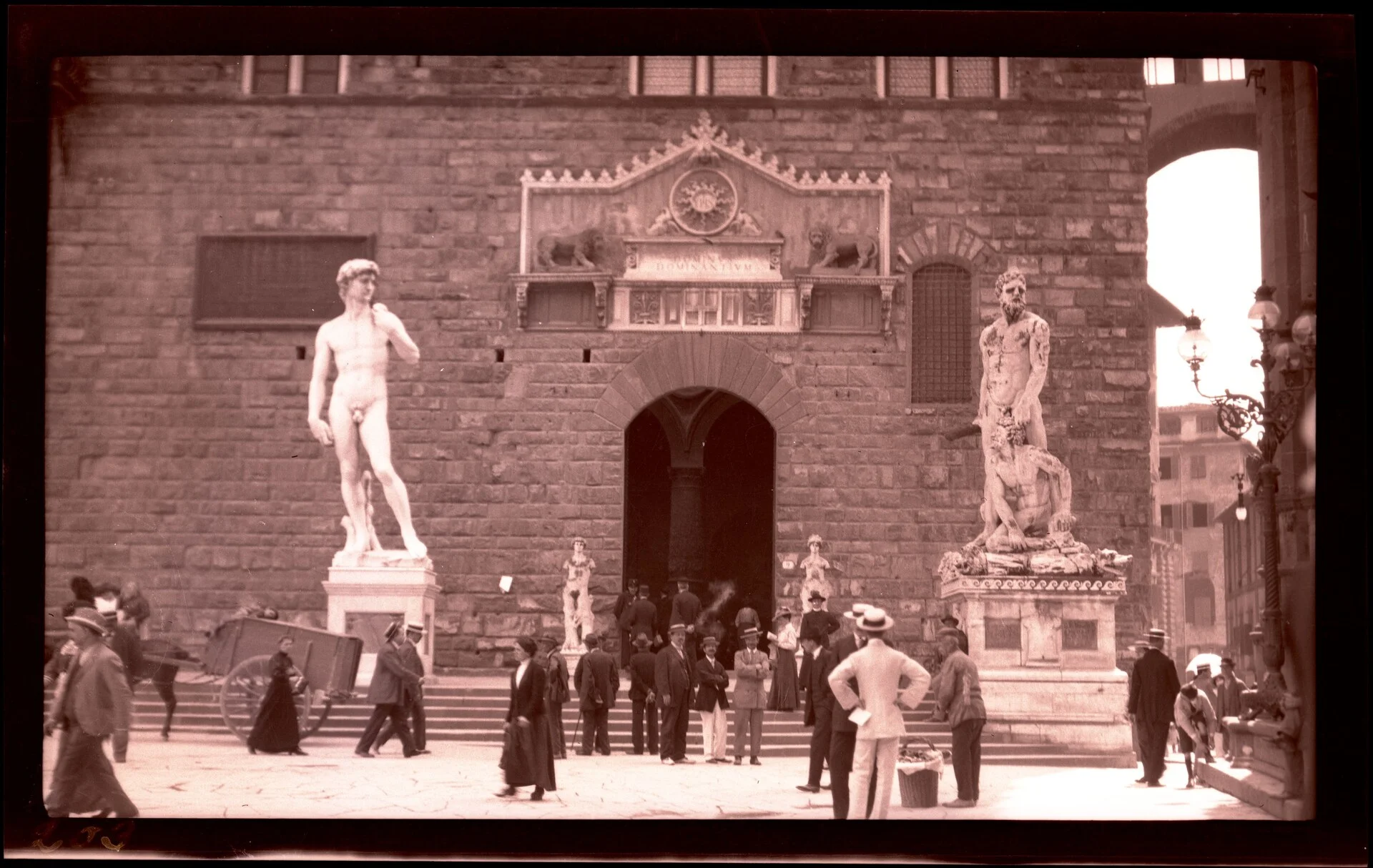
Michelangelo's David, carved from a single block of Carrara marble, is the masterpiece you come to Florence to see. The original now stands in the Accademia Gallery, with a replica marking its historic spot in Piazza della Signoria.
Here is the most important practical tip in this entire guide: both museums use timed entry, and standard tickets routinely sell out days ahead, especially from April to October. The Accademia in particular has some of the longest walk-up lines in Florence. The most efficient option for first-timers is a combined Uffizi and Accademia Gallery skip-the-line ticket, which secures a timed slot at both. If you want the stories behind the masterpieces, a guided tour of the Uffizi and the David at the Accademia brings the art to life with an expert.
For art lovers who want to go deeper without the crowds, a private tour of the Uffizi and Accademia with the David lets you set the pace and skip every line. Allow at least two hours for the Uffizi and an hour for the Accademia. You can check current opening hours and ticket prices on the official Uffizi Galleries website, and the David's home is detailed on the official Accademia Gallery website.
⛪ The Duomo: Cathedral, Brunelleschi's Dome & Bell Tower
The cathedral complex is the beating heart of Florence and its most photographed landmark. The Cathedral of Santa Maria del Fiore is free to enter, but the real prize is Brunelleschi's Dome, the largest masonry dome ever built and the engineering miracle that defined the Renaissance skyline when it was completed in 1436. Climbing the dome requires a separate timed-entry reservation that often sells out a week ahead, the cathedral floor is free but the dome, bell tower, baptistery, and museum need a paid combined ticket.
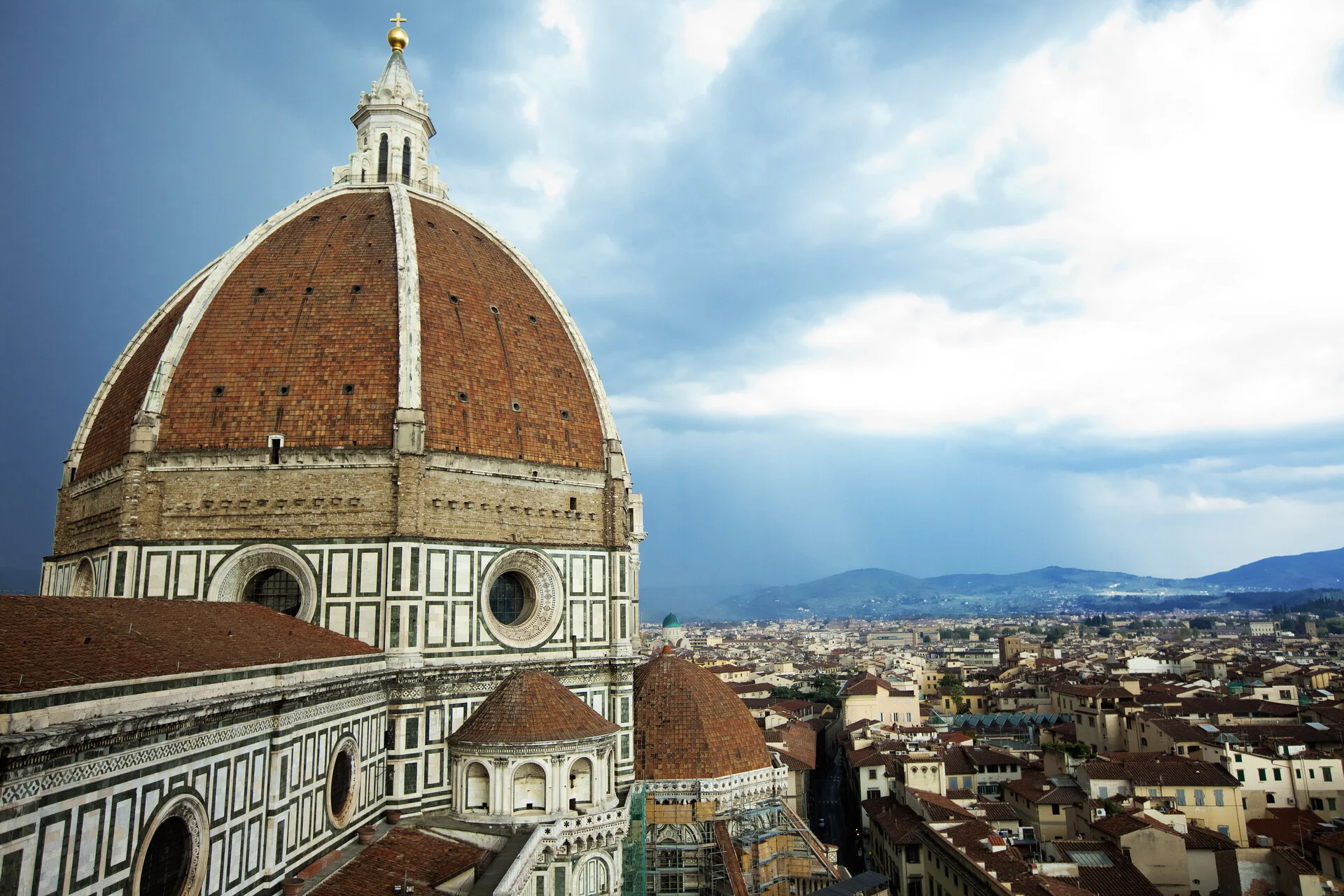
Brunelleschi's Dome, the largest masonry dome ever built, crowns the Cathedral of Santa Maria del Fiore in the heart of Florence.
The climb to the top of the dome is 463 steps up narrow staircases squeezed between the structure's two shells, passing within arm's reach of Vasari's vast Last Judgment frescoes before you emerge at the lantern for the best panorama in the city. The neighboring monuments are stars in their own right: Giotto's Bell Tower (the Campanile), the octagonal Baptistery with Ghiberti's gilded Gates of Paradise, and the Opera del Duomo Museum, which holds Michelangelo's late Pietà. To climb the dome with context, book a guided Duomo tour with Brunelleschi's Dome climb access.
If you prefer to explore at your own pace, a Brunelleschi's Dome entry ticket with the full Duomo complex pass covers the dome, the bell tower, the baptistery, and the museum on a three-day pass. For something special, a VIP tour of the Duomo's secret terraces takes you out onto walkways high above the nave that are normally closed to the public. Reservation details are on the official Opera di Santa Maria del Fiore website.
Top-Rated Activities in Florence
🏛️ The Historic Center: Ponte Vecchio & Piazza della Signoria
The historic center of Florence is a UNESCO World Heritage Site, and it is small enough to cross on foot in about 20 minutes, with the Duomo, the Ponte Vecchio, and Piazza della Signoria all within a 10-minute walk of each other. The Ponte Vecchio is the city's most romantic landmark, a medieval bridge lined with goldsmiths' shops that has spanned the Arno since 1345 and was the only Florentine bridge spared from destruction in 1944.
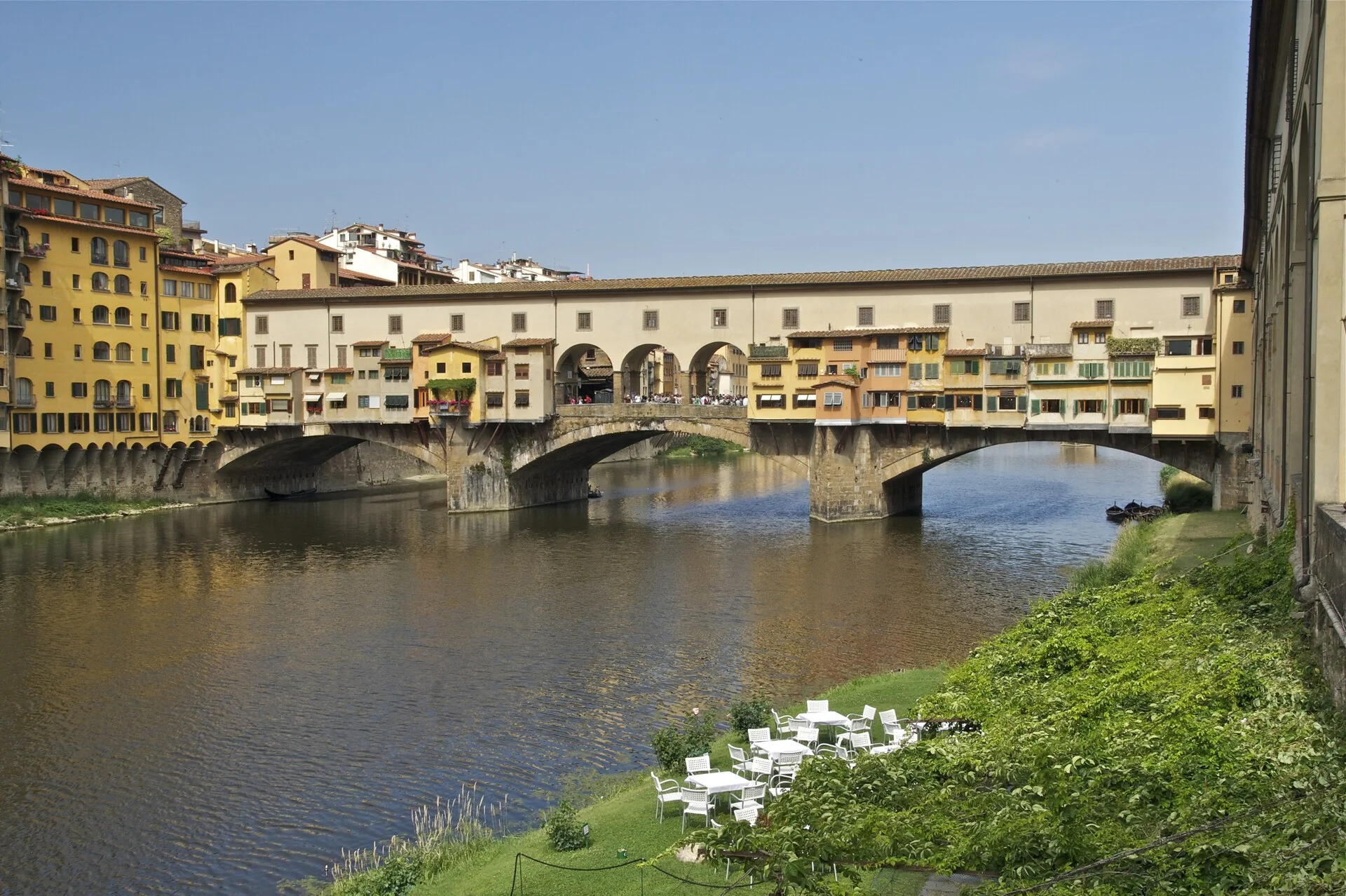
The Ponte Vecchio, lined with jewelers' shops, is the oldest bridge in Florence and the only one to survive World War II.
A short walk away, Piazza della Signoria is an open-air sculpture gallery and the political heart of the city for seven centuries. A replica of the David marks the spot where the original once stood, and the Loggia dei Lanzi shelters masterpieces like Cellini's bronze Perseus. Towering over the square is Palazzo Vecchio, the fortress-like town hall whose frescoed Salone dei Cinquecento and clock tower you can visit with a Palazzo Vecchio skip-the-line entry ticket. To uncover its hidden chambers, a Palazzo Vecchio secret passages tour reveals the staircases and rooms the Medici used to move unseen.
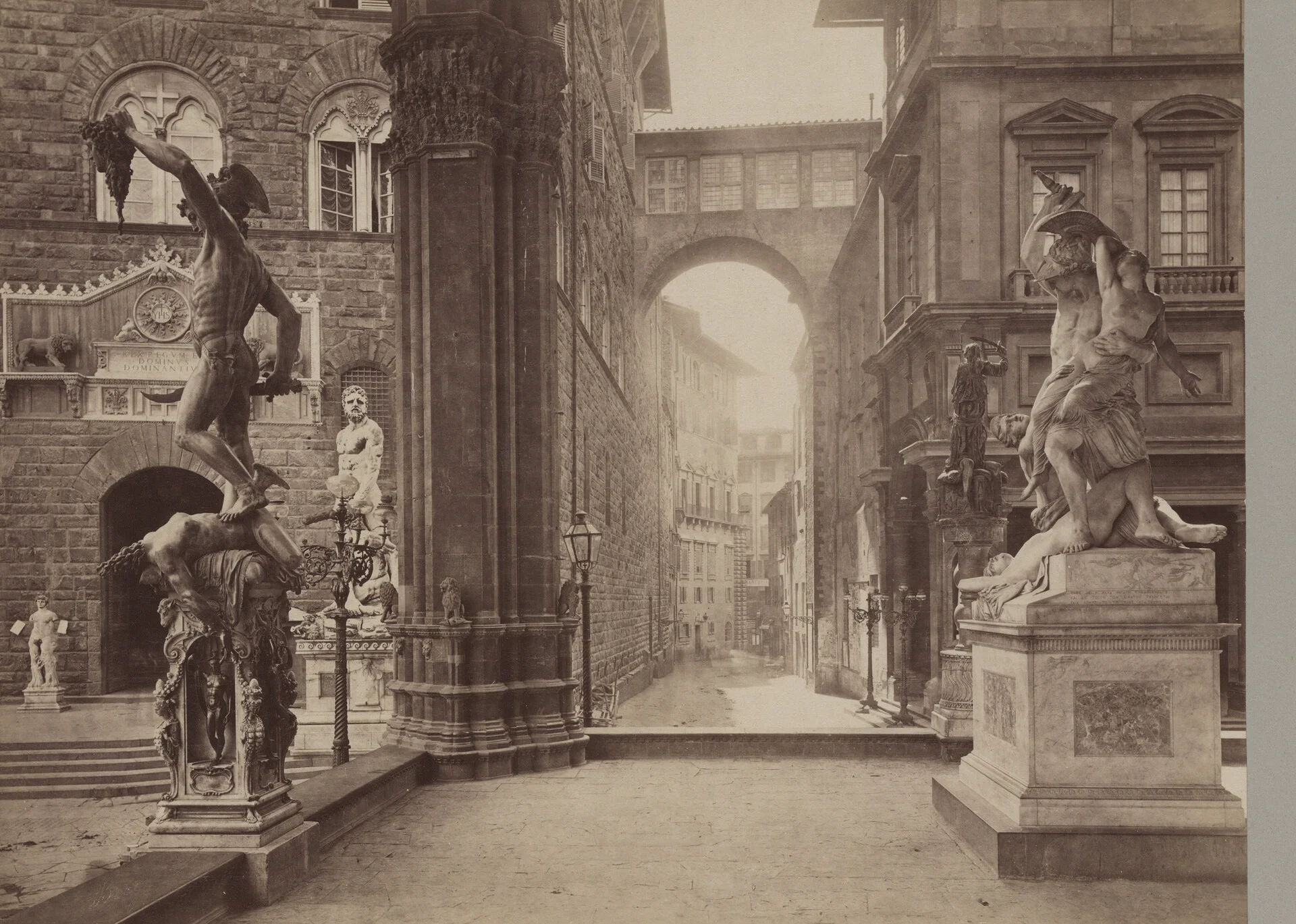
The Loggia dei Lanzi on Piazza della Signoria is a free open-air gallery of Renaissance statues, including Cellini's bronze Perseus holding the head of Medusa.
Because so much of Florence's story is hidden in plain sight, first-timers often get their bearings on a walking tour that links the David, the Duomo, and the Uffizi, which stitches the major landmarks into one efficient morning. For deeper context, the UNESCO listing of the Historic Centre of Florence is a useful reference.
Where to Stay in Florence
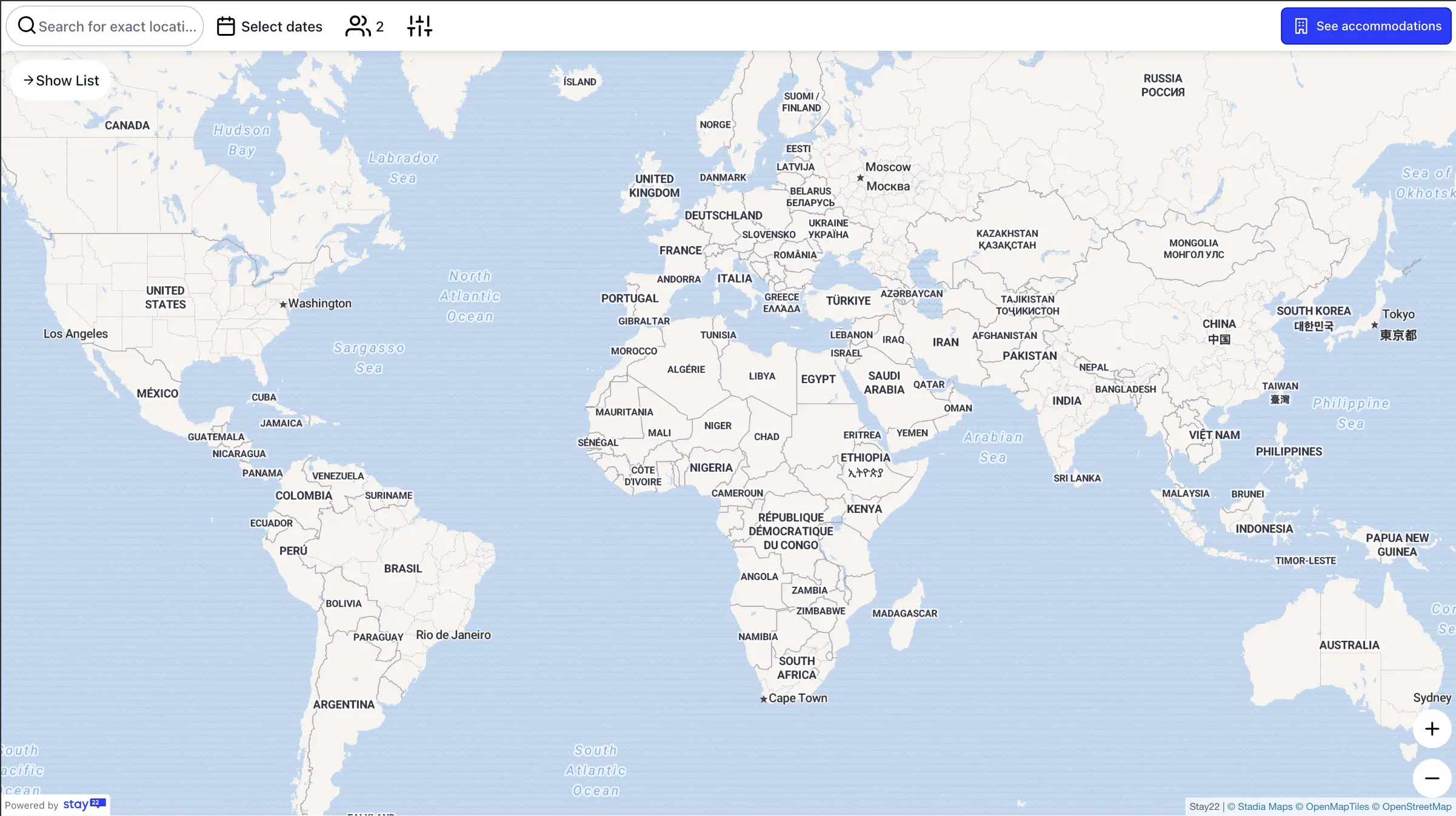
Book through this map and you help support our travels, at no extra cost to you. We earn a small commission, and it means a lot.
🏰 Oltrarno: Pitti Palace, Boboli Gardens & Piazzale Michelangelo
Cross the Arno to the Oltrarno (literally "beyond the Arno") and Florence slows down. This is the city's artisan quarter, full of leather workshops, frame gilders, and the lively Santo Spirito square. Its centerpiece is the Pitti Palace, the immense Renaissance residence the Medici made their home, now holding seven museums including the Palatine Gallery and its Raphael and Titian masterpieces. Behind it spread the Boboli Gardens, a sculpted Renaissance park that is effectively an open-air museum of fountains, grottoes, and statues.
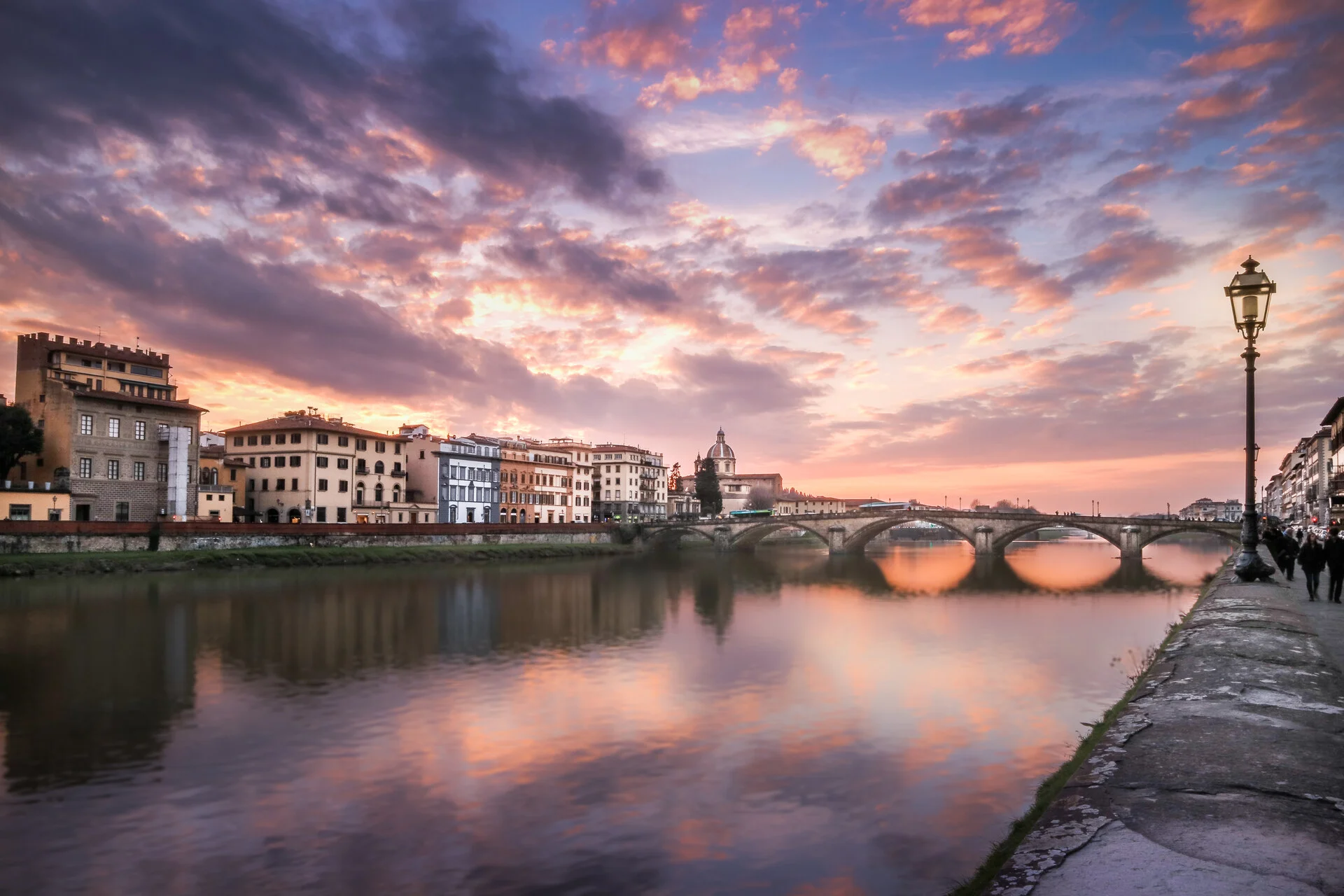
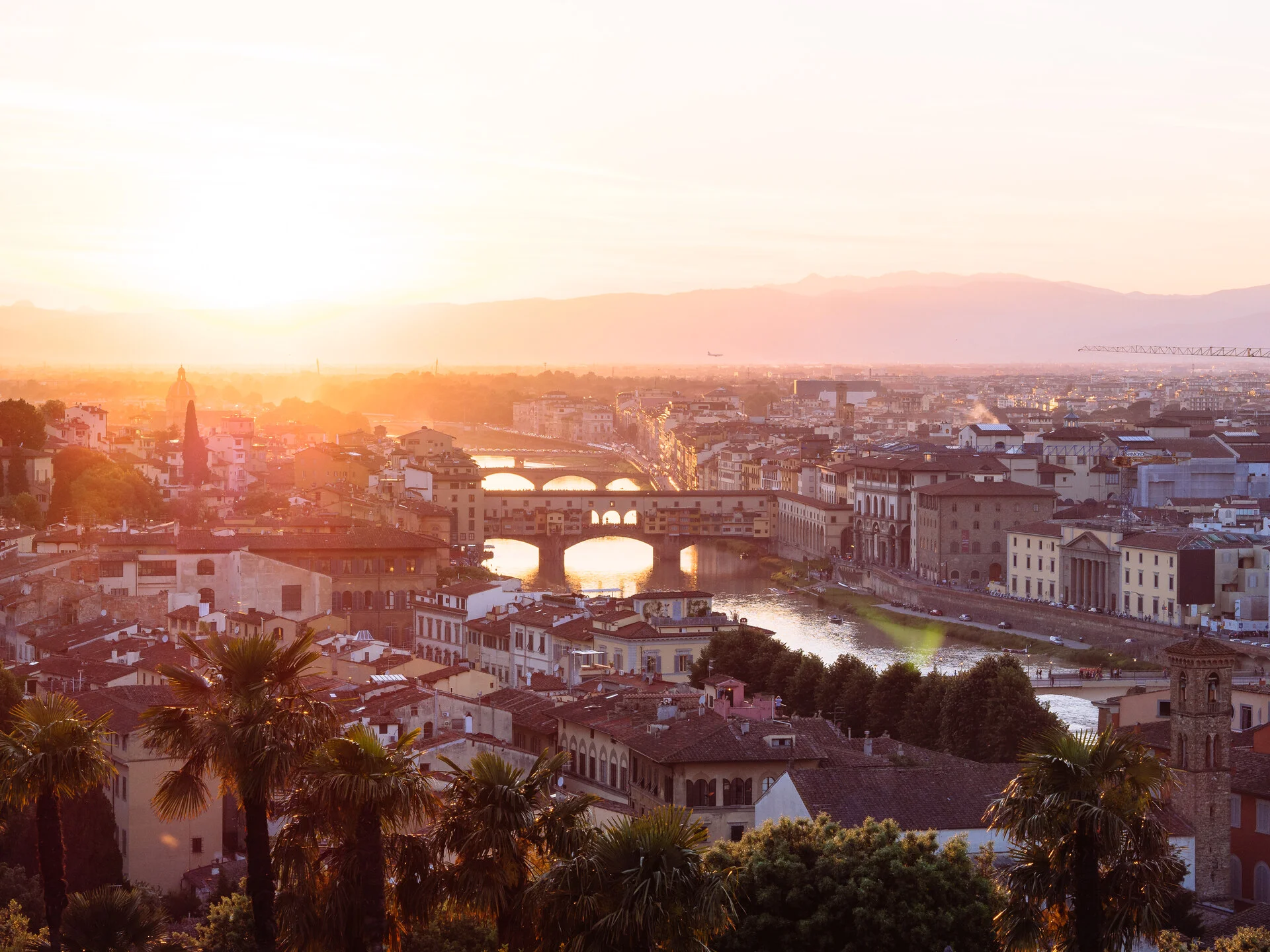
Sunset over the Arno in the Oltrarno, the quieter half of Florence across the river from the historic center.
To see both the palace and the gardens efficiently, a combined Pitti Palace and Boboli Gardens ticket covers the whole complex in one booking. Details on the seven museums are on the official Pitti Palace website. From the gardens it is a short uphill walk to the city's most beloved viewpoint.
Piazzale Michelangelo offers the best free view of Florence and is most beautiful at sunset, a 15-minute uphill walk or a short bus ride from the historic center. Just above it sits the Romanesque church of San Miniato al Monte, worth the extra climb. One of the most memorable ways to reach the terrace is a panoramic Vespa tour of Florence and the surrounding hills, weaving up to Piazzale Michelangelo and out to Fiesole for that postcard view over the domes and the Arno.
🍝 Food & Wine: Tuscan Cuisine, Markets & Tastings
Eating is one of the best things to do in Florence, and Tuscan cooking is built on simple, bold ingredients. The signature dish is the bistecca alla fiorentina, a thick T-bone steak grilled rare over wood. Around it sit ribollita (a hearty bread-and-vegetable soup), pappa al pomodoro, crusty schiacciata sandwiches, and the city's beloved street food, lampredotto. Florence even claims to be the birthplace of gelato, so a scoop here is practically a cultural obligation.
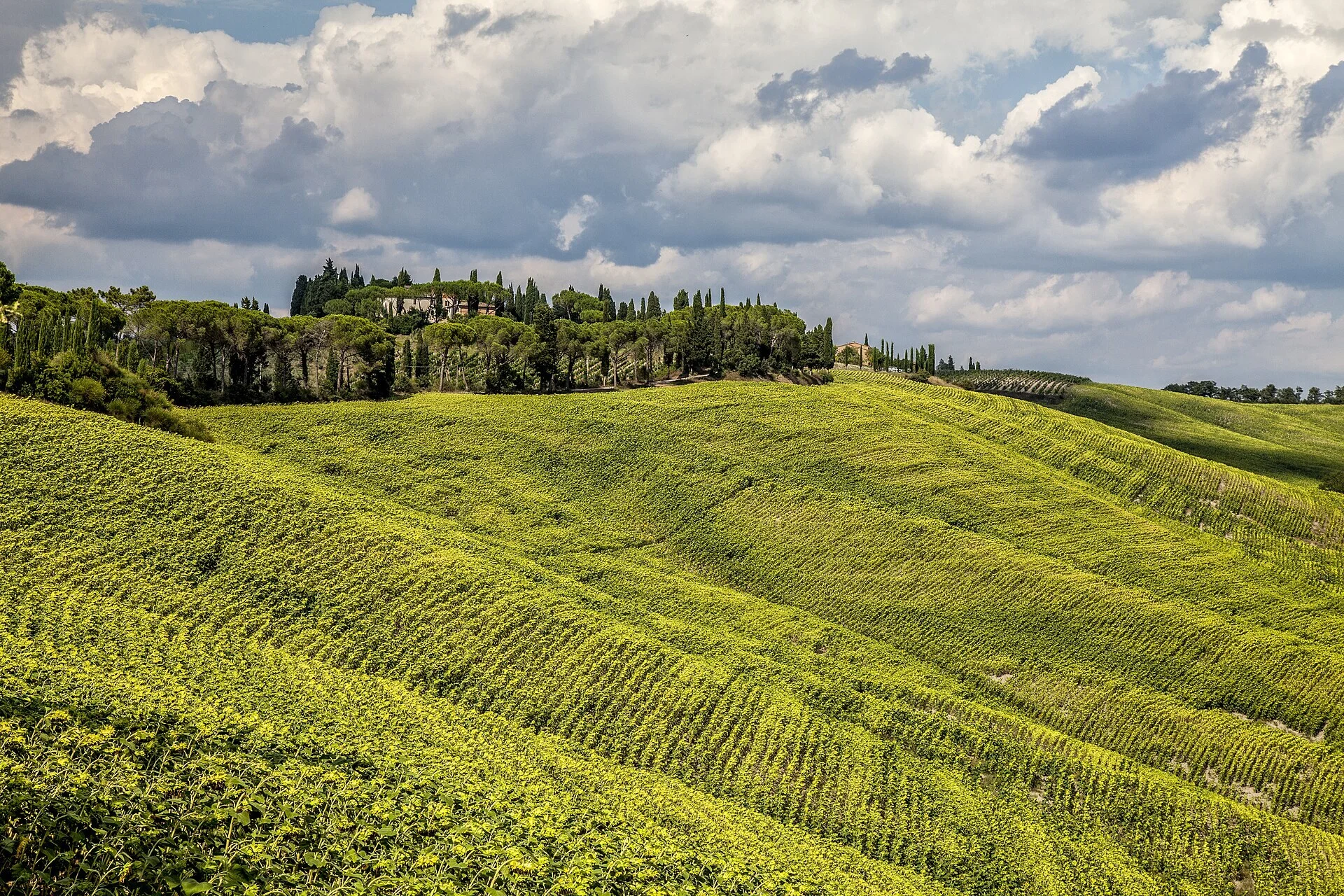
The Chianti wine region begins on Florence's doorstep, making vineyard tastings one of the easiest and most rewarding experiences in the city.
The best way to taste it all in one go is a Florence street food tour with wine and a local guide, grazing through markets and historic bakeries with a Tuscan in the know. For a hands-on afternoon, a pasta and gelato cooking class at a Tuscan farm takes you into the countryside to make your own meal, while a city-center premium pasta and gelato class with unlimited wine is perfect if you are short on time.
Then there is the wine. The Chianti region begins just south of the city, so a vineyard visit barely counts as a day trip. A half-day Chianti wineries tour with tastings takes you to family-run estates in the rolling hills for Chianti Classico paired with cheese and olive oil. For the freshest produce in town, browse the stalls of the Mercato Centrale and the Sant'Ambrogio market, where Florentines have shopped for generations.
| Tuscan Dish | What It Is | Where to Try It |
|---|---|---|
| Bistecca alla Fiorentina | Thick T-bone steak grilled rare over wood | Traditional trattorias in Santa Croce |
| Lampredotto | Slow-cooked tripe in a bun, the classic street food | Mercato Centrale and street carts |
| Ribollita | Hearty Tuscan bread and vegetable soup | Family-run osterie across the city |
| Schiacciata | Crisp flatbread sandwich with cured meats | All'Antico Vinaio and local bakeries |
| Gelato | Florence claims to be its birthplace | Artisan gelaterie in the Oltrarno |
Classic Florentine and Tuscan foods to try
Classic Florentine and Tuscan foods to try
🚆 Best Day Trips from Florence
Florence is the perfect base for exploring Tuscany and beyond. Its central train station, Santa Maria Novella, puts much of central Italy within easy reach, and organized tours handle the trickier countryside logistics. If you have more than two days, dedicate one to a day trip.
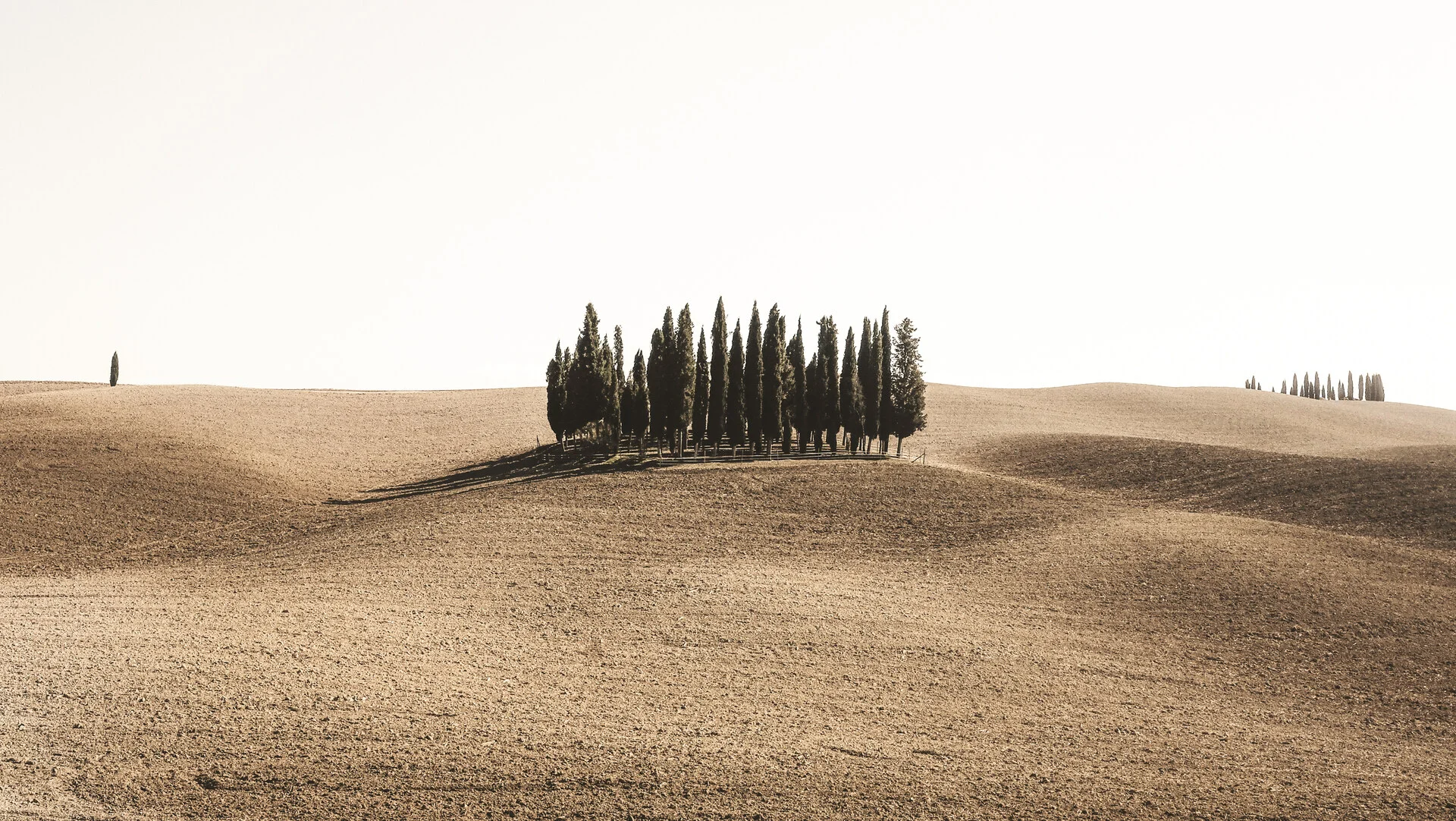
The cypress-dotted hills of the Tuscan countryside, the quintessential scenery on a day trip from Florence into Siena, San Gimignano, and the Chianti.
Pisa is the easiest and most iconic option, around an hour away by train. A half-day trip to Pisa with optional Leaning Tower climb handles the transport and gets you to the Piazza dei Miracoli for that classic photo. For the quintessential Tuscan day, a tour combining Siena, San Gimignano, and a Chianti wine tasting rolls medieval hill towns and vineyards into one unforgettable outing. If you want to see it all, a full-day Pisa, Siena, and San Gimignano day trip with lunch covers the highlights in a single day.
For dramatic coastline, the colorful villages of the Cinque Terre on a full-day tour by train and boat make a spectacular if long day out. And if you simply want to drink in the scenery, a relaxed Chianti half-day wine tour is the lowest-effort way to experience the Tuscan hills.
| Day Trip | Travel Time (one way) | Best For |
|---|---|---|
| Pisa (Leaning Tower) | ~1 hour by train | The iconic tower and an easy half day |
| Siena + San Gimignano | ~1 to 1.5 hours | Medieval hill towns and Tuscan scenery |
| Chianti wine country | ~45 minutes | Vineyards, tastings, and rolling hills |
| Cinque Terre | ~2.5 hours | Cliffside coastal villages, a long but stunning day |
| Bologna | ~37 minutes by train | Food capital of Italy, easy by high-speed rail |
Best day trips from Florence compared
Best day trips from Florence compared
If you enjoy structuring trips around excursions, you might also like our guides to the best things to do in Rome, just 1.5 hours south by high-speed train, and the best things to do at Lake Como in northern Italy.
🧭 Practical Tips for Visiting Florence
Best time to visit: April to May and September to October are ideal, with mild temperatures (18 to 26°C) and thinner crowds than peak summer. July and August are hot (30 to 35°C) and very busy, and many family-run businesses close in mid-August for Ferragosto. Winter (November to February) is cool (5 to 13°C), atmospheric, and the cheapest time to visit.
How many days: Two to three days is the sweet spot. Two days covers the David, the Uffizi, the Duomo complex, the Ponte Vecchio, and Piazza della Signoria. A third day adds the Pitti Palace, the Oltrarno, and a Tuscan food or wine experience, while a fourth frees up a day trip.
Getting around: The historic center is fully walkable, with most major sights within a 20-minute walk of each other, so you will rarely need transport inside the old town. The T1 and T2 tram lines and ATAF buses connect the outskirts and the airport, and the central Santa Maria Novella (SMN) station is your hub for day trips. For a relaxed first-day overview, a hop-on hop-off bus tour links the main viewpoints and saves your legs.
| Option | Approx. Price | Best For |
|---|---|---|
| Firenze Card (72h) | ~85€ | Museum-heavy trips, 60+ sites with one timed entry each |
| Individual skip-the-line tickets | Varies | Short trips focused on the David, Uffizi, and Duomo |
| Uffizi + Pitti + Boboli combined pass | ~38€ | Art lovers visiting all the major Medici collections |
Florence passes and tickets compared
Florence passes and tickets compared
Where to stay: The historic center (centro storico) puts you within walking distance of the Duomo and the Uffizi. San Lorenzo and Santa Croce are central and lively, while the Oltrarno (Santo Spirito) is quieter, artsier, and full of authentic trattorias. We book accommodation on Booking.com and compare flight-and-hotel bundles on Expedia.
Etiquette and safety: Cover your shoulders and knees to enter churches, including the cathedral. A local rule bans eating on church steps and monument doorsteps in the center, so find a bench or piazza instead. Pickpockets work the crowds around Santa Maria Novella station and the Duomo, so keep valuables zipped and in front of you. Expect a small coperto (cover charge) per person at restaurants, and note that tap water is safe and free.
Frequently Asked Questions About Florence
What are the best things to do in Florence?
The best things to do in Florence are seeing Michelangelo's David at the Accademia Gallery, touring the Uffizi Gallery for Botticelli's Birth of Venus, climbing Brunelleschi's Dome at the Florence Cathedral, crossing the Ponte Vecchio, standing in Piazza della Signoria, visiting Palazzo Vecchio, exploring the Pitti Palace and Boboli Gardens, watching sunset from Piazzale Michelangelo, and taking a day trip into Tuscany to Pisa, Siena, or the Chianti wine country. The Uffizi, the Accademia, and the dome climb all use timed entry, so booking skip-the-line tickets in advance is essential.
How many days do you need in Florence?
We recommend 2 to 3 days for Florence. Two days covers the essentials: the Accademia (David), the Uffizi Gallery, the Duomo complex with the dome climb, the Ponte Vecchio, and Piazza della Signoria, plus a sunset at Piazzale Michelangelo. A third day lets you add the Pitti Palace and Boboli Gardens, the Oltrarno neighborhood, and a Tuscan food or wine experience. If you have 4 days or more, dedicate one to a day trip such as Pisa, Siena and San Gimignano, or the Chianti vineyards.
Do you need to book Uffizi and Accademia tickets in advance?
Yes, you should book Uffizi and Accademia Gallery tickets in advance. Both use timed entry and routinely sell out days ahead, especially from April to October. A standard Uffizi ticket costs around 25€ and the Accademia around 16€, while skip-the-line and guided tours run higher but save hours of queueing. The Accademia, home to Michelangelo's David, has some of the longest walk-up lines in the city, so a pre-booked timed slot or guided tour is the single best time-saver in Florence.
Is the Firenze Card worth it?
The Firenze Card (around 85€, valid 72 hours) is worth it only for museum-intensive trips. It covers entry to more than 60 museums, including the Uffizi, the Accademia, Palazzo Vecchio, and the Pitti Palace, with one timed entry per site. For most first-time visitors on a 2 to 3 day trip who focus on the big sights, booking individual skip-the-line tickets is cheaper and more flexible. The card makes sense if you plan to visit many smaller museums and churches in a short window.
What is the best day trip from Florence?
Pisa is the best short day trip from Florence, reachable in about an hour by train, where you can climb the Leaning Tower and see the Piazza dei Miracoli. For classic Tuscan scenery, a day trip combining Siena and San Gimignano with a Chianti wine tasting is the most rewarding full day. Other excellent options include the Chianti vineyards, the cliffside villages of the Cinque Terre (around 2.5 hours away), Lucca, and Bologna, which is just 37 minutes by high-speed train.
When is the best time to visit Florence?
The best time to visit Florence is April to May and September to October, when temperatures are mild (18 to 26°C) and crowds are thinner than in peak summer. July and August are hot (30 to 35°C) and very busy, and many family-run businesses close in mid-August for Ferragosto. Winter (November to February) is cool (5 to 13°C), quiet, and the cheapest time to visit, ideal for the museums without the summer queues.
How do you climb Brunelleschi's Dome and is it worth it?
Climbing Brunelleschi's Dome requires a separate timed-entry reservation that often sells out a week or more ahead, and it is absolutely worth it. The climb is 463 steps up narrow staircases between the dome's two shells, passing close to Vasari's Last Judgment frescoes before reaching the lantern, which offers the best panorama in Florence. The cathedral floor is free to enter, but the dome, Giotto's Bell Tower, the Baptistery, and the Opera del Duomo Museum require a paid combined ticket. The dome climb is not suitable for those with limited mobility, as there is no elevator.
Start Planning Your Florence Trip
Florence rewards both the art lover and the wanderer. You can spend a morning eye to eye with Michelangelo's David, an afternoon climbing a 600-year-old dome, and an evening with a bistecca and a glass of Chianti as the sun sets over the Arno. Few cities pack this much beauty into walking distance, which is exactly why it overwhelms first-timers who arrive without a plan.
The single biggest tip we can give you is to book the timed-entry sights early. The Uffizi, the Accademia, and the dome climb all sell out, and securing skip-the-line tickets in advance is what separates a smooth trip from hours wasted in line. When you are ready, you can browse all Florence tours and activities on GetYourGuide to lock in your dates.
Planning a bigger European adventure? Pair Florence with our guides to the best things to do in Barcelona and the best things to do in Vienna for more inspiration across the continent.