
Best Things to Do in Rome, Italy (2026 Travel Guide)
This article contains affiliate links. If you make a purchase through these links, we may earn a small commission at no extra cost to you. This helps us keep creating free content for you!
Rome welcomes around 35 million visitors a year, and the Colosseum alone draws more than 7 million of them, making the ancient amphitheater Italy's most visited monument and one of the most visited paid attractions on the entire planet. It is easy to understand why. This is a 2,500-year-old open-air museum where you can stand inside a gladiator arena in the morning, toss a coin into a Baroque fountain at lunch, and eat a plate of cacio e pepe in a candlelit Trastevere alley at night.
The best things to do in Rome include touring the Colosseum, Roman Forum, and Palatine Hill, exploring the Vatican Museums and the Sistine Chapel, climbing the dome of St. Peter's Basilica, throwing a coin in the Trevi Fountain, marveling at the Pantheon, wandering Piazza Navona, eating your way through Trastevere, and escaping the city on a day trip to Pompeii or Tivoli. There is far too much to fit into one trip, which is exactly why a plan helps.
We have put together this complete guide to help you prioritize. We cover the unmissable sights, the skip-the-line strategies that save hours of queueing in the Roman sun, the food experiences worth booking, and the day trips that get you out of the city. If you are mapping a wider European trip, our guide to skip-the-line tickets across Europe pairs perfectly with this one. Let's start where everyone wants to begin: ancient Rome.
🏛️ The Colosseum, Roman Forum & Palatine Hill
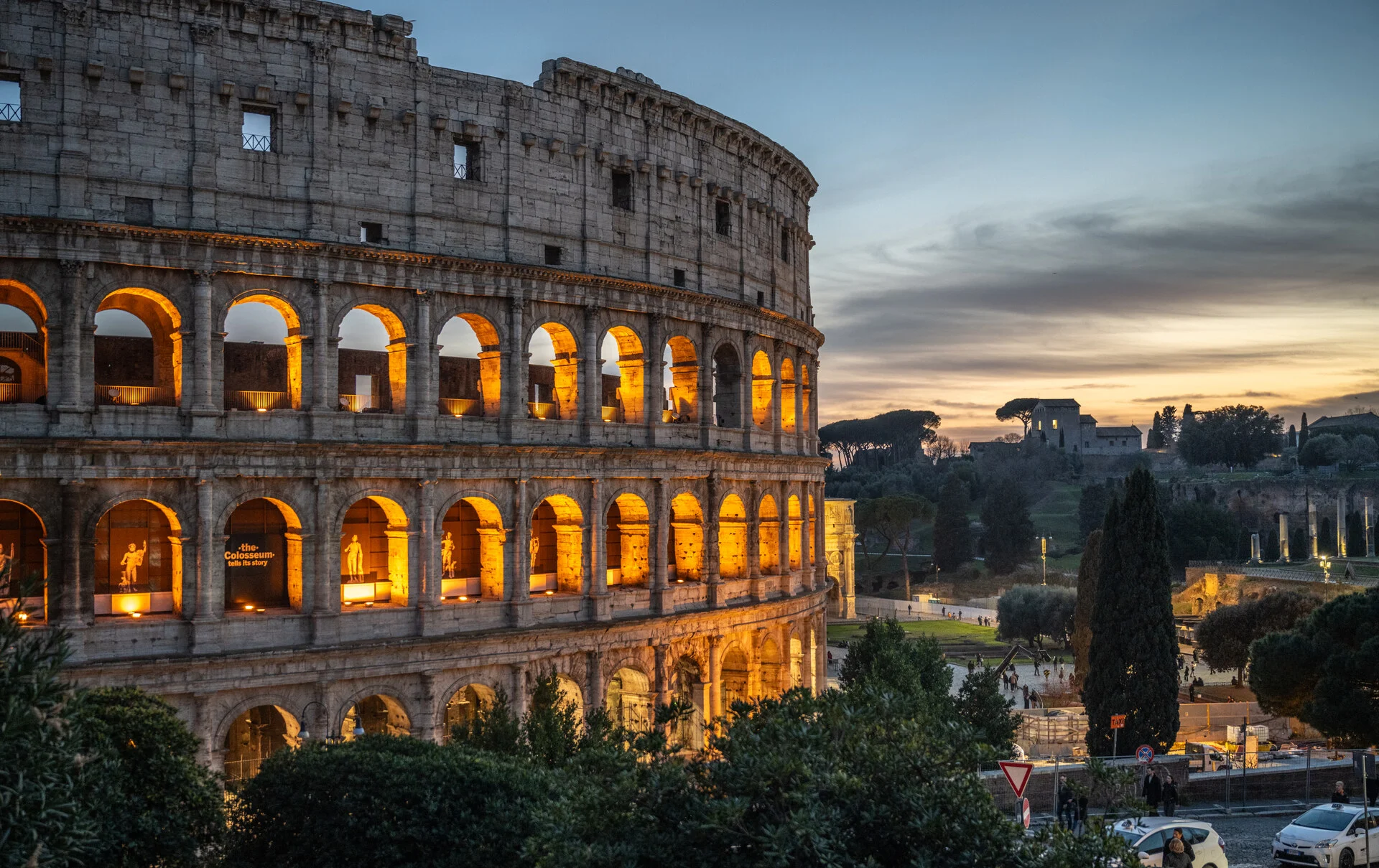
The Colosseum is the single most important thing to see in Rome, and the one attraction to plan your trip around. Completed in AD 80, the Flavian Amphitheatre once held up to 80,000 spectators for gladiator combat, wild animal hunts, and mock sea battles. Today it is the world's most recognizable ancient ruin and a UNESCO World Heritage Site. The good news for visitors is that one combined ticket covers three sites: the Colosseum itself, the Roman Forum, and Palatine Hill, all clustered together in the archaeological heart of the city.
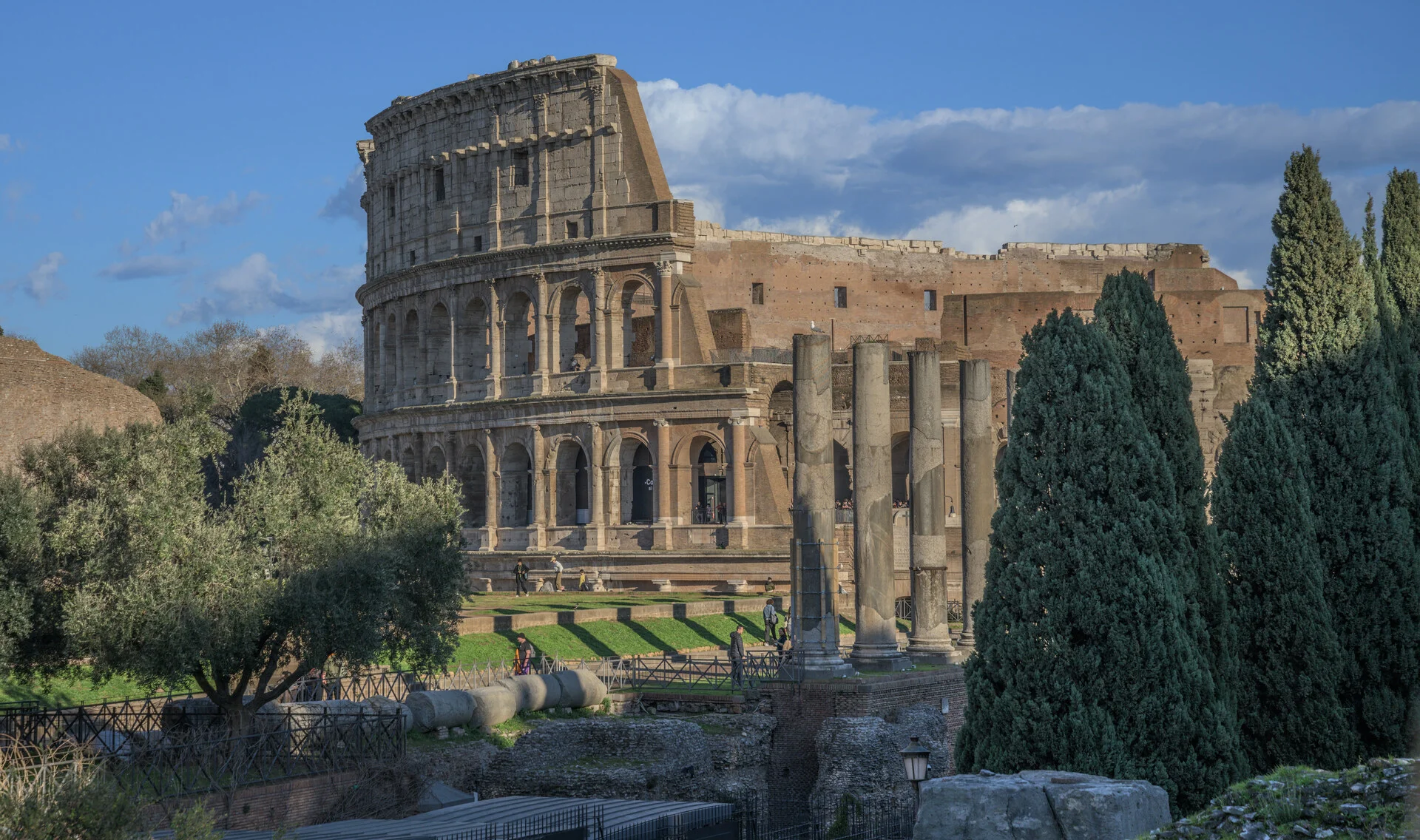
One combined ticket covers the Colosseum, the Roman Forum, and Palatine Hill, the cradle of ancient Rome.
Next door, the Roman Forum was the political and commercial heart of the empire, a sprawl of temples, triumphal arches, and basilicas where Julius Caesar was cremated. Above it rises Palatine Hill, the legendary birthplace of Rome and the address of emperors, with views down over both the Forum and the Colosseum. Allow at least half a day for all three. The site is enormous, the signage is sparse, and a guide brings the rubble to life, which is why most first-timers book a tour.
Entry is timed and standard tickets routinely sell out days in advance, so book ahead. The most efficient choice for first-timers is a skip-the-line guided tour of the Colosseum, Roman Forum, and Palatine Hill, which packs the history into a couple of hours. If you prefer to move faster, a Colosseum express tour with skip-the-line tickets gets you inside the arena quickly and then lets you explore the Forum at your own pace.
For the most memorable experience, upgrade to special access. A guided tour with Colosseum Underground and Arena Floor access takes you down into the Hypogeum, the network of tunnels where gladiators and animals waited beneath the arena, and out onto the reconstructed arena floor itself. These tickets are strictly limited and sell out first, so book as early as you can. You can check current opening hours on the official Parco archeologico del Colosseo website.
⛪ Vatican City: Museums, Sistine Chapel & St. Peter's
Vatican City is the smallest sovereign state in the world, and it holds an outsized share of humanity's greatest art. The Vatican Museums are open Monday to Saturday and require a timed ticket, St. Peter's Basilica is free to enter, but the dome climb is paid. Plan a half-day here at minimum, and remember the dress code: shoulders and knees must be covered, or you will be turned away at the door.
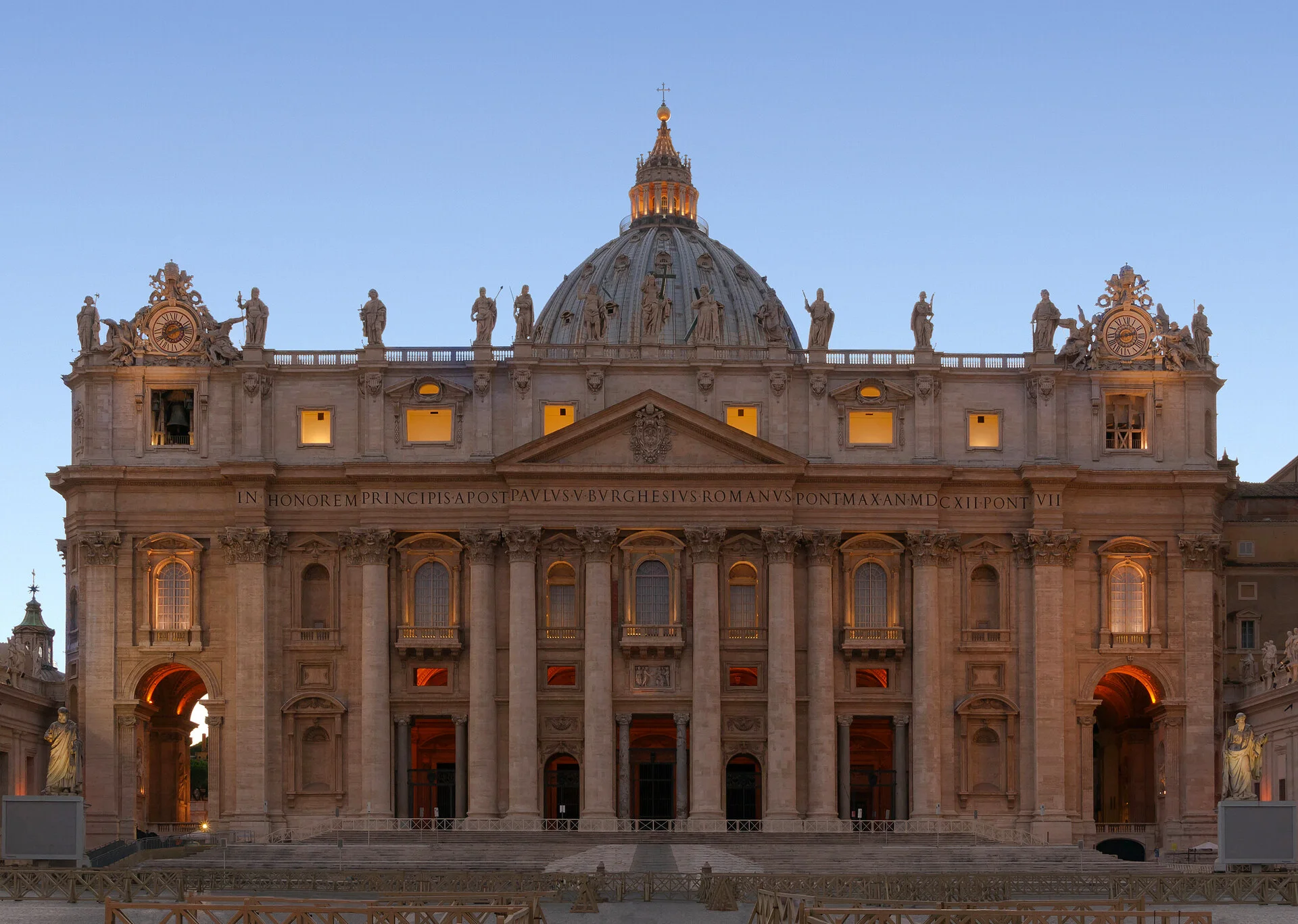
St. Peter's Basilica is the largest church in the world and free to enter, though the dome climb costs extra.
The Vatican Museums are a four-kilometre marathon of galleries: the Gallery of Maps, the Raphael Rooms, ancient sculpture in the Pio-Clementino, and modern religious art, all building toward one room. The Sistine Chapel is the finale, where Michelangelo's ceiling and his Last Judgment leave most visitors craning their necks in silence. To skip the notoriously long entry queue, book a Vatican Museums and Sistine Chapel skip-the-line entry ticket, or take a guided tour of the Vatican Museums, Sistine Chapel, and St. Peter's Basilica that connects all three in one route.
St. Peter's Basilica is the largest church in the world and the spiritual center of the Catholic faith. Inside you will find Michelangelo's Pietà and Bernini's soaring bronze baldachin over the high altar. Entry is free, but security lines can be long, and a guided visit lets you skip ahead. For the best view in Rome, climb the dome of St. Peter's (the cupola), where 551 steps (or a lift plus stairs) reward you with a panorama over St. Peter's Square and the whole city. Plan your visit using the official Vatican Museums website.
Top-Rated Activities in Rome
⛲ Iconic Piazzas, Fountains & the Pantheon
Some of the best things to do in Rome cost nothing at all. The historic center (centro storico) is a walkable open-air gallery of Baroque squares, dramatic fountains, and ancient temples, and stitching them together on foot is one of the great pleasures of the city. The classic route links the Pantheon, Piazza Navona, the Trevi Fountain, and the Spanish Steps, all within a 20-minute walk of each other.
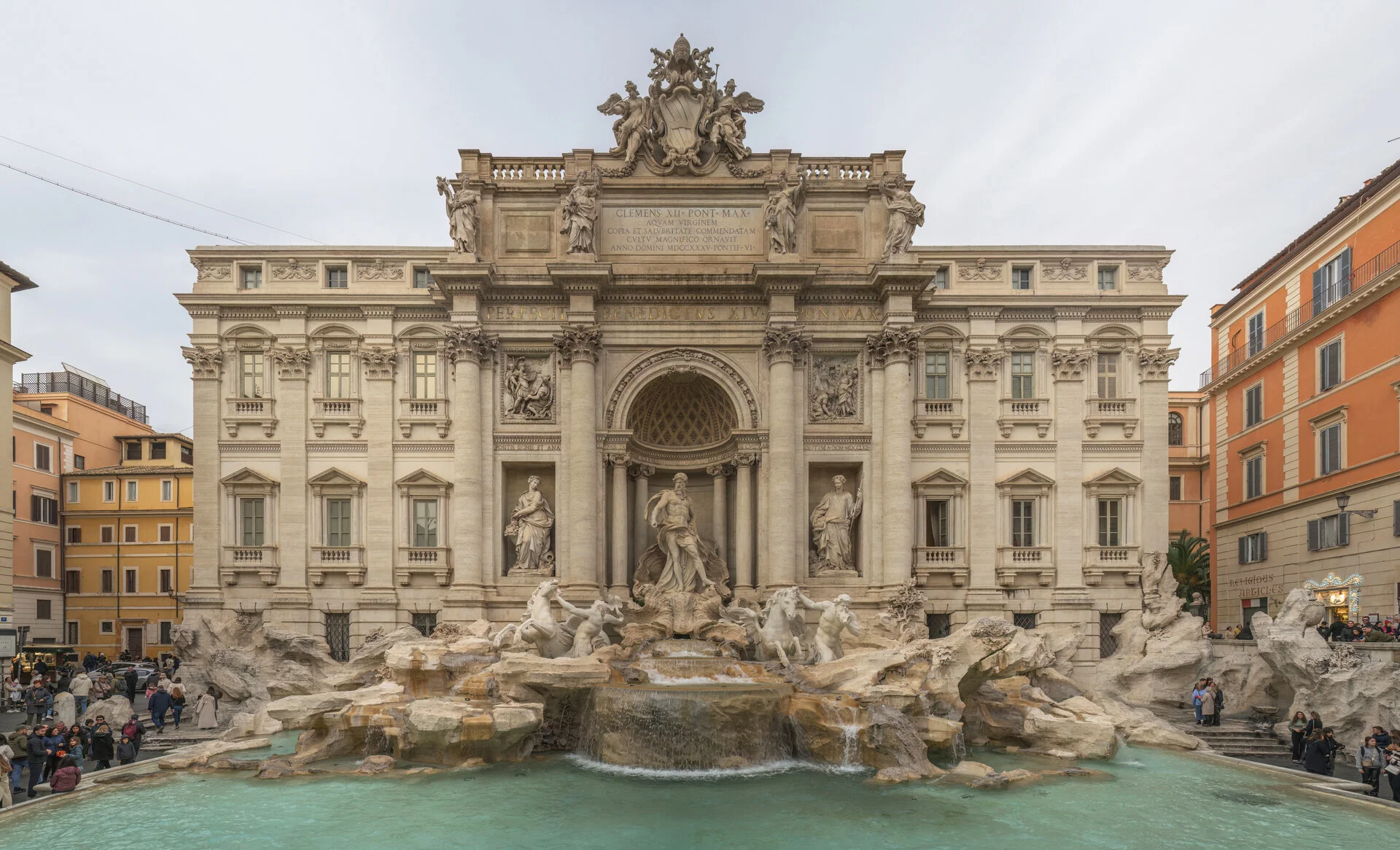
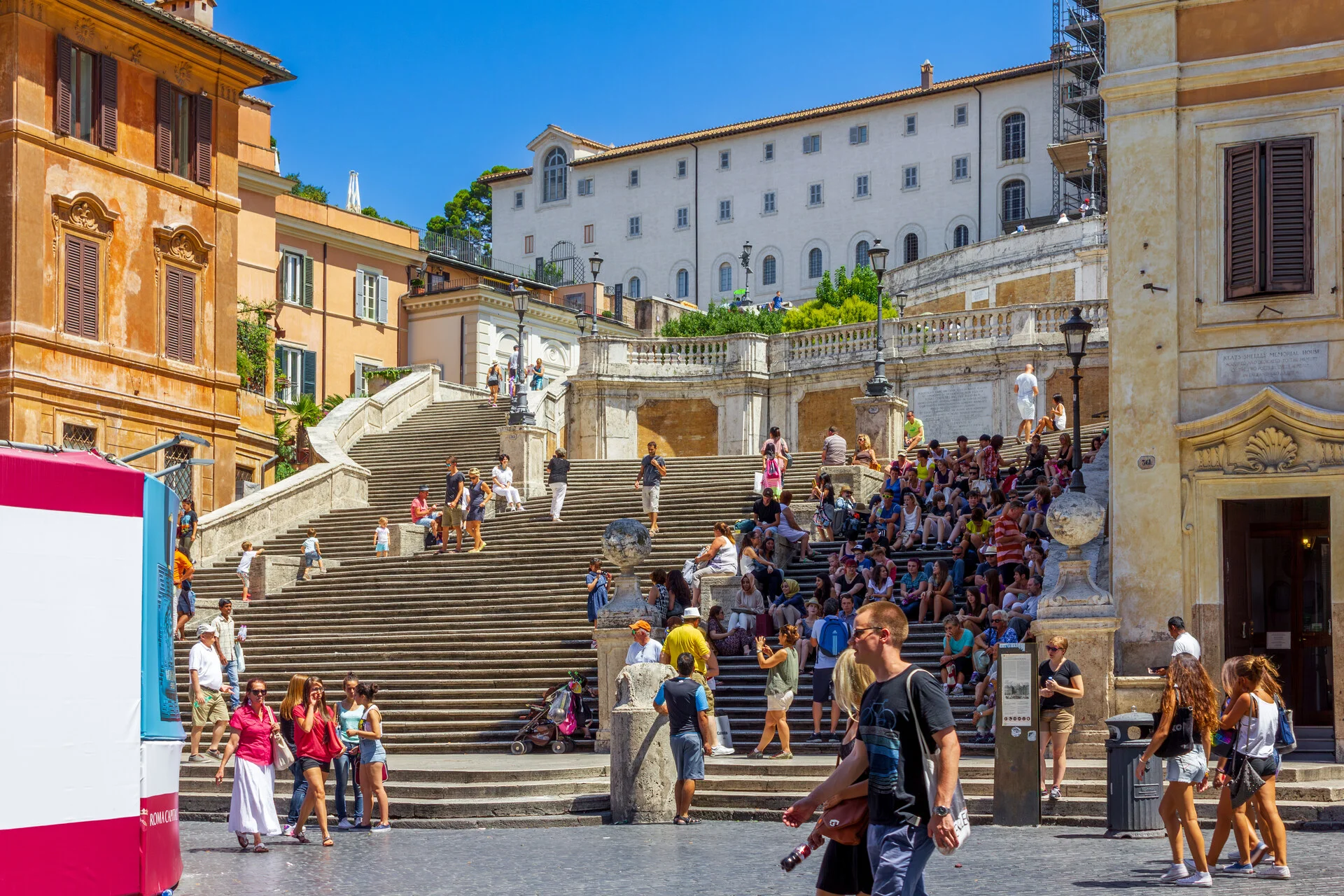
The Trevi Fountain (left) and the Spanish Steps (right) are two of Rome's most beloved free attractions.
The Trevi Fountain is the most famous fountain in the world, a Baroque wall of travertine where tradition says a coin thrown over your left shoulder guarantees a return to Rome. It is breathtaking and mobbed in equal measure, so visit early morning (before 9am) or late at night to actually see it. A short walk away, the Pantheon is the best-preserved building of ancient Rome, a 2,000-year-old temple with the largest unreinforced concrete dome on Earth and an open oculus to the sky. It now charges a small entry fee, and a Pantheon guided tour with skip-the-line entry explains the engineering that has kept it standing for two millennia.
Piazza Navona is Rome's most theatrical square, built over the ancient Stadium of Domitian and centered on Bernini's spectacular Fountain of the Four Rivers. Nearby, the Spanish Steps sweep up to the Trinità dei Monti church and make a fine people-watching perch. Because the stories behind these sites are easy to miss on your own, an evening guided walking tour of Rome's squares and fountains is a lovely way to see them lit up after dark. For deeper context, the UNESCO listing of the Historic Centre of Rome is a useful reference.
🎨 The Borghese Gallery, Castel Sant'Angelo & More
Beyond the Vatican, Rome holds world-class museums that many first-timers skip, often because they did not book ahead. The standout is the Borghese Gallery, set in a villa inside the leafy Villa Borghese park. It houses an astonishing concentration of Bernini sculptures (his Apollo and Daphne is breathtaking) alongside masterpieces by Caravaggio, Raphael, and Titian. Crucially, the Borghese Gallery requires a pre-booked timed ticket: walk-ins are not allowed, visits are capped at two hours, and slots sell out a week or more ahead.
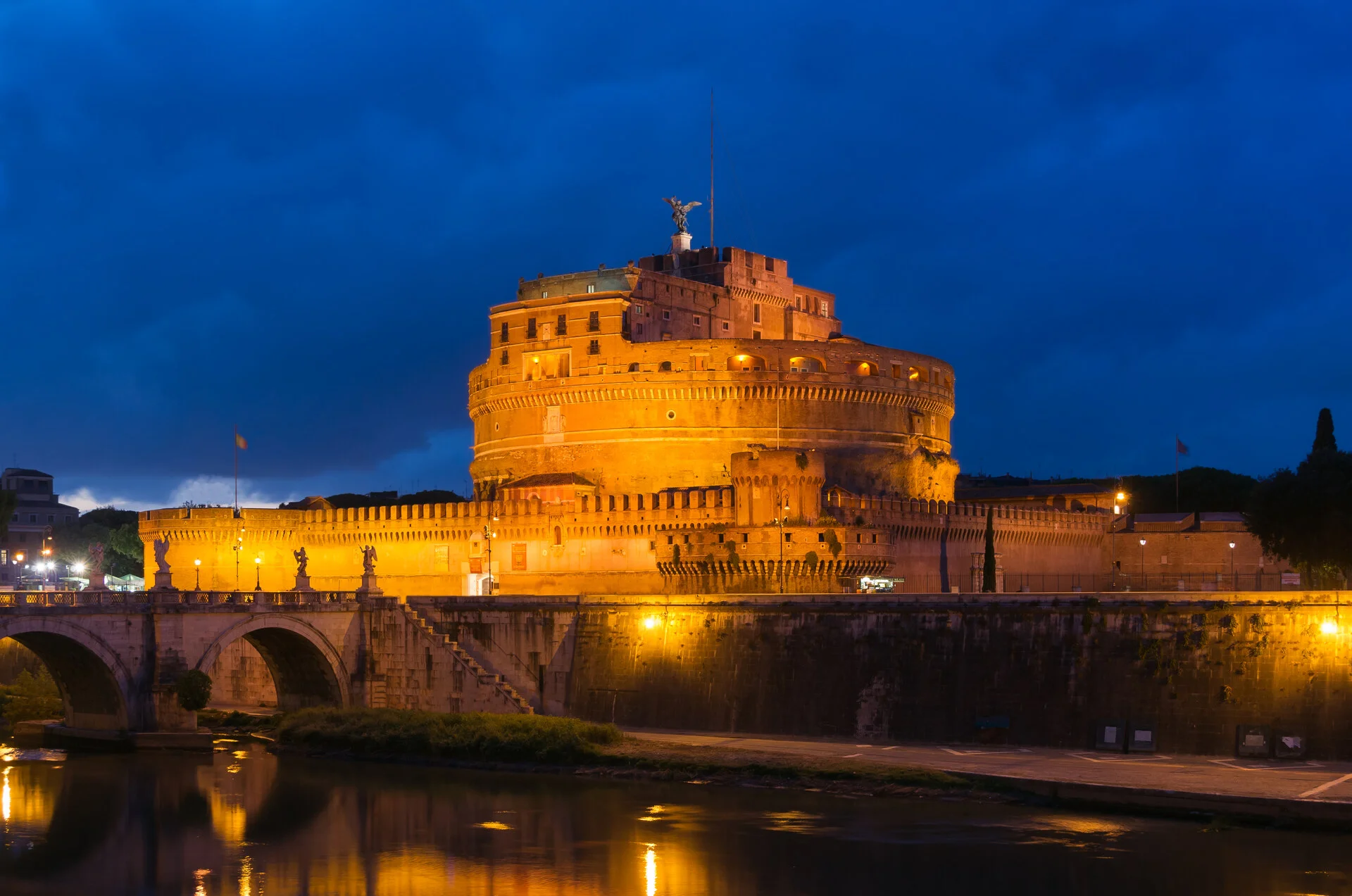
Castel Sant'Angelo began as Hadrian's mausoleum and later served as a papal fortress and escape route.
To see Bernini and Caravaggio without the stress, book a Borghese Gallery skip-the-line ticket or guided tour well in advance. After your slot, the surrounding Villa Borghese gardens are perfect for a stroll, a rowboat on the little lake, or a sunset from the Pincio Terrace. Reservation details are on the official Borghese Gallery website.
On the riverfront stands Castel Sant'Angelo, a drum-shaped fortress that began life as Emperor Hadrian's mausoleum and later became a papal stronghold, complete with a secret elevated passage to the Vatican. Its terrace offers one of the best views in Rome, looking straight down the angel-lined bridge toward St. Peter's. A Castel Sant'Angelo skip-the-line ticket saves time at the entrance. History lovers should also consider the Capitoline Museums, the oldest public museums in the world, perched on Michelangelo's Campidoglio square.
Where to Stay in Rome
Book through this map and you help support our travels, at no extra cost to you. We earn a small commission, and it means a lot.
🍝 Food, Wine & Trastevere
Eating is one of the best things to do in Rome, no qualification needed. Roman cuisine is built on a handful of perfect dishes: cacio e pepe (pasta with pecorino and black pepper), carbonara, amatriciana, deep-fried supplì rice balls, crisp Roman-style pizza al taglio, and the famous fried artichokes of the old Jewish Quarter. Save room for gelato and an evening aperitivo. The local rhythm matters too: lunch runs from 1pm, dinner rarely starts before 8:30pm, and the espresso is taken standing at the bar.
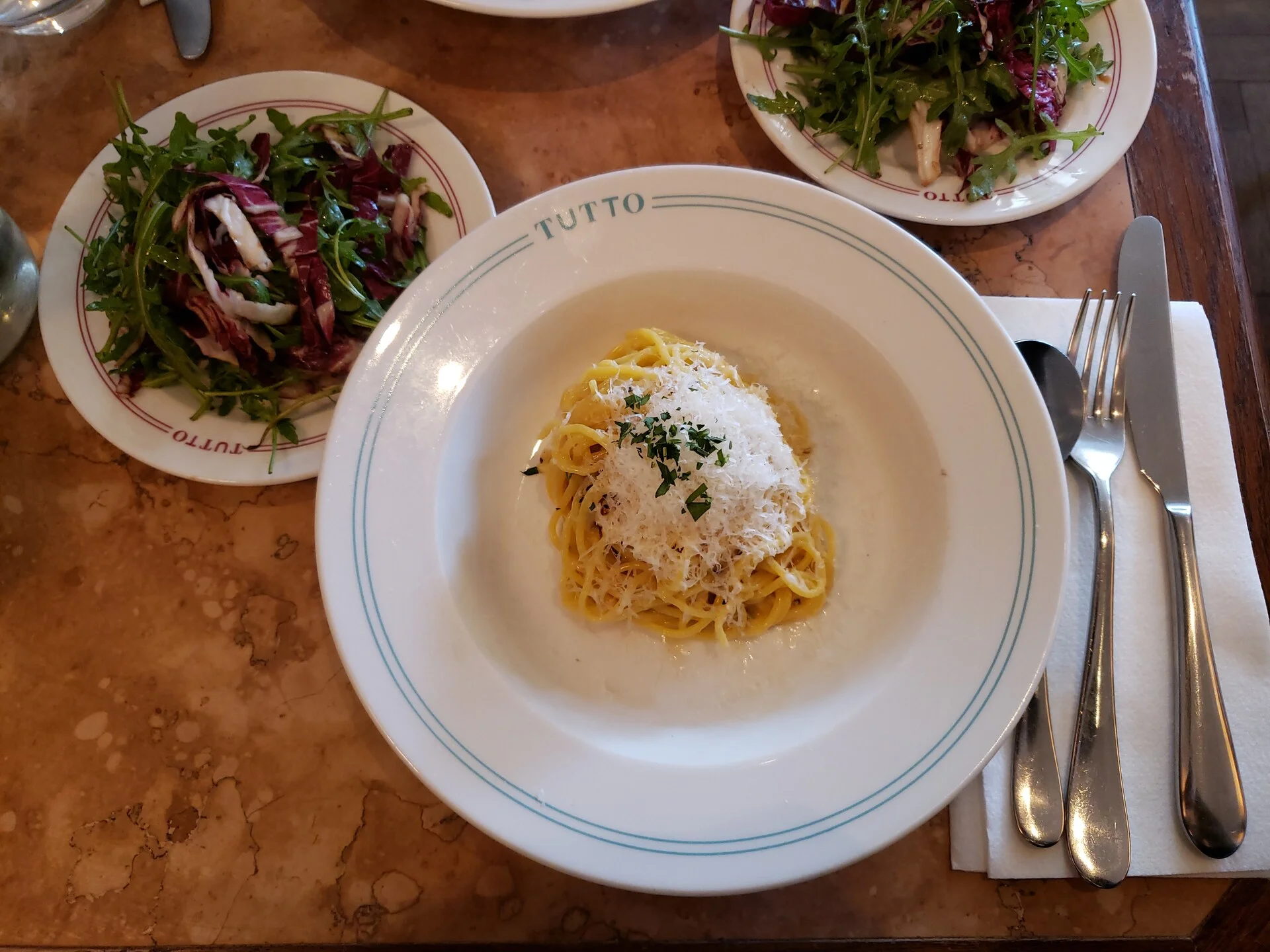
Cacio e pepe is the quintessential Roman pasta, made with just pecorino cheese and black pepper.
The best neighborhood to eat and wander after dark is Trastevere, a tangle of ivy-draped cobbled lanes across the Tiber, full of trattorias, wine bars, and piazzas that come alive at night. We loved exploring it on a Trastevere food tour with tastings, grazing on supplì, pizza, and gelato with a local guide. For a hands-on experience, a Roman pasta-making class teaches you to roll fresh pasta and cook a classic carbonara from scratch.
For a grittier, more local food scene, head to Testaccio, the historic slaughterhouse district that is now one of Rome's best eating neighborhoods. A Testaccio market food tour dives into the covered market and the traditional dishes Romans actually eat. And no trip is complete without wine: the hills around Rome produce crisp Frascati whites, and a Rome wine tasting experience is a relaxed way to spend an afternoon between sights.
🚆 Best Day Trips from Rome
Rome is a superb base for exploring central and southern Italy. If you have more than three days, dedicate one to a day trip. The two classics pull in opposite directions: Tivoli for Renaissance fountains and Roman ruins, and Pompeii for the most famous archaeological site on Earth.
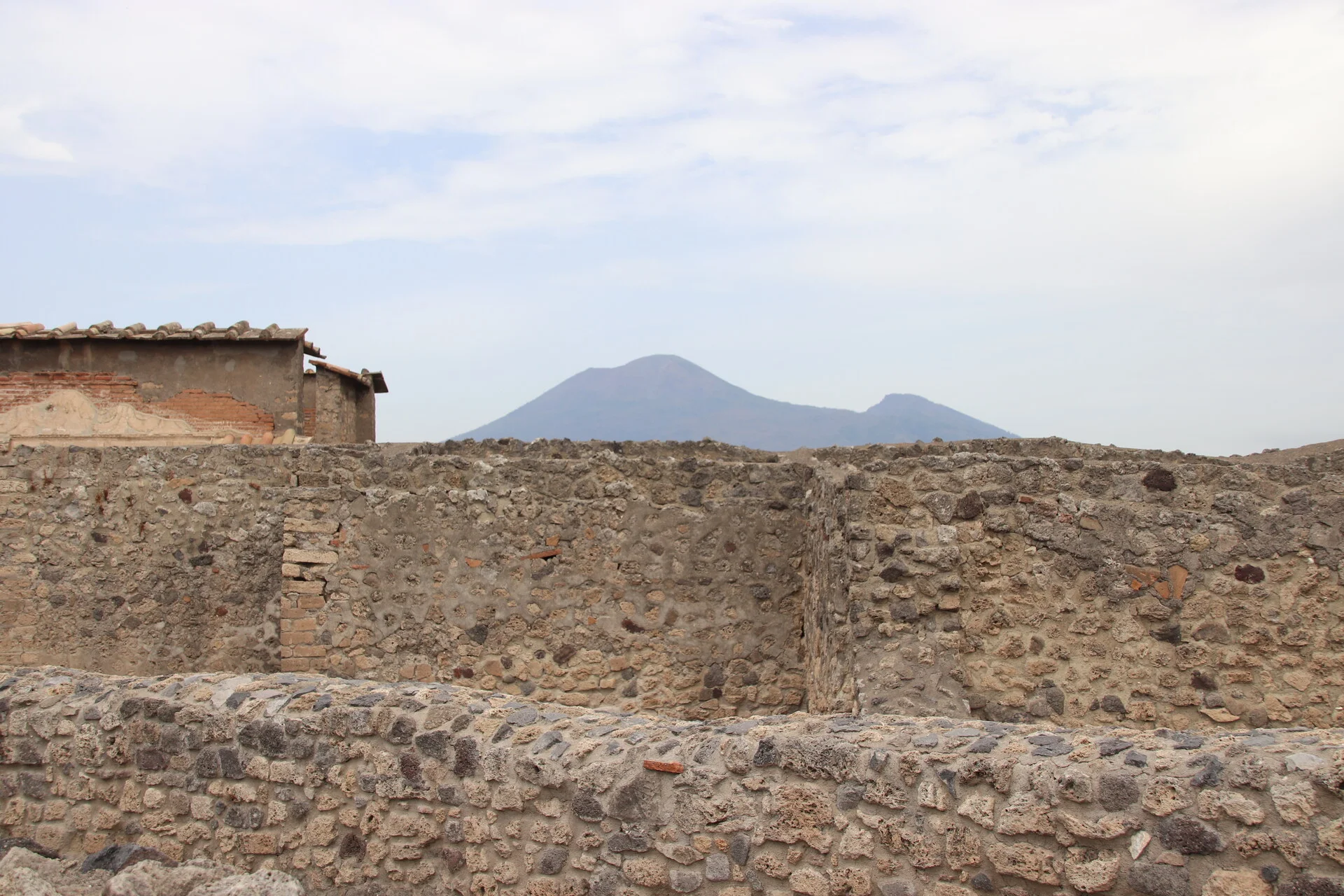
Pompeii, frozen by the AD 79 eruption of Mount Vesuvius, is the most rewarding longer day trip from Rome.
Tivoli (about an hour east) packs two UNESCO sites into one easy day: Villa d'Este, a Renaissance villa with terraced gardens of more than 500 fountains, and Hadrian's Villa, the vast country estate of the emperor who built the Pantheon. Pompeii (around 2.5 hours south) is the Roman city buried by the AD 79 eruption of Mount Vesuvius and frozen in time, from frescoed villas to plaster casts of its residents. A Pompeii day trip from Rome with skip-the-line entry handles the long logistics, and many travelers add Mount Vesuvius on a combined Pompeii and Vesuvius full-day tour.
For the fountains and ruins of Tivoli, a guided Tivoli day trip to Villa d'Este and Hadrian's Villa takes the stress out of the connections. Italy's high-speed trains also put a second city within reach: a Florence day trip by high-speed train reaches the Renaissance capital in just 1.5 hours. Closer to home, a half-day trip to Ostia Antica, Rome's ancient port, offers Pompeii-like ruins just 40 minutes from the center.
| Day Trip | Travel Time (one way) | Best For |
|---|---|---|
| Tivoli (Villa d'Este + Hadrian's Villa) | ~1 hour | Renaissance fountains and Roman ruins, easiest full day |
| Pompeii + Vesuvius | ~2.5 hours | Ancient history fans, the iconic buried city |
| Florence | ~1.5 hours by train | Renaissance art and a second Italian city in one day |
| Ostia Antica | ~40 minutes | Pompeii-style ruins, closer and far quieter |
| Naples + Amalfi Coast | ~1 to 3 hours | Coastal scenery, pizza, and dramatic drives |
Best day trips from Rome compared
Best day trips from Rome compared
If you enjoy structuring trips around excursions, you might also like our guides to the best things to do at Lake Como in northern Italy and the best day trips from Prague in Central Europe.
🧭 Practical Tips for Visiting Rome
Best time to visit: April to May and September to October are ideal, with mild temperatures (18 to 26°C) and thinner crowds than peak summer. July and August are hot (30 to 35°C) and busy, and many family-run restaurants close in mid-August for the Ferragosto holiday. Winter (November to February) is cool (8 to 15°C), atmospheric, and the cheapest time to visit.
How many days: Three to four days is the sweet spot. Three days covers ancient Rome, the Vatican, and the historic center. A fourth day adds the Borghese Gallery, Trastevere, or a day trip to Tivoli or Pompeii.
Getting around: The centro storico is compact and best explored on foot. For longer hops, the Metro (lines A, B, and C) is quick but limited, and buses and trams fill the gaps. From Fiumicino Airport, the Leonardo Express train reaches Termini station in 32 minutes, or you can pre-book a private airport transfer for door-to-door convenience. For a first-day overview, a hop-on hop-off bus tour links the major sights and saves your legs.
| Pass | Approx. Price | Best For |
|---|---|---|
| Roma Pass (48h) | €36 | 2 free attractions + unlimited public transport |
| Roma Pass (72h) | €58 | 3 days, 2 free attractions + unlimited transport |
| Omnia Vatican & Rome Card | From €149 | Vatican + Colosseum fast-track bundled with transport |
| Individual skip-the-line tickets | Varies | Flexible short trips focused on the big sights |
Rome passes compared
Rome passes compared
Where to stay: The historic center (centro storico) puts you within walking distance of the Pantheon and Piazza Navona. Monti is a trendy, central neighborhood near the Colosseum, Trastevere is best for food and nightlife, and Prati is quiet and handy for the Vatican. We book accommodation on Booking.com and compare flight-and-hotel bundles on Expedia. Transport timetables and the Roma Pass are explained on the official Roma Pass website.
Etiquette and safety: Cover your shoulders and knees to enter churches, including St. Peter's. Pickpockets work the crowded Metro line A and the area around Termini station, so keep valuables zipped and in front of you. Expect a small coperto (cover charge) per person at restaurants, tap water is safe and free from the city's nasoni fountains, and a simple "buongiorno" goes a long way.
Frequently Asked Questions About Rome
What are the best things to do in Rome?
The best things to do in Rome are visiting the Colosseum, Roman Forum, and Palatine Hill, touring the Vatican Museums and the Sistine Chapel, climbing the dome of St. Peter's Basilica, tossing a coin in the Trevi Fountain, admiring the Pantheon, exploring Piazza Navona and the Spanish Steps, eating your way through Trastevere, and taking a day trip to Pompeii or Tivoli. Most major sites use timed entry, so booking skip-the-line tickets in advance is essential.
How many days do you need in Rome?
We recommend 3 to 4 days for a first visit to Rome. Three days covers ancient Rome (the Colosseum, Roman Forum, and Palatine Hill), the Vatican (Vatican Museums, Sistine Chapel, and St. Peter's Basilica), and the historic center with the Pantheon, Trevi Fountain, and Piazza Navona. A fourth day lets you add the Borghese Gallery, the Trastevere neighborhood, or a day trip to Tivoli or Pompeii. With only 2 days, prioritize the Colosseum and the Vatican.
Do you need to book Colosseum tickets in advance?
Yes, you should book Colosseum tickets in advance. Entry is timed and standard tickets routinely sell out days ahead, especially from April to October. A combined ticket covering the Colosseum, Roman Forum, and Palatine Hill costs around 18€, while guided skip-the-line tours run from about 40€. Special-access tickets for the Arena Floor and the Underground (Hypogeum) sell out first and are only available through guided tours. Booking online avoids queues that can exceed an hour.
Is the Roma Pass or Omnia Card worth it?
The Roma Pass is worth it if you plan to use public transport and visit several paid sites. The 48-hour pass (around 36€) includes free entry to 2 attractions plus unlimited transport, and the 72-hour pass (around 58€) covers 3 days. The Omnia Vatican and Rome Card (from around 149€) adds fast-track Vatican and Colosseum access and is worth it only if you want everything bundled. For a short, big-sights trip, booking individual skip-the-line tickets is usually more flexible.
What is the best day trip from Rome?
Tivoli is the best short day trip from Rome, with two UNESCO sites in one outing: the fountain-filled Renaissance gardens of Villa d'Este and the sprawling ruins of Hadrian's Villa, both about an hour east of the city. For ancient history, Pompeii (around 2.5 hours south) is the most rewarding longer day trip, often combined with Mount Vesuvius. Other great options include Florence by high-speed train, Naples and the Amalfi Coast, and Ostia Antica, Rome's remarkably well preserved ancient port.
When is the best time to visit Rome?
The best time to visit Rome is April to May and September to October, when temperatures are mild (18 to 26°C) and crowds are thinner than in peak summer. July and August are hot (30 to 35°C) and very busy, and many Roman restaurants close in mid-August. Winter (November to February) is cool (8 to 15°C), quiet, and the cheapest time to visit, ideal for museums and sightseeing without the heat.
Is the Vatican worth visiting and what is the dress code?
Yes, the Vatican is worth visiting and is one of Rome's unmissable experiences. The Vatican Museums hold one of the world's greatest art collections and lead to Michelangelo's Sistine Chapel ceiling, while St. Peter's Basilica is the largest church in the world and free to enter. The dress code is strictly enforced: shoulders and knees must be covered for both the museums and the basilica. The Vatican Museums require a timed ticket and are closed on Sundays except the last Sunday of the month, when entry is free.
Start Planning Your Rome Trip
Rome rewards both the planner and the wanderer. You can spend a morning inside a 2,000-year-old amphitheater, an afternoon among Michelangelo's frescoes, and an evening eating cacio e pepe in a Trastevere alley with a glass of Frascati. Few cities pack this much history, art, and food into walking distance, which is exactly why it overwhelms first-timers who arrive without a plan.
The single biggest tip we can give you is to book the timed-entry sights early. The Colosseum, the Vatican Museums, and the Borghese Gallery all sell out, and securing skip-the-line tickets in advance is what separates a smooth trip from hours wasted in line. When you are ready, you can browse all Rome tours and activities on GetYourGuide to lock in your dates.
Planning a bigger European adventure? Pair Rome with our guides to the best things to do in Vienna and the best things to do in Barcelona for more inspiration across the continent.