

Best Things to Do in Rio de Janeiro (2026)
This article contains affiliate links. If you make a purchase through these links, we may earn a small commission at no extra cost to you. This helps us keep creating free content for you!
Rio de Janeiro is one of those cities that looks unreal even when you are standing right in it. Granite peaks erupt from the Atlantic coastline, a 30-meter statue watches over everything from the clouds, and the soundtrack swings between crashing waves and live samba. It is chaotic, beautiful, and completely addictive.
The best things to do in Rio de Janeiro include visiting Christ the Redeemer on Corcovado Mountain, riding the Sugarloaf Cable Car at sunset, hiking through Tijuca National Park (the world's largest urban rainforest), relaxing at Copacabana and Ipanema beaches, exploring the bohemian Santa Teresa neighborhood, and experiencing live samba in Lapa. Rio offers a combination of natural beauty, cultural energy, and iconic landmarks that very few cities on Earth can match.
We have visited Rio a couple of times now, and each trip has revealed a new layer, from the famous landmarks everyone knows to the neighborhood samba nights most tourists never find. This guide covers the experiences we have actually done, the ones that made us fall in love with the Cidade Maravilhosa. If you are building a broader South America trip, check out our 8-day Patagonia itinerary and wine tasting in Mendoza for more inspiration.
⛪ Christ the Redeemer & Corcovado Mountain
Christ the Redeemer (Cristo Redentor) is a 30-meter Art Deco statue standing atop Corcovado Mountain at 710 meters elevation. It is one of the New Seven Wonders of the World and the single most iconic image of Brazil. No matter how many photos you have seen, standing at the base and looking up at those outstretched arms with the entire city spread below is something else entirely.

Christ the Redeemer stands 30 meters tall at 710 meters elevation, offering 360-degree views of Rio de Janeiro.
There are three ways to reach the summit. The cog train from Cosme Velho station is the most scenic, running through Tijuca Forest in about 20 minutes. Official vans depart from the Paineiras visitor center partway up the mountain. The third option, and the one we recommend for most visitors, is a guided tour with early access to Christ the Redeemer and Sugarloaf that handles all the logistics and lets you skip the ticket queues.
We went early morning on our first visit, and it made a huge difference. By 8:30am we had the viewing platform nearly to ourselves. By 10am the crowds had tripled and a cloud bank was rolling in from the coast. If you can, arrange your schedule around a clear morning. Check the Corcovado webcam the night before and be flexible.
The 360-degree panorama from the summit is staggering: Sugarloaf Mountain and Guanabara Bay to the east, Copacabana and Ipanema beaches to the south, the Tijuca Forest canopy stretching in every direction, and Lagoa Rodrigo de Freitas glinting in the middle of it all. It genuinely feels like you can see the entire city.
For the most complete experience, book a full-day Corcovado and Sugarloaf tour with lunch that combines both iconic peaks in one day. Alternatively, the half-day Christ the Redeemer, Selarón Steps, and Sugarloaf sunset tour is perfect if you want to see the three most photographed landmarks in Rio before dinner.
🚡 Sugarloaf Cable Car & Urca
Pão de Açúcar (Sugarloaf Mountain) is a 396-meter granite peak at the mouth of Guanabara Bay, and the two-stage cable car ride to the top is one of Rio's most thrilling experiences. The Sugarloaf Cable Car costs approximately R$130 (about $23 USD) for adults and operates from 8am to 9pm daily.

The Sugarloaf Cable Car offers one of Rio's best sunset experiences, with views stretching from Copacabana to Christ the Redeemer.
The cable car runs in two stages. The first takes you from Praia Vermelha (Red Beach) to Morro da Urca at 220 meters, where there is a restaurant, bar, and outdoor amphitheater that hosts live music events some evenings. The second stage climbs from Urca to the Sugarloaf summit. Both rides take about 3 minutes each and the glass-walled cabins give you unobstructed views the whole way up.
We timed our visit for late afternoon and it was one of the best decisions of the entire trip. Watching the sun drop behind the mountains while Christ the Redeemer slowly lit up across the bay was genuinely one of the most beautiful things we have seen anywhere in the world. The city below transitions from golden daylight to a carpet of twinkling lights, and the illuminated statue presides over all of it.
If you want to combine Sugarloaf with Christ the Redeemer in one booking, the Sugarloaf Cable Car and Corcovado train combo tickets bundle both at a slight discount. For something different, a Guanabara Bay sunset sailing tour with drinks lets you see Sugarloaf from the water while sipping caipirinhas.
Do not skip the Urca neighborhood below. It is one of Rio's calmest and most charming areas. Walk along the Mureta da Urca (Urca seawall) in the evening, grab a cold beer from one of the street vendors, and watch the sunset with the locals. Praia Vermelha, the small sheltered beach at the base of Sugarloaf, is also worth a quick swim before or after your cable car ride.
Top-Rated Activities in Rio de Janeiro
🏖️ Copacabana, Ipanema & Rio's Beach Culture
Rio's beach culture is not just a tourist attraction. It is the beating heart of the city. Cariocas (Rio locals) live on the sand: jogging, playing volleyball and futevôlei (foot volleyball), surfing, socializing, and working out at the outdoor gym stations that line the boardwalks. Understanding the beach is understanding Rio.

Copacabana Beach stretches for 4 km with its famous wave-pattern boardwalk designed by Roberto Burle Marx.
Copacabana Beach is the most famous, a 4 km crescent of sand lined with the iconic black-and-white wave-pattern boardwalk designed by landscape architect Roberto Burle Marx. Different postos (numbered lifeguard stations) have different vibes. Posto 5 and 6 are popular with tourists, while Posto 2 near the Copacabana Palace attracts a more upscale crowd. The beach buzzes with vendors selling everything from fresh coconuts and caipirinhas to grilled cheese on a stick.
Ipanema Beach, just south of Copacabana, is slightly more upscale and backed by boutique shops and excellent restaurants. The famous bossa nova song "The Girl from Ipanema" was written at Bar Garota de Ipanema, which still operates on Rua Vinícius de Moraes. Leblon, the beach immediately west of Ipanema, is the quietest of the three and a local favorite.
The unmissable sunset spot is Arpoador Rock, the rocky point separating Copacabana and Ipanema. Crowds gather every evening and, on a good night, actually break into applause when the sun dips below the horizon. We saw this happen on our first visit and it honestly gave us chills. It is one of those spontaneous, beautiful travel moments you cannot plan.
A practical note on safety: do not bring valuables to the beach. Leave your passport and extra cash at the hotel, use a waterproof phone pouch, and keep belongings minimal. Rent a chair and umbrella from a barraca vendor for about R$10 to R$20 and enjoy. A guided bike tour of Rio's beaches, lagoon, and botanical garden is a great way to cover more ground and learn the local beach etiquette from a guide.
🌿 Tijuca National Park: Rainforest in the Heart of the City
Tijuca National Park is the world's largest urban rainforest, covering 32 square kilometers entirely within Rio de Janeiro's city limits. The fact that a city of 7 million people has a full-scale tropical rainforest in its backyard, complete with waterfalls, toucans, and capuchin monkeys, is remarkable. Even more remarkable is the forest's origin story: it was entirely replanted in the 1860s after being cleared for coffee plantations, making it one of the first major reforestation projects in history.
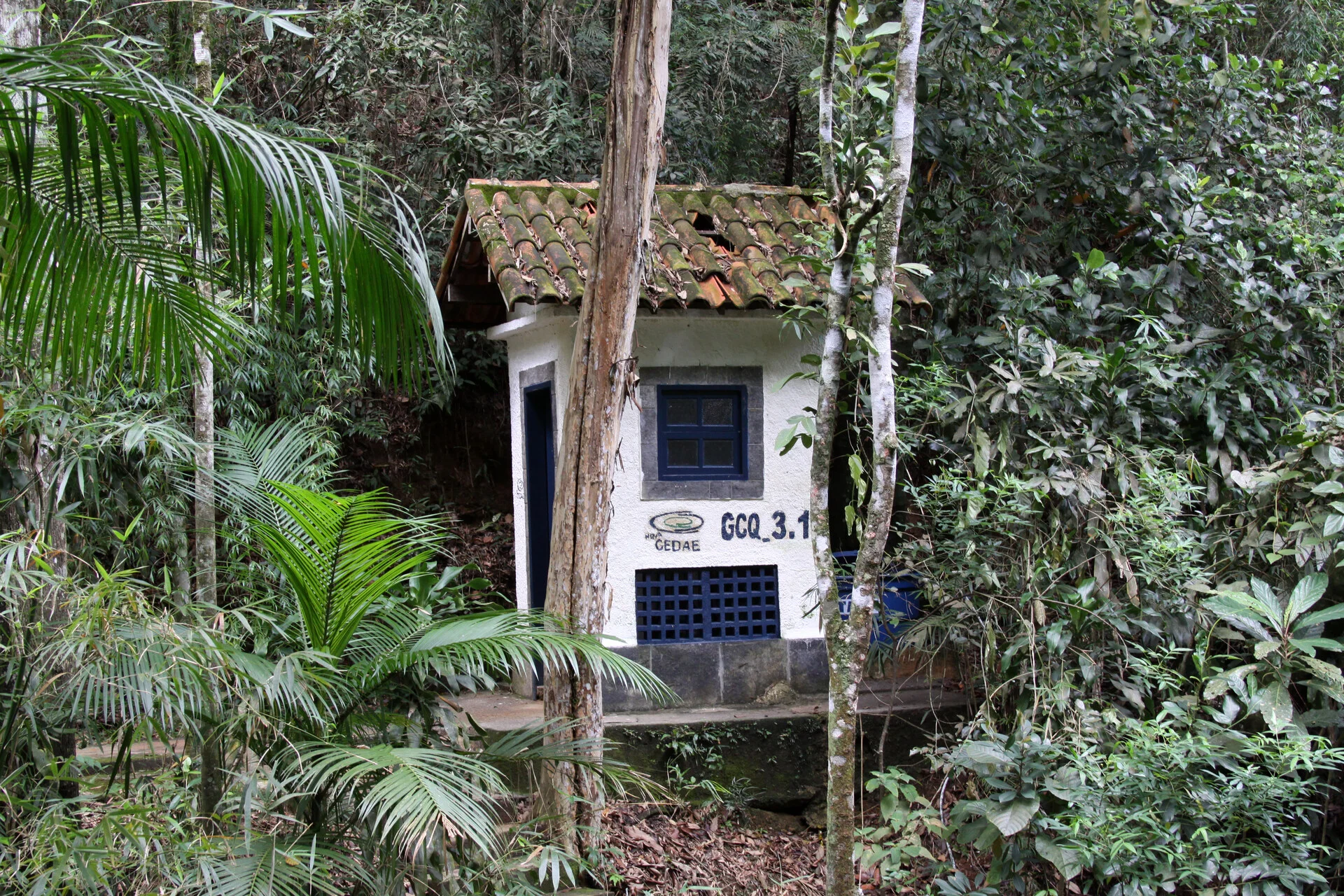
Tijuca National Park covers 32 square kilometers and is the largest urban rainforest on Earth.
The most popular hikes are Pico da Tijuca (the park's highest point at 1,021 meters, a 2 to 3 hour round trip), Pedra Bonita (a moderate 30-minute hike to a stunning panoramic viewpoint), and Pedra da Gávea (a challenging 4 to 5 hour scramble with rope-assisted sections near the summit). Cascatinha Teles Waterfall, the easiest natural attraction to reach, sits right off the main park road and requires almost no walking.
We did the Pedra Bonita hike on our second trip and it blew us away. The trail is short enough that it does not eat your whole day, but the view from the top is absolutely massive: you can see all of Rio's south zone beaches, the Tijuca Forest canopy, and hang gliders launching from the adjacent ramp into the void below. It was one of those hikes where we just sat at the top in silence for 20 minutes, taking it in.
For the deeper trails, we strongly recommend going with a guide. Trail markings can be inconsistent, and some paths require local knowledge to navigate safely, especially Pedra da Gávea. The Tijuca Forest guided hike to peaks, caves, and waterfalls is an excellent full-experience option. For something more targeted, a small-group hike to Pedra Bonita viewpoint gets you to that panoramic summit with a knowledgeable local guide.
If you want something more adventurous, the hiking and rappelling adventure in Tijuca Forest combines a forest hike with a rappelling descent down a rock face. Start early (7 to 8am) regardless of which hike you choose. The morning air is cooler, the light is beautiful, and afternoon clouds often roll in and obscure the views.
🎨 Santa Teresa, Selarón Steps & Lapa
Santa Teresa is Rio's bohemian hilltop neighborhood, a maze of cobblestone streets lined with street art, colonial mansions converted into galleries and restaurants, and views that stop you mid-sentence. It feels like a different city up here, slower and more artistic, with an energy that reminded us of Valparaíso in Chile or Alfama in Lisbon.
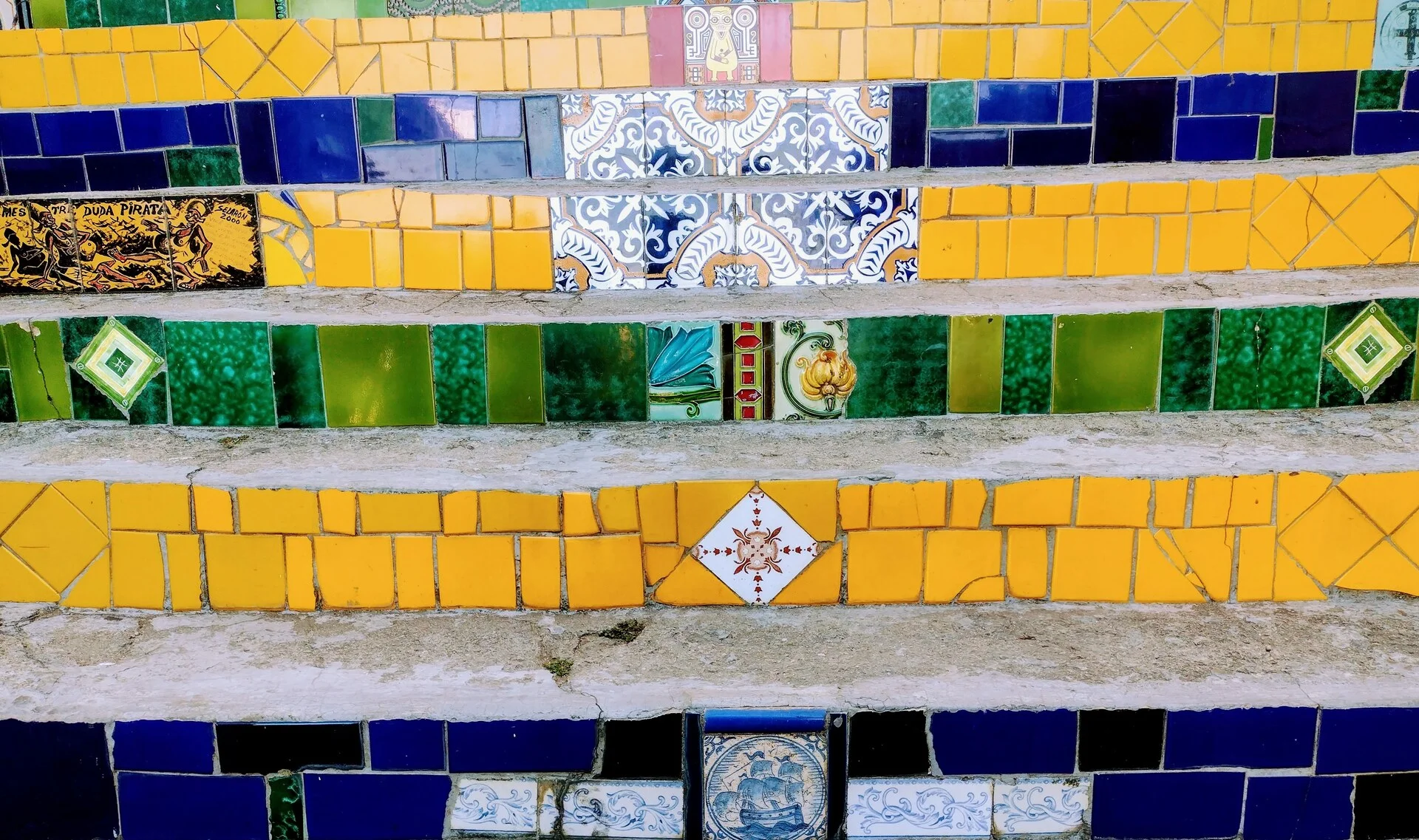
The Selarón Steps feature 215 steps covered in over 2,000 tiles collected from more than 60 countries.
The Escadaria Selarón (Selarón Steps) connects Lapa to Santa Teresa: 215 steps covered in over 2,000 colorful tiles collected from more than 60 countries. Chilean artist Jorge Selarón started the project in 1990 as a personal tribute to the Brazilian people and continued adding tiles until his death in 2013. It is free to visit, wildly photogenic, and best seen in the morning before the crowds arrive.
The historic yellow Santa Teresa tram (Bondinho) has been recently restored and runs from the city center up to the neighborhood. It is a charming way to arrive and crosses the Arcos da Lapa (the colonial aqueduct) on the way up. For dining, Aprazível is legendary: a treehouse-style restaurant built into the hillside with panoramic views of the city and some of the best contemporary Brazilian food we have eaten anywhere.
Below Santa Teresa, Lapa is Rio's nightlife epicenter. Friday and Saturday nights the streets around the Arcos da Lapa come alive with live music pouring out of dozens of bars simultaneously. It is loud, crowded, energetic, and quintessentially Rio. A pub crawl in Lapa with cachaça tasting and live samba is a great way to experience the scene safely with a local guide who knows the best spots.

The Arcos da Lapa, Rio's colonial aqueduct, marks the entrance to the city's most vibrant nightlife district.
One experience we highly recommend is a community-led favela tour. The Favela Santa Marta community tour with a local guide is run by residents who share the real story of favela life: the challenges, the community spirit, the art, and the history. The tour supports the local economy directly, and it gave us more context about Rio's social fabric than anything else we did.
🎶 Samba Nights & Carioca Culture
You cannot truly experience Rio without experiencing samba. It is not just music here, it is the cultural backbone of the city. And the best part is that the most authentic samba experiences in Rio are often free.
Pedra do Sal, in Rio's port area, hosts outdoor samba sessions every Monday and Friday night. This spot is considered the birthplace of samba, an Afro-Brazilian cultural site where the genre first took shape in the early 20th century. There is no stage, no cover charge, and no tourist veneer. Musicians set up on the cobblestones, hundreds of people gather, and the dancing just happens. We went on a Monday night and it was one of the highlights of our entire time in Brazil. A Pedra do Sal live samba night with a local guide provides context and handles transport so you can focus on the music.
If you visit between September and February, try to attend a samba school rehearsal (ensaio). Schools like Salgueiro, Mangueira, and Beija-Flor open their rehearsals to the public as they prepare for Carnival. The energy inside is electric: full percussion sections, hundreds of dancers, and an intensity that gives you a taste of what Carnival itself must feel like. The Carnival experience at a samba school includes transport, entry, and a guide who explains the history and competition structure.
For those who want to try the dance themselves, a samba class followed by a samba night out combines a lesson with a guide-led evening of live music. Studios in Copacabana and Lapa offer drop-in classes lasting 1 to 2 hours.
Beyond samba, carioca culture is rich and layered. The Feira de São Cristóvão is a massive Northeastern Brazilian culture market with live forró music on weekends and traditional food from Bahia and Pernambuco. Capoeira rodas (circles) pop up on Copacabana and Ipanema beaches on weekends, a mesmerizing mix of martial art, dance, and acrobatics. And bossa nova, the genre born in Ipanema and Copacabana in the late 1950s, still lives on in intimate bar performances around the city.
🚢 Day Trips from Rio de Janeiro
Rio is surrounded by spectacular natural scenery and historic towns that make excellent day trips. If you have 4 or more days in the city, dedicating one to a day trip is absolutely worth it. For full details on every destination below, including travel times, costs, and booking tips, see our complete guide to the best day trips from Rio de Janeiro.

Arraial do Cabo, known as the Brazilian Caribbean, has some of the clearest water in Brazil and is 2.5 hours from Rio.
Arraial do Cabo
Arraial do Cabo is the best day trip from Rio de Janeiro for beach lovers. Located 2.5 hours east of the city, it is known as the "Brazilian Caribbean" for its crystal-clear turquoise water and white sand beaches. A boat trip around the cape visits several otherwise inaccessible beaches and includes snorkeling stops. The water visibility here is remarkable, and we were genuinely stunned at how much it resembled the Caribbean. The Arraial do Cabo day trip with boat tour from Rio includes hotel pickup, the boat excursion, and free time on the beach.
Ilha Grande
Ilha Grande is a car-free tropical island about 3 hours from Rio by bus and ferry. It has pristine beaches, hiking trails through Atlantic Forest, and a laid-back atmosphere that feels a world away from the city. The most famous beach, Lopes Mendes, consistently ranks among Brazil's best. A Ilha Grande day trip with sightseeing cruise from Rio handles all the transport logistics and includes a boat tour around the island.
Petrópolis
Petrópolis, the "Imperial City," sits in the mountains 1.5 hours north of Rio. It was the summer residence of Brazil's emperors, and the cooler mountain temperatures (typically 5 to 10 degrees lower than Rio) made it a welcome escape from the coastal heat. The Imperial Museum, housed in the former summer palace, is Brazil's most visited museum. The European-style architecture and tree-lined avenues feel surprisingly different from Rio. A Petrópolis guided cultural day tour from Rio includes the key historic sites and transport.
Niterói
Niterói is technically its own city, but it is just a 15-minute ferry ride from Praça XV in central Rio. The main draw is the Museu de Arte Contemporânea (MAC), designed by Oscar Niemeyer. The flying saucer-shaped building perched on a cliff above Guanabara Bay is one of the most iconic pieces of architecture in Brazil. The ferry ride itself offers fantastic views of Rio's skyline and Sugarloaf Mountain.
🎒 Practical Tips for Visiting Rio de Janeiro
The best time to visit Rio de Janeiro is May to September (dry season), with temperatures between 20°C and 27°C, fewer crowds, and lower hotel prices. December to March is summer, with temperatures above 35°C, frequent afternoon rain showers, and the highest prices (especially during Carnival in February or March).
| Neighborhood | Best For | Vibe |
|---|---|---|
| Copacabana | Central location, beach access, best transport links | Busy, touristy, convenient |
| Ipanema | Upscale dining, boutique shopping, beautiful beach | Trendy, slightly quieter |
| Botafogo | Local feel, between Sugarloaf and Centro, great restaurants | Up-and-coming, authentic |
| Santa Teresa | Art, charm, hilltop views, bohemian atmosphere | Artistic, peaceful, hilly |
| Leblon | Quiet beach, excellent restaurants, safe | Upscale, residential |
Where to stay in Rio de Janeiro: neighborhood comparison
Where to stay in Rio de Janeiro: neighborhood comparison
Getting around Rio is straightforward. Uber and 99 (a local ride-hailing app) are cheap and reliable, with most cross-city rides costing R$15 to R$30 ($3 to $6 USD). The metro covers the main tourist corridor from Copacabana through Botafogo to Centro, and the VLT light rail connects the port area. For getting to the airport, a pre-booked transfer or Uber takes 30 to 45 minutes depending on traffic.
Rio requires street awareness, but it should not scare you away. Stick to well-traveled areas during the day, use ride-hailing apps at night, leave valuables at the hotel, and avoid displaying expensive jewelry or electronics. Tourist police are present at the main beaches and landmarks. We felt safe throughout both of our trips by following these basic precautions.
Budget-wise, expect to spend R$300 to R$500 per day ($55 to $90 USD) for a mid-range couple's trip including accommodation, food, and activities. Brazil uses the Real (BRL/R$), credit cards are widely accepted, and ATMs inside banks are the safest option for cash withdrawals. One important note: Brazilians speak Portuguese, not Spanish. Learning a few phrases like "obrigado/obrigada" (thank you) and "quanto custa?" (how much?) goes a long way.
❓ Frequently Asked Questions About Rio de Janeiro
How many days do you need in Rio de Janeiro?
We recommend 4 to 5 days for a first visit to Rio de Janeiro. That gives you a full day each for Christ the Redeemer and Sugarloaf Mountain, a day for Tijuca National Park hiking, a beach and neighborhood exploration day, and time for a samba night and a day trip. With only 2 to 3 days, prioritize Christ the Redeemer, Sugarloaf at sunset, and one evening in Lapa.
Is Rio de Janeiro safe for tourists?
Rio is generally safe for tourists who take basic precautions. Stick to well-traveled areas like Copacabana, Ipanema, Leblon, Botafogo, and Santa Teresa during the day. Use Uber or 99 instead of walking alone at night. Do not bring valuables to the beach. Avoid displaying expensive jewelry or electronics. Tourist police patrol the main beach areas and landmarks.
What is the best time to visit Rio de Janeiro?
May to September is the best time to visit Rio de Janeiro. This is the dry season with temperatures between 20°C and 27°C, fewer crowds, and lower hotel prices. December to March is summer with temperatures above 35°C, frequent afternoon rain showers, and the highest prices, especially during Carnival in February or March.
How do you get to Christ the Redeemer?
There are three ways to reach Christ the Redeemer. The cog train from Cosme Velho station is the most scenic option, running through Tijuca Forest in 20 minutes and costing approximately R$100 (about $18 USD). Official vans depart from the Paineiras visitor center. Guided tours include hotel pickup and skip-the-line access. Book any option in advance during peak season as tickets sell out.
Is the Sugarloaf Cable Car worth it?
Yes, the Sugarloaf Cable Car is one of Rio's must-do experiences. The two-stage cable car ride offers panoramic views of Copacabana Beach, Guanabara Bay, and Christ the Redeemer. Going at sunset is the best time, as you can watch the city transition from daylight to illuminated skyline. Tickets cost approximately R$130 (about $23 USD) for adults.
What is the best day trip from Rio de Janeiro?
Arraial do Cabo is the best day trip from Rio for beach lovers, with crystal-clear turquoise water often compared to the Caribbean. It is 2.5 hours from the city. For history, Petrópolis is the imperial mountain town 1.5 hours away with cooler temperatures and European architecture. Ilha Grande is best for a nature and hiking-focused day trip.
What should you eat in Rio de Janeiro?
Rio's must-try foods include feijoada (black bean and pork stew, traditionally eaten on Saturdays), pão de queijo (cheese bread), açaí bowls (Rio serves them thick and frozen, often with granola and banana), coxinha (chicken croquettes), and churrasco (Brazilian barbecue). For street food, try pastel (fried pastry with various fillings) and tapioca crepes on the beach.
Start Planning Your Rio de Janeiro Trip
Rio de Janeiro is a city that overwhelms the senses in the best possible way. From the jaw-dropping view at the top of Corcovado to the raw energy of a Lapa samba night, from the turquoise water of Arraial do Cabo to the quiet charm of Urca's seawall, every experience feels larger than life. We keep coming back because no amount of visits feels like enough.
If you are planning your first trip, start by booking your Christ the Redeemer and Sugarloaf tickets on GetYourGuide. They sell out fast during peak season, and a guided tour takes the logistics off your plate so you can focus on the views. Add a Tijuca hike, a samba night, and at least one evening watching the sunset from Arpoador Rock, and you will understand why cariocas call this the Marvelous City.
If you are continuing through South America, do not miss our guides to easy hiking trails near Santiago and the best things to do in Lisbon for another vibrant coastal city with incredible food and culture.