
8 Days in Portugal: Porto to Lisbon Itinerary (2026)
This article contains affiliate links. If you make a purchase through these links, we may earn a small commission at no extra cost to you. This helps us keep creating free content for you!
Portugal welcomed over 30 million tourists in 2024, making it one of Europe's fastest-growing destinations. Yet it remains more affordable than Spain, France, or Italy. From the port wine cellars lining Porto's Douro River to the golden light spilling across Lisbon's hilltop miradouros, 8 days gives you enough time to experience two world-class cities and the remarkable countryside between them.
Most itineraries fly into Lisbon and rush through Porto as an afterthought. We think that gets the trip backwards. Starting in Porto and traveling south lets you build from intimate wine culture toward Lisbon's grand monuments, with two stops most tourists never make: the ancient university city of Coimbra and the medieval walled town of Obidos. This is the exact itinerary we planned for our Portugal trip next month, and we designed it around the experiences that matter most: world-class wine, skip-the-line monument access, and enough time to actually get lost in each city's neighborhoods.
Below you will find our day-by-day breakdown, transport logistics, budget tips, and the tours worth booking in advance. If you prefer to start in Lisbon (easier if your flights go through there), simply reverse the route. If you are building a bigger European trip, our guide to skip-the-line tickets across Europe covers fast-track access at the continent's most popular attractions.
🗺️ Our 8-Day Portugal Route at a Glance
This itinerary starts in Porto and ends in Lisbon, traveling south through the Portuguese heartland. We recommend booking an open-jaw flight (fly into Porto, fly out of Lisbon) to avoid backtracking. If only Lisbon flights work for your schedule, reverse the route, the stops work equally well in either direction.
| Day | Location | Highlights |
|---|---|---|
| Day 0 | Arrive Porto | Evening arrival, first walk along the Ribeira waterfront |
| Day 1 | Porto | Sao Bento Station, Clerigos Tower, Livraria Lello, port wine cellars |
| Day 2 | Douro Valley (day trip) | Scenic train to Pinhao, wineries, river views, vineyard terraces |
| Day 3 | Aveiro or Braga (day trip) | Aveiro's colorful boats or Braga's Bom Jesus sanctuary |
| Day 4 | Porto → Coimbra | Train south, University of Coimbra, Biblioteca Joanina, old town |
| Day 5 | Coimbra → Obidos → Lisbon | Medieval walled town, ginjinha, arrive Lisbon evening |
| Day 6 | Lisbon | Alfama, Sao Jorge Castle, miradouros, fado show |
| Day 7 | Sintra (day trip) | Pena Palace, Quinta da Regaleira, fairy-tale palaces |
| Day 8 | Lisbon | Belem, Jeronimos Monastery, pasteis de nata, sunset cruise |
8-day Portugal itinerary overview: Porto to Lisbon via Coimbra and Obidos
8-day Portugal itinerary overview: Porto to Lisbon via Coimbra and Obidos
Quick stats: 4 cities, 2 day trips, 1 country, approximately 1,200 to 2,000 euros per person for the full trip. The route follows the Portuguese rail network south, making every transfer easy and scenic.
🍷 Day 1: Porto's Historic Center and Wine Cellars
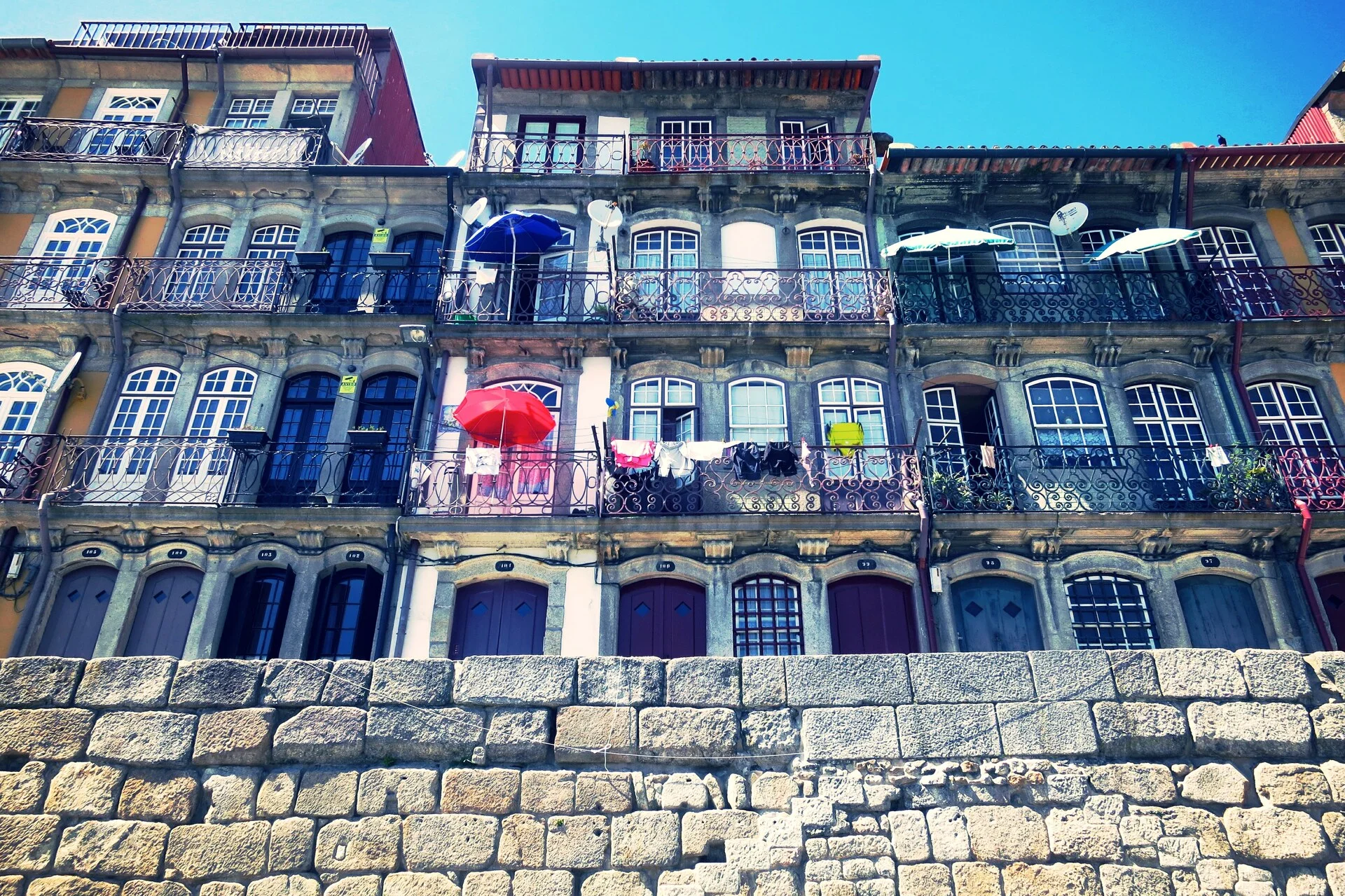
After arriving in Porto the evening before (Day 0), you will have had your first taste of the Ribeira waterfront at sunset. Day 1 is about Porto's two defining features: the azulejo tile art that covers buildings, churches, and even a train station, and the world-famous port wine cellars across the river in Vila Nova de Gaia.
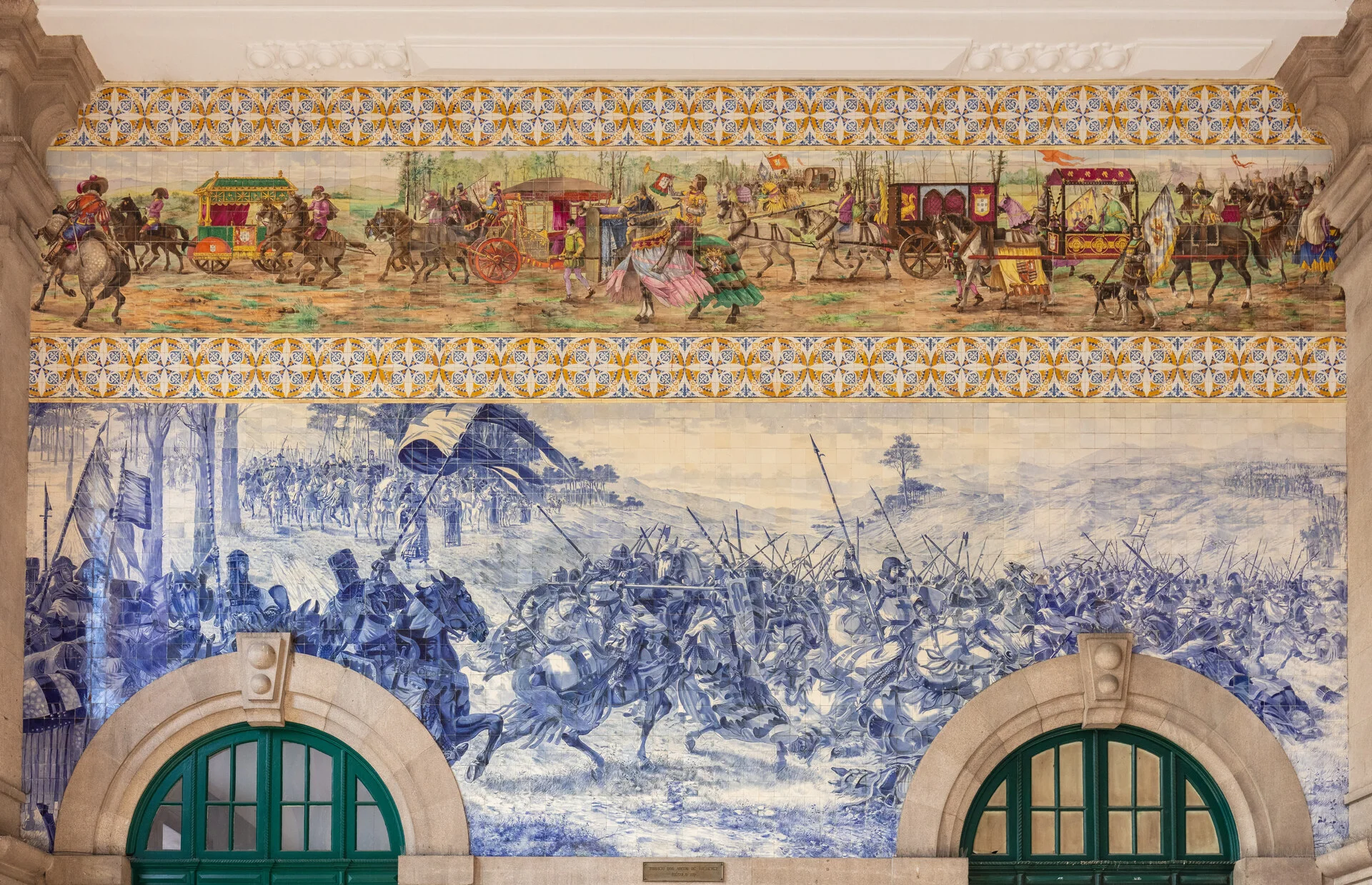
Sao Bento Station is one of the world's most beautiful train stations. Entry is free.
Sao Bento Station and the Historic Center
Porto's Sao Bento Station features over 20,000 hand-painted azulejo tiles depicting Portuguese history, from medieval battles to the evolution of transport. It is considered one of the most beautiful train stations in the world, and it is completely free to visit. From there, walk uphill to Clerigos Tower, a 76-meter baroque bell tower with 240 steps and the best 360-degree view of Porto. Then visit Livraria Lello, one of the world's most beautiful bookstores, said to have inspired J.K. Rowling's vision of Hogwarts. Entry costs 5 euros, redeemable against any book purchase.
A walking tour is the best way to connect these landmarks with context. The Porto walking tour covering Sao Bento, Clerigos, and Ribeira covers the historic center's highlights in about 3 hours.
Afternoon: Port Wine Cellars in Vila Nova de Gaia
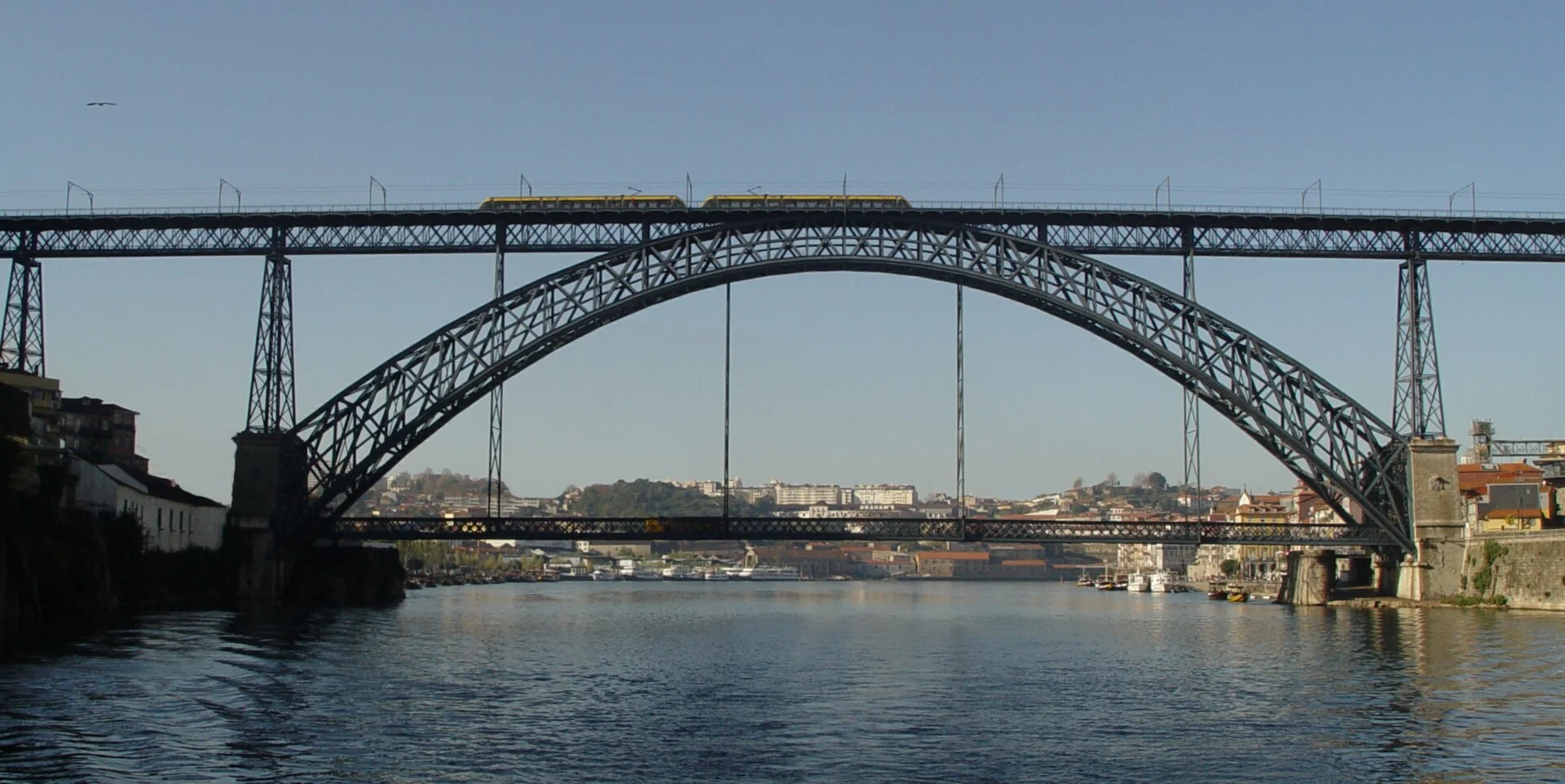
Cross the Dom Luis I Bridge to Vila Nova de Gaia, home to the world's most famous port wine cellars. A guided cellar tour costs 15 to 25 euros, lasts about 45 minutes, and includes tastings of 3 to 5 wines. Taylor's has a stunning rooftop terrace with river views. Graham's sits on a hillside with panoramic vistas. Burmester offers a more intimate, less crowded experience. We recommend visiting 2 cellars in one afternoon to compare styles.
Port wine cellar guided tour with tasting in Vila Nova de Gaia is an essential Porto experience. Pair it with a Six Bridges Douro River cruise on a traditional Rabelo boat for a complete afternoon on the water.
Evening: Francesinha
The francesinha is Porto's most famous dish: layers of cured ham, fresh sausage, and steak sandwiched between bread, smothered in melted cheese and a spicy tomato-beer sauce. It is gloriously messy and completely unique to Porto. Cafe Santiago and Brasao are two of the most popular spots, but nearly every neighborhood has a local favorite. Pair it with a Super Bock, Porto's hometown beer.
🍇 Day 2: Douro Valley by Scenic Train
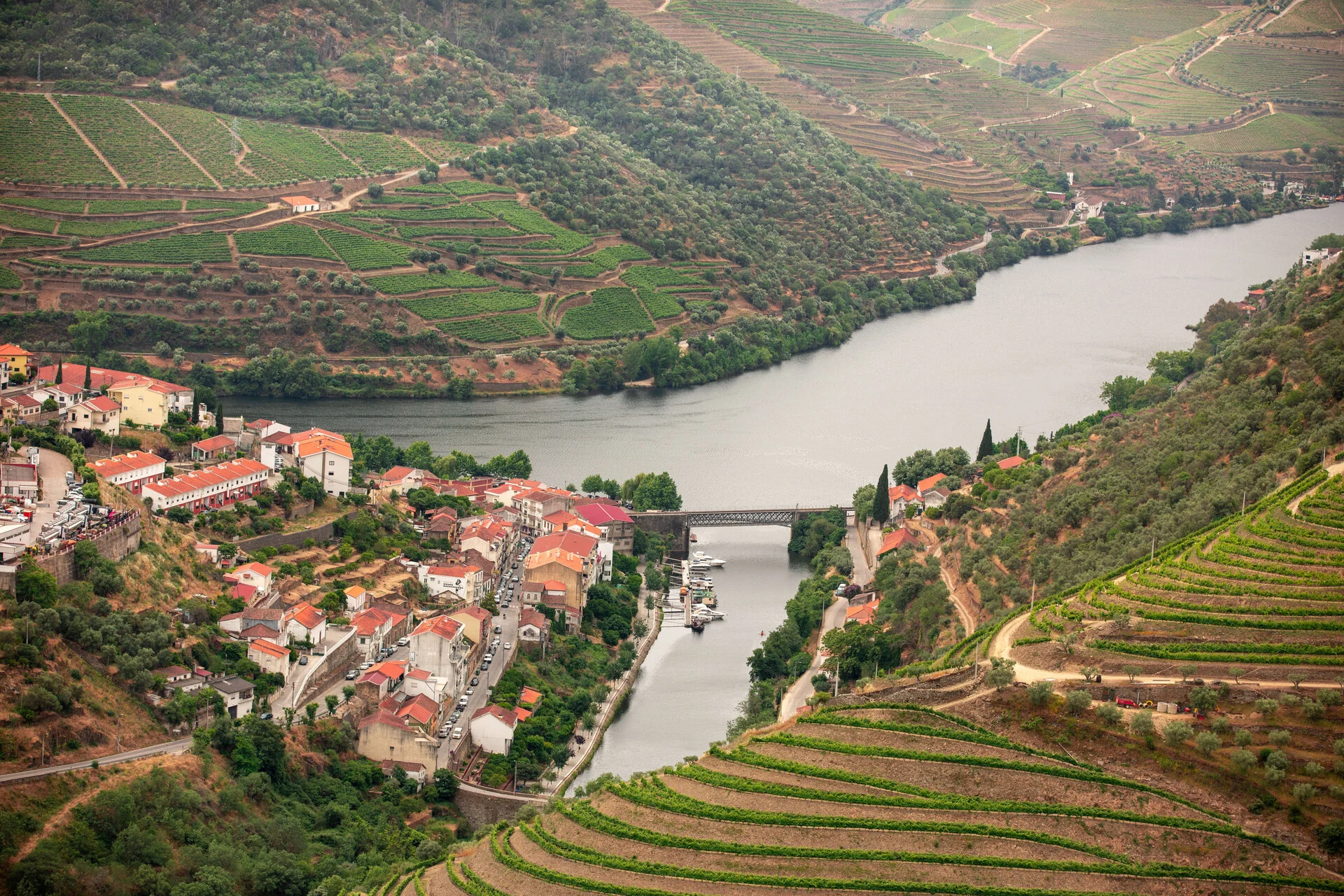
The Douro Valley is a UNESCO World Heritage Site and the oldest demarcated wine region in the world, dating to 1756. Its terraced vineyards have been cultivated for over 2,000 years, carved into steep hillsides above the Douro River. A full day here is one of the highlights of any Portugal trip.
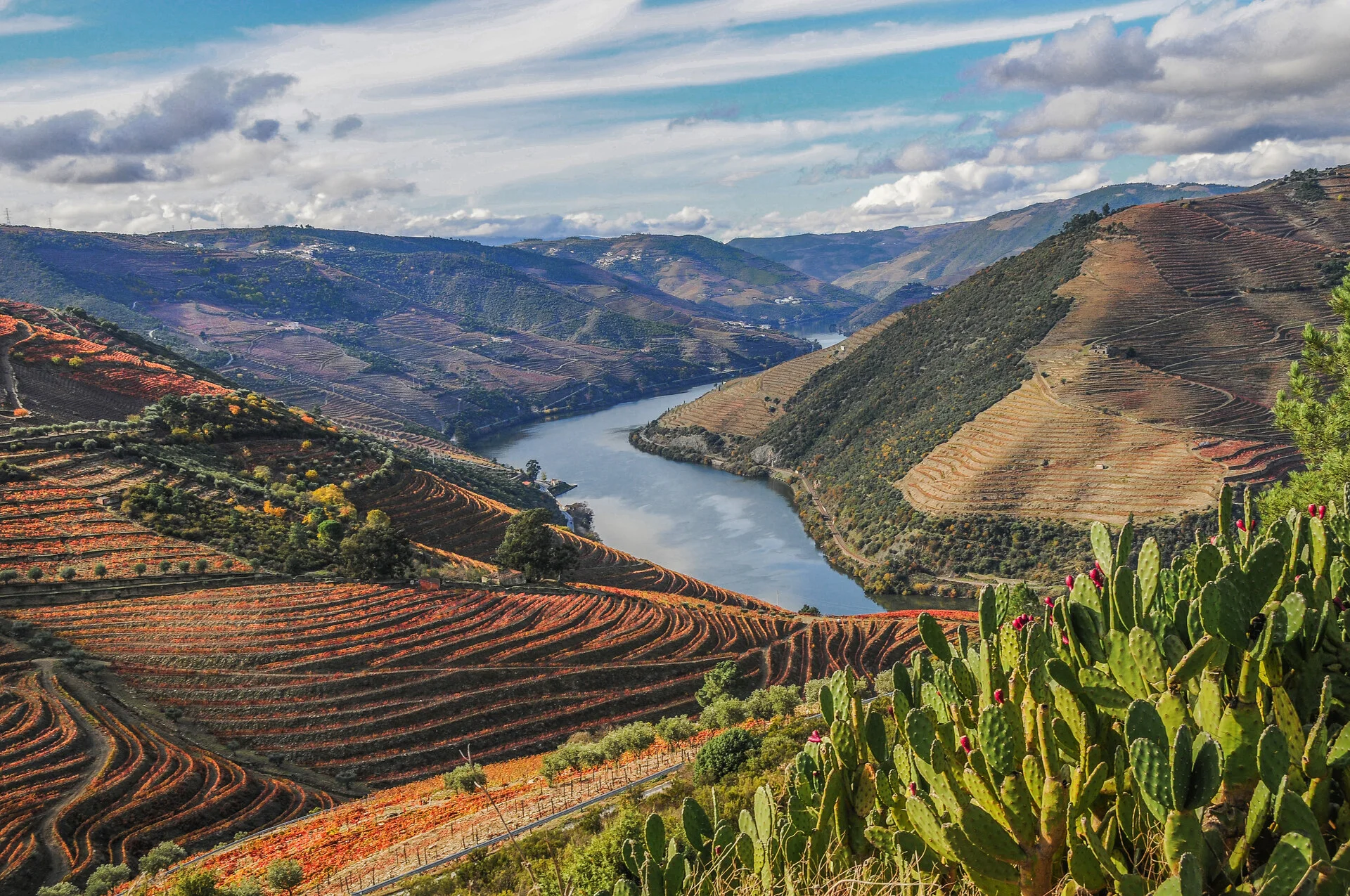
The Douro Valley's terraced vineyards are a UNESCO World Heritage Site and produce Portugal's famous port wine.
The Scenic Train to Pinhao
One of Europe's most underrated train rides runs from Porto Sao Bento to Pinhao, a tiny station in the heart of the Douro Valley. The journey takes about 2.5 hours and follows the river through gorges, past terraced vineyards, and under hillside villages. Trains cost around 12 to 15 euros each way on cp.pt. Pinhao's station itself is covered in azulejo panels depicting the wine harvest.
Guided Tour vs. DIY
The valley's wineries are spread across remote hillsides, and many are not walkable from the train station. A guided tour from Porto is the most practical option: costs range from 85 to 150 euros per person and typically include hotel pickup, visits to 2 wineries with tastings, a traditional Portuguese lunch, and a Douro River boat cruise.
The Douro Valley full-day tour with boat cruise, 2 wineries, and lunch from Porto is the most popular option and sells out regularly in summer. For a more exclusive experience, the premium small-group Douro Valley wine tour with 11 tastings keeps group sizes to 8 people or fewer.
Wines You Will Taste
The Douro Valley produces more than just port wine. Expect to taste port (ruby, tawny, and aged vintage varieties), Douro DOC reds and whites (increasingly acclaimed by international critics), and sweet moscatel. The reds are particularly impressive: full-bodied, complex, and a fraction of the price of comparable wines from France or Italy. September to October is harvest season (vindimas), when the valley is at its most beautiful.
🚂 Day 3: Day Trip to Aveiro or Braga
Day 3 gives you a choice depending on your interests. Both towns are easy day trips from Porto by train and offer something completely different from the city.
Option A: Aveiro, the "Venice of Portugal"
Aveiro is 1 hour south of Porto by train (about 3.50 euros each way) and is famous for its colorful moliceiro boats gliding through Art Nouveau-lined canals. The comparison to Venice is generous, but the town has genuine charm. The canal boat rides cost around 12 euros and last 45 minutes. Costa Nova, a beach town 10 minutes away by bus, has some of Portugal's most photographed houses: candy-striped wooden facades in red, blue, green, and yellow. Try ovos moles, Aveiro's signature egg-yolk pastry shaped like fish and seashells.
The Aveiro day trip from Porto with boat ride and Costa Nova visit handles all the transport logistics and includes a moliceiro cruise.
Option B: Braga and Bom Jesus do Monte
Braga is Portugal's third-largest city and its religious capital, just 1 hour north of Porto by train (about 3.50 euros). The main attraction is Bom Jesus do Monte, a UNESCO World Heritage sanctuary reached by climbing 577 baroque steps (or taking a 19th-century hydraulic funicular, the oldest on the Iberian Peninsula). The views from the top are extraordinary. Braga's historic center is also worth exploring: the Se de Braga is Portugal's oldest cathedral, founded in 1070.
A guided day trip covers both Braga and nearby Guimaraes, the birthplace of Portugal. The Braga and Guimaraes full-day tour from Porto with lunch is excellent value and covers both UNESCO sites.
Last Evening in Porto
Whatever you choose for the day trip, spend your last Porto evening soaking in the Ribeira. Walk across the upper level of the Dom Luis I Bridge at sunset for the iconic panoramic view, then grab a farewell dinner at a riverside restaurant in the Ribeira UNESCO district. For a hands-on souvenir, a Portuguese azulejo tile painting workshop in Porto lets you learn the art of tile making and take home something you created.
📚 Day 4: Coimbra, Europe's Hidden University City
Most Portugal itineraries skip Coimbra entirely, which is a mistake. This is one of Europe's oldest university cities, home to a UNESCO World Heritage campus founded in 1290 and one of the most jaw-dropping baroque libraries ever built. The train from Porto to Coimbra-B takes about 1 hour 45 minutes on the intercity service (around 20 euros).
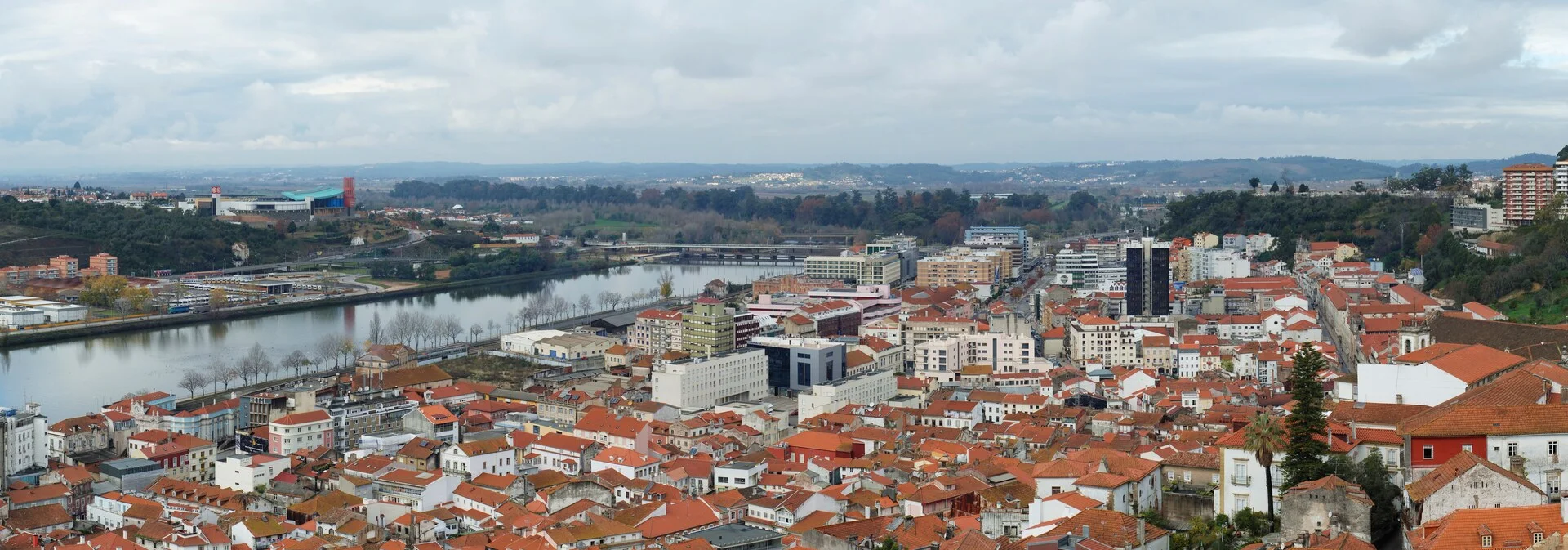
Coimbra's university campus has been educating students since 1290, making it one of the oldest in continuous operation.
University of Coimbra and Biblioteca Joanina
The University of Coimbra is the city's main attraction and a UNESCO World Heritage Site. The Royal Palace courtyard offers sweeping views over the Mondego River. The Joanina Library, built in 1717 under King Joao V, is the crown jewel: three interconnected rooms with gilded wood, frescoed ceilings, and 300,000 volumes. A colony of bats lives behind the bookshelves, protecting the collection from insects (yes, really). Visits are timed and limited, so book your ticket early in the day.
The combined university ticket (about 13 euros) covers the library, the Royal Palace, the Chapel of Sao Miguel with its ornate azulejo walls, and the university prison. A University of Coimbra guided tour including the Joanina Library provides context that makes the visit far more meaningful.
Exploring the Old Town
After the university, wander downhill through the old town. Coimbra's medieval streets are steep, narrow, and full of character. The Arco de Almedina is the surviving gate of the medieval city walls. The Se Velha (Old Cathedral) is one of Portugal's best-preserved Romanesque buildings, built during the reconquest in 1139. Along the Mondego River, the Parque Verde offers a peaceful spot to rest before your next move.
Coimbra has its own fado tradition, quite different from Lisbon's: here it is sung exclusively by male students in black capes, and the themes lean toward academic nostalgia rather than maritime longing. If you stay the evening, catching a performance is a memorable experience.
Where to Stay
You can visit Coimbra as a half-day stop (drop bags at the station's lockers, explore for 4 to 5 hours, then continue south) or stay overnight to enjoy the city at a slower pace. We recommend at least one night: the city empties of tourists by evening and takes on a completely different, more authentic student-town atmosphere.
🏰 Day 5: Obidos and Arrival in Lisbon
Day 5 is a travel day with a spectacular detour. Instead of taking the direct train from Coimbra to Lisbon (2 hours), break the journey at Obidos, a perfectly preserved medieval walled town that feels like stepping into a storybook.
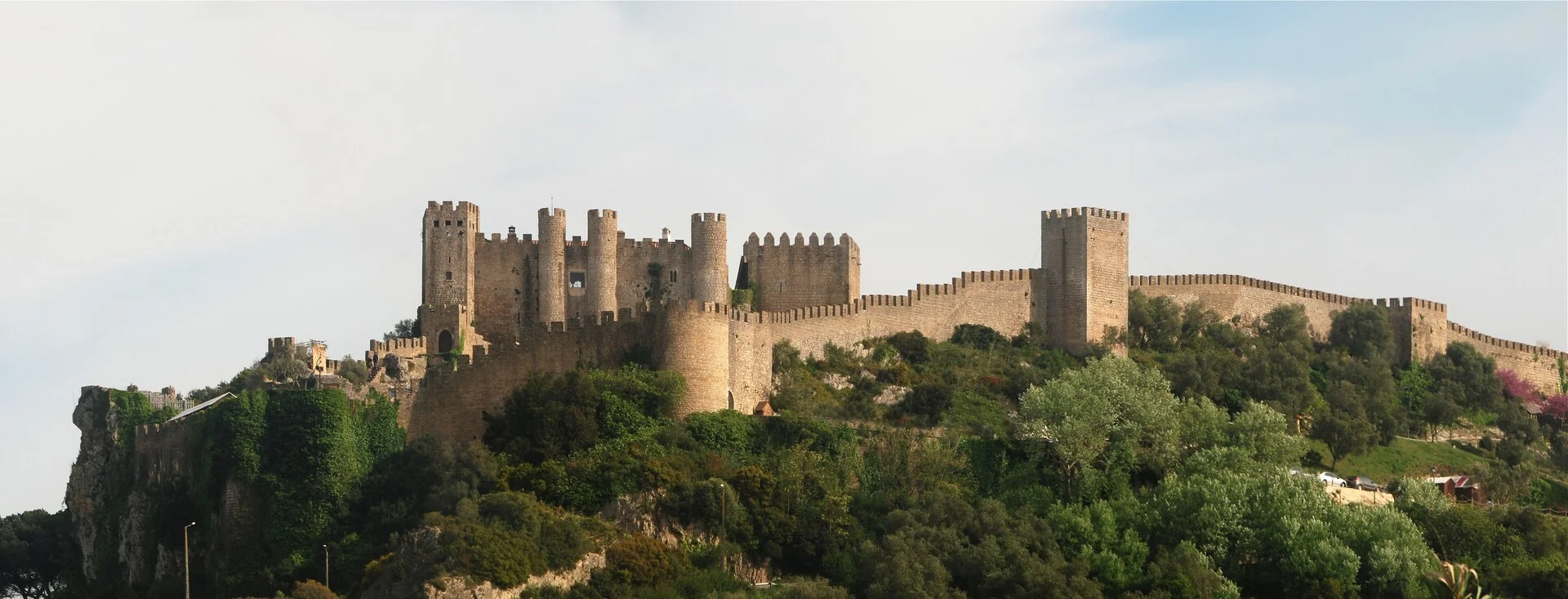
Obidos is one of Portugal's best-preserved medieval towns, surrounded by intact 14th-century walls.
Walking the Walls of Obidos
Obidos is a small town enclosed by intact 14th-century walls that you can walk along their entire length, with views of terracotta rooftops, whitewashed houses draped in bougainvillea, and rolling green countryside in every direction. The walk takes about 30 minutes and is free. The walls have no railings in many sections, which adds to the medieval atmosphere (and demands some caution).
Getting here from Coimbra requires a connection through Caldas da Rainha. Take the regional train from Coimbra-B to Caldas da Rainha (about 1.5 hours), then a short bus or taxi to Obidos (15 minutes). Alternatively, the Obidos, Nazare, and Fatima day trip from Lisbon is popular if you want a guided option.
Ginjinha in a Chocolate Cup
Obidos is famous for ginjinha, a sweet cherry liqueur served in an edible chocolate cup. Nearly every shop along the main street sells it, and at about 1.50 euros per cup, it is the most delightful affordable souvenir in Portugal. Sip it on the walls while watching the sunset over the countryside.
The Castle of Obidos at the top of town is now a luxury pousada (state-run historic hotel), but you can walk through the courtyard and admire the exterior. The town is small enough to see in 2 to 3 hours, leaving plenty of time to catch a late-afternoon bus to Caldas da Rainha and then a train to Lisbon (about 1 hour 15 minutes from Caldas).
Arriving in Lisbon
You should reach Lisbon by early evening. Check into your accommodation and take a first stroll through the Baixa district, the elegant grid of streets rebuilt after the devastating 1755 earthquake. Praca do Comercio, the grand waterfront square, is particularly beautiful at night. Find a traditional tasca (family-run restaurant) for grilled sardines, bacalhau (salt cod), and a glass of Vinho Verde.
🎶 Day 6: Alfama, Sao Jorge Castle, and Fado
Your first full day in Lisbon is about the city's soul. Alfama is Lisbon's oldest neighborhood, a maze of cobblestone streets, ceramic tile facades, and hidden viewpoints that survived the devastating 1755 earthquake. This is where you slow down, get lost, and discover the Lisbon that locals love.
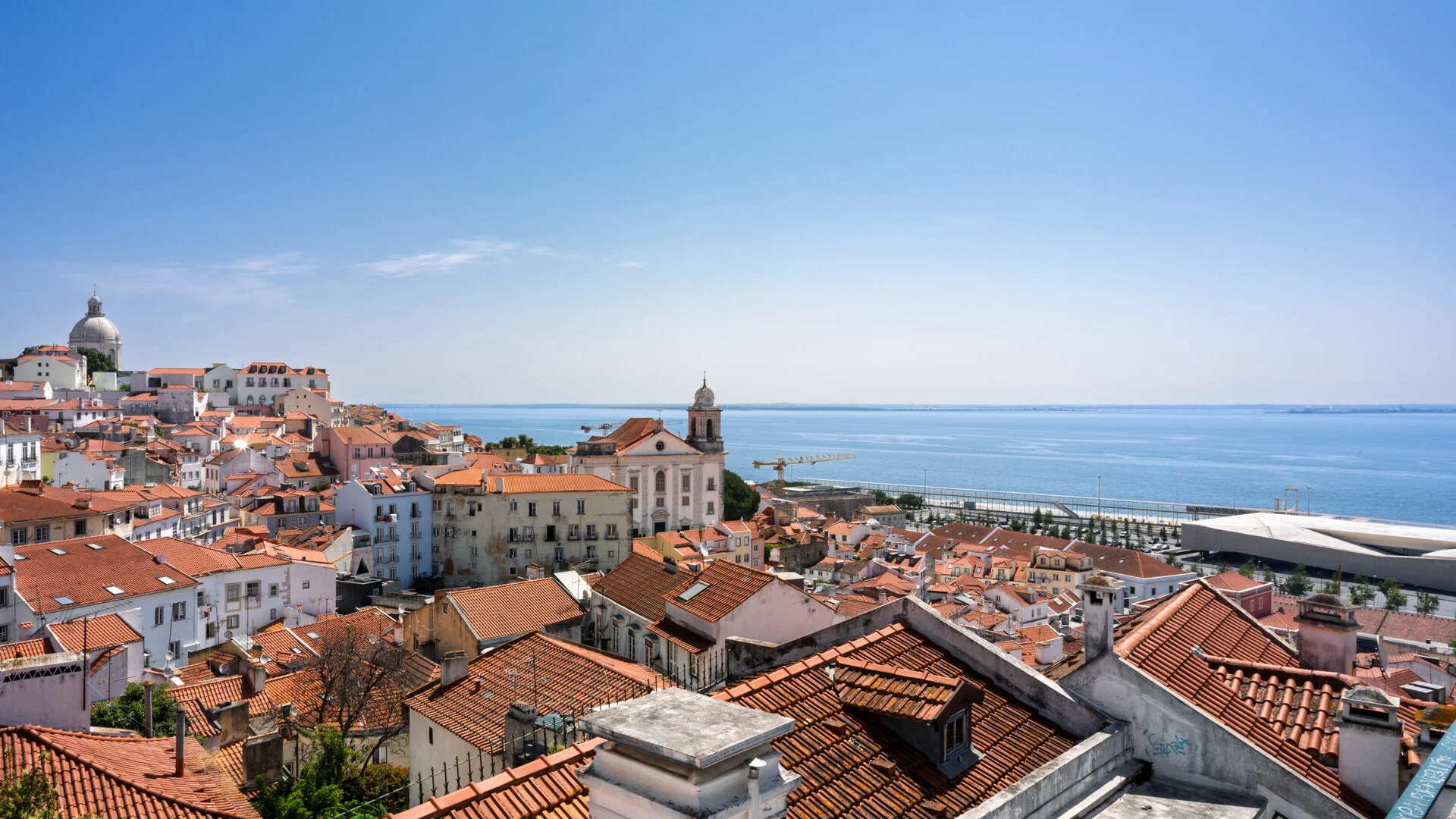
Alfama is Lisbon's oldest neighborhood, with winding streets dating back to the Moorish era.
Sao Jorge Castle
Start the morning at Sao Jorge Castle, the Moorish fortress perched on Lisbon's highest hill. The panoramic views from the ramparts are the best in the city: a sweeping vista of red rooftops, the Tagus River, and the Ponte 25 de Abril bridge. The castle grounds include archaeological ruins dating back to the Iron Age. Arrive early (before 10am) to avoid the midday crowds and heat.
Alfama's Miradouros
After the castle, wind your way down through Alfama, stopping at the city's best free viewpoints. Miradouro de Santa Luzia is the most photogenic (bougainvillea frames, azulejo panels). Miradouro das Portas do Sol offers the classic Alfama rooftop shot. Miradouro da Graca is best for sunrise if you are an early riser. These are Lisbon's best free experiences, and they are worth building your walking route around.
Alfama's steep hills and narrow streets are best explored with a guide who knows the hidden corners. The Alfama historical walking tour with local guide covers the miradouros, Moorish history, and street art you would miss on your own.
Afternoon: LX Factory
In the afternoon, head to LX Factory, a creative hub in a former industrial complex. Converted warehouses now house independent bookshops, design studios, restaurants, and street art installations. It is a welcome contrast to the historic neighborhoods and a great spot for lunch or a late afternoon coffee.
Evening: Live Fado
Fado is Portugal's most distinctive musical tradition and a UNESCO Intangible Cultural Heritage. Lisbon's fado is different from Coimbra's: here it features both male and female voices, and the themes center on saudade (a uniquely Portuguese feeling of nostalgic longing), fate, and the sea. The best fado houses are in Alfama and Chiado.
Fado in Chiado live performance (50 minutes, UNESCO heritage) is a popular concert-style option. For a more immersive experience, a traditional fado dinner show in Alfama with Portuguese meal pairs the music with excellent local cuisine.
🏰 Day 7: Sintra Day Trip, Europe's Fairy-Tale Escape
Sintra is the single best day trip from Lisbon, and one of the best in all of Europe. This UNESCO World Heritage town is only 40 minutes from Lisbon by train (2.30 euros each way from Rossio station) and is home to some of the continent's most extraordinary palaces.
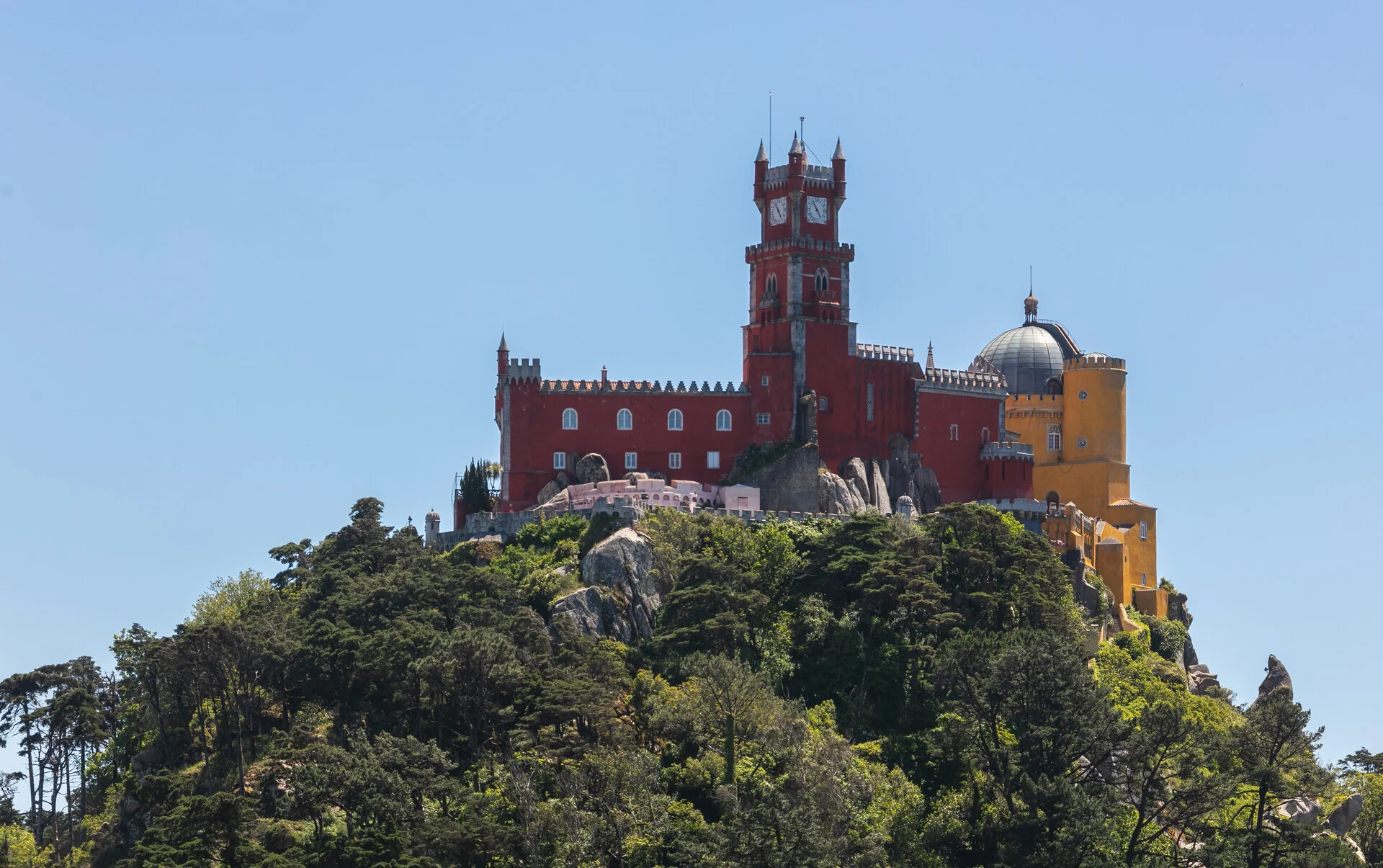
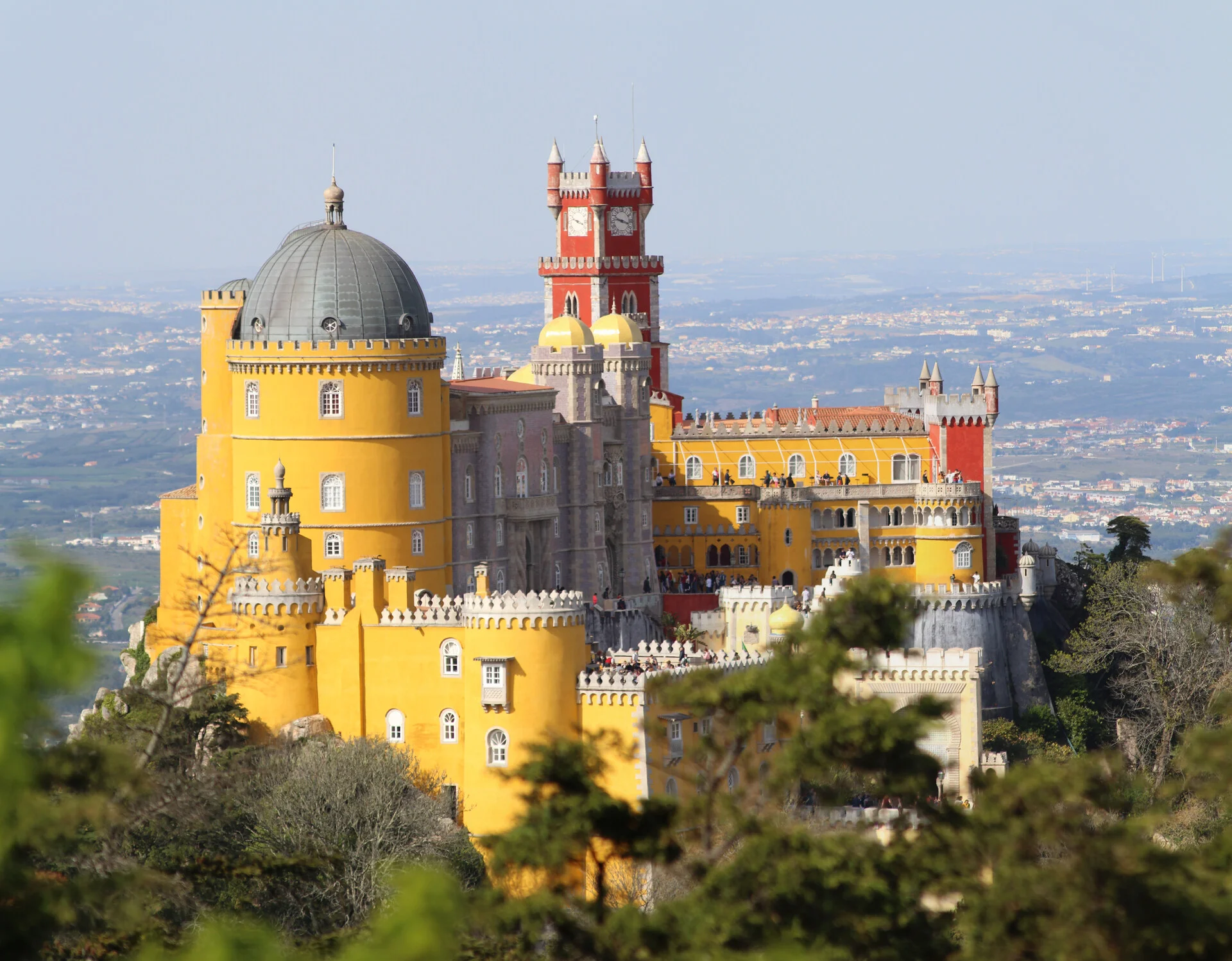
Pena Palace is one of Europe's most photographed landmarks. Book skip-the-line tickets in advance.
Pena Palace
Pena Palace is the crown jewel of Sintra. Perched on a hilltop and painted in vivid reds, yellows, and purples, this 19th-century Romanticist palace looks like something out of a fairy tale. The interior is equally impressive, preserved exactly as the royal family left it. Skip-the-line tickets are essential in summer, as queues can reach 90 minutes.
A guided day trip from Lisbon is the most hassle-free option. The Sintra, Pena Palace and Quinta da Regaleira guided tour from Lisbon covers both palaces with skip-the-line entry and handles all the transport logistics.
Quinta da Regaleira
Quinta da Regaleira is Sintra's most mystical experience. This gothic estate hides underground tunnels, secret grottoes, and the famous Initiation Well, a 27-meter spiral staircase descending into the earth that was used in Masonic initiation rites. The gardens are equally enchanting, with hidden pathways connecting grottos, waterfalls, and lakeside towers. Allow at least 1.5 hours to explore.
Quinta da Regaleira entry tickets sell out in summer. Book at least a week ahead during peak season.
Optional: Cabo da Roca and Cascais
If you want to extend the day, combine Sintra with Cabo da Roca (the westernmost point of mainland Europe) and Cascais, a charming coastal town with beautiful beaches. The Sintra, Cabo da Roca, and Cascais full-day tour from Lisbon covers all three in a single day with transport included.
🏛️ Day 8: Belem, Pasteis de Nata, and Farewell
Your final day in Portugal starts in Belem, the waterfront district where Portuguese explorers set sail for the New World. This is where Lisbon's most important monuments are concentrated, and it is the perfect way to close a trip that has traced Portugal's history from north to south.
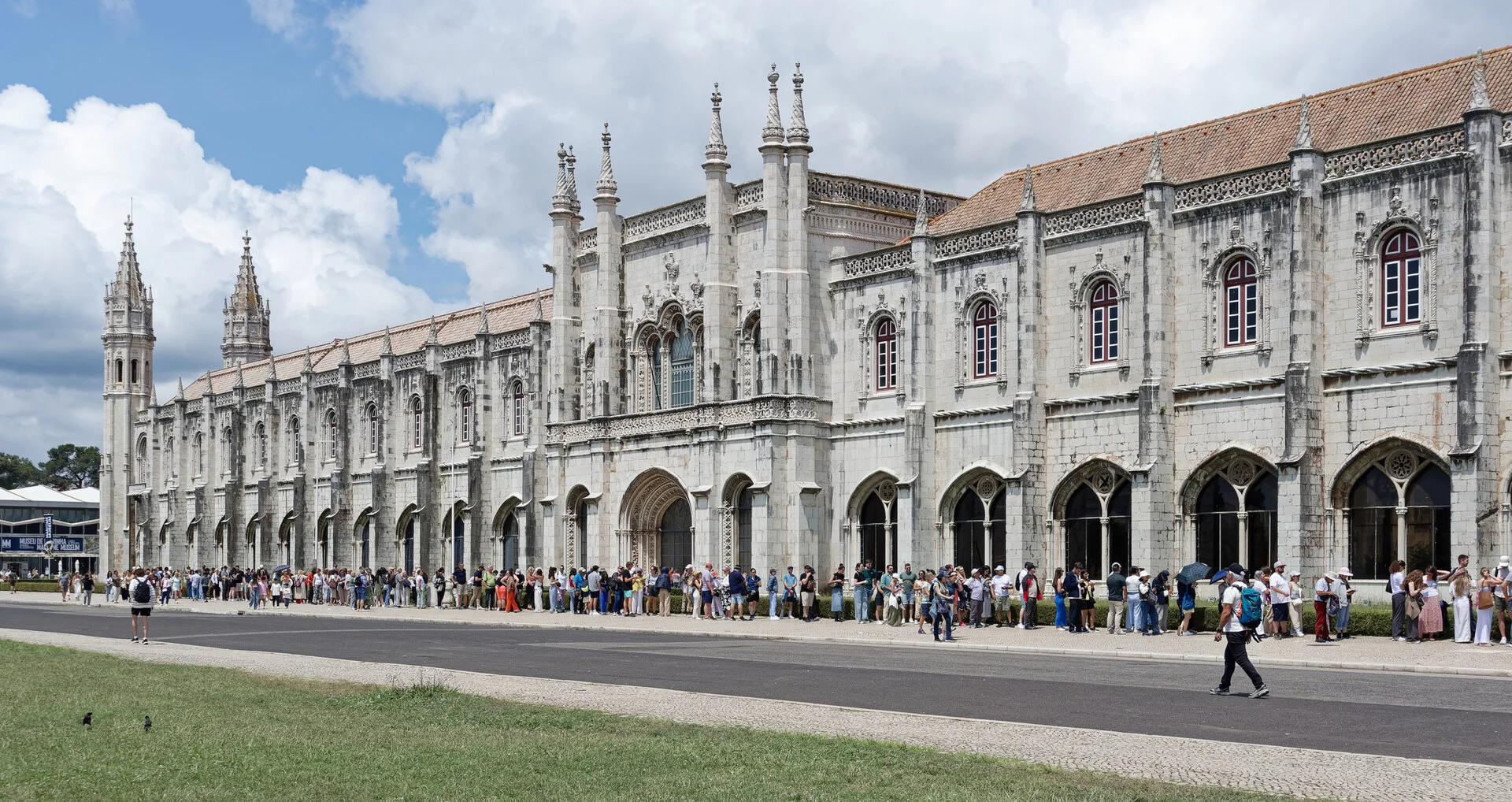
Jeronimos Monastery is Lisbon's most visited monument and a UNESCO World Heritage Site.
Jeronimos Monastery
Jeronimos Monastery is Lisbon's most visited monument and a UNESCO World Heritage Site. Built in the early 1500s to celebrate Vasco da Gama's voyage to India, its Manueline architecture is unlike anything else in Europe: elaborate stone carvings of ropes, sea creatures, and navigation instruments cover every surface. Skip-the-line tickets cost approximately 10 euros and save 30 to 60 minutes of waiting in peak season.
Jeronimos Monastery skip-the-line guided tour includes a knowledgeable guide who brings the monastery's Age of Discovery history to life.
Belem Tower and Pasteis de Belem
After the monastery, walk along the waterfront to Belem Tower, the iconic 16th-century fortress on the Tagus River that served as the last sight sailors saw when departing Lisbon. Then stop at Pasteis de Belem, the original pastel de nata bakery operating since 1837. The warm custard tarts dusted with cinnamon are worth every minute in the queue.
If you want to cover Belem's spread-out sights without exhaustion, a Belem tuk-tuk tour covering Jeronimos, MAAT, and the Tower is a fun and efficient option.
Afternoon: Chiado and Time Out Market
Head back to the center and explore Chiado, Lisbon's most elegant neighborhood. Visit Cafe A Brasileira (where a bronze Fernando Pessoa statue sits at a sidewalk table) and the haunting Carmo Convent, a Gothic church whose roof collapsed in the 1755 earthquake and was never rebuilt. Then have lunch at Time Out Market, one of Europe's best food halls featuring dishes from Lisbon's top chefs under one roof.
Evening: Sunset Tagus River Cruise
End your Portugal trip with a sunset cruise on the Tagus River. Watching the golden light reflect off the water as the Ponte 25 de Abril glows above you is an unforgettable farewell. Most cruises depart from the Terreiro do Paco terminal near Praca do Comercio.
Sunset Tagus River cruise in Lisbon run 1 to 2 hours and offer stunning views of Belem, Alfama, and the Ponte 25 de Abril from the water. The perfect ending to 8 days tracing Portugal from north to south.
💰 Budget Breakdown: What to Expect for 8 Days in Portugal
An 8-day trip to Portugal costs approximately 1,200 to 2,000 euros per person including accommodation, transport, food, and activities. Portugal is one of Western Europe's most affordable destinations, and both Lisbon and Porto offer outstanding value compared to cities like Paris, Rome, or Barcelona.
| Category | Budget | Mid-Range | Splurge |
|---|---|---|---|
| Accommodation (per night) | €40-70 | €80-140 | €150-300+ |
| Food (per day) | €20-35 | €40-60 | €80+ |
| Intercity trains (total) | €50-80 | €50-80 | €50-80 |
| Activities (per day) | €10-20 | €30-60 | €80+ |
| Daily total (per person) | €70-100 | €110-160 | €200+ |
Estimated daily costs per person in Portugal (2026)
Estimated daily costs per person in Portugal (2026)
Money-Saving Tips
- The Lisboa Card (22 euros for 1 day, 38 for 2 days, 47 for 3 days) includes 39+ museums, unlimited metro/tram/bus, plus the train to Sintra. It pays for itself if you visit 3+ monuments and use public transport.
- Book intercity trains on cp.pt at least a few days ahead for the cheapest fares. The Porto to Coimbra intercity costs around 20 euros vs. 30+ last-minute.
- Eat at tascas (family-run restaurants) rather than tourist-facing places. A full meal with wine at a local tasca costs 12 to 18 euros per person.
- Uber and Bolt are very cheap in both cities: 5 to 8 euros for most rides across town.
- Lisbon's best experiences (its viewpoints) are completely free. Porto's Sao Bento Station and azulejo churches are also free.
- Coimbra and Obidos are both affordable: a full day including food and attractions costs under 40 euros per person.
✈️ Practical Tips for Visiting Portugal
Best Time to Visit
April to June and September to October offer the best balance of warm weather, smaller crowds, and lower prices. July and August are peak season with temperatures above 35 degrees in Lisbon and the highest hotel rates. Winter (November to March) is mild but rainy. For the Douro Valley, September to October is harvest season and the most scenic time.
Getting Around
Portugal's intercity train network (operated by CP) connects Porto, Coimbra, and Lisbon efficiently. Within cities, Lisbon has an efficient metro, bus, and tram network. The iconic Tram 28 runs through Alfama, Graca, and Estrela, but it is extremely crowded and a known pickpocket hotspot. Walking the route is actually more enjoyable. In Porto, the metro covers most tourist areas and connects to the airport (line E, 30 minutes, approximately 2.50 euros).
Language and Safety
Portuguese is not Spanish (locals appreciate the distinction). That said, most people in tourism speak excellent English. Portugal is one of Europe's safest countries. The main concern is petty theft: watch for pickpockets on Tram 28 and in crowded tourist areas. Keep valuables secure and you will have no issues.
🛡️ Don't Forget Travel Insurance
We never travel without insurance. Heymondo covers medical expenses, trip cancellation, and stolen or damaged electronics, with 24/7 assistance through their app. As one of our readers, you get 5% off your policy.
Get 5% off your travel insurance →If you purchase through our link, we may earn a commission at no extra cost to you. Discount not available for US residents.
What to Pack
Comfortable walking shoes are essential. Lisbon's hills are serious (some streets feel like staircases), Porto has similar terrain, and both Coimbra and Obidos involve uphill walks on cobblestones. Bring layers for coastal weather, as evenings can be cool even in summer. Sunscreen and a hat are mandatory from May to October.
Start Planning Your Portugal Trip
Eight days in Portugal gives you the complete picture: world-class wine cellars in Porto, a UNESCO baroque library in Coimbra, a medieval walled town with cherry liqueur in chocolate cups in Obidos, and centuries-old monasteries and fairy-tale palaces in Lisbon. Traveling north to south by train ties it all together into a coherent journey through Portuguese history, culture, and cuisine.
The experiences that sell out fastest are the Douro Valley wine tour from Porto, the Sintra day trip with Pena Palace entry, and the Jeronimos Monastery skip-the-line tour. Book those first, and the rest of your itinerary will fall into place.
For deeper dives into each city, check out our complete guide to the best things to do in Lisbon and our guide to the best tours and activities in Porto. And if you are continuing through Europe, our 10-day Central Europe itinerary covers another incredible multi-city rail trip.
Frequently Asked Questions
How many days do you need in Portugal?
We recommend 8 days for a first trip to Portugal: 3 days in Porto (including a Douro Valley day trip), a day exploring Coimbra, a stop in the medieval town of Obidos, and 3 days in Lisbon (including a Sintra day trip). This covers the country's two greatest cities plus unforgettable stops in between.
Should I start my Portugal trip in Porto or Lisbon?
We recommend starting in Porto and traveling south to Lisbon. This lets you build from Porto's intimate wine culture toward Lisbon's grand monuments, with Coimbra and Obidos as stops along the way. If flights to Porto are limited, you can reverse the route and start in Lisbon heading north.
How do you get from Porto to Lisbon by train?
The Alfa Pendular high-speed train connects Porto Campanha to Lisboa Oriente in 2 hours and 50 minutes, costing 25 to 35 euros. For a more scenic route with stops, take intercity trains from Porto to Coimbra (1 hour 45 minutes, about 20 euros) and then Coimbra to Lisbon (2 hours). Book on cp.pt for the best prices.
Is Portugal expensive to visit?
Portugal is one of Western Europe's most affordable destinations. A mid-range daily budget of 100 to 150 euros per person covers comfortable accommodation, meals at local restaurants, and activities. Porto is slightly cheaper than Lisbon. Compared to Spain, France, or Italy, Portugal offers significantly better value.
What is the best time to visit Portugal?
April to June and September to October offer the best weather, smaller crowds, and lower prices. July and August are peak season with temperatures above 35 degrees in Lisbon. Winter (November to March) is mild but rainy. For Douro Valley wine tours, September to October is harvest season and the most scenic time.
Is the Sintra day trip from Lisbon worth it?
Absolutely. Sintra is only 40 minutes from Lisbon by train and is home to Pena Palace, one of Europe's most beautiful palaces, and Quinta da Regaleira with its famous Initiation Well. It is consistently rated as one of the best day trips in all of Europe. Book skip-the-line tickets for Pena Palace in advance.
Is Coimbra worth visiting on a Portugal trip?
Yes, Coimbra is a highlight that most tourists skip. The University of Coimbra is a UNESCO World Heritage Site, and the Biblioteca Joanina is one of the most beautiful baroque libraries in the world. It is an easy stop between Porto and Lisbon by train. Half a day is enough for the main sights, but a full day lets you enjoy the medieval streets and riverside atmosphere.